



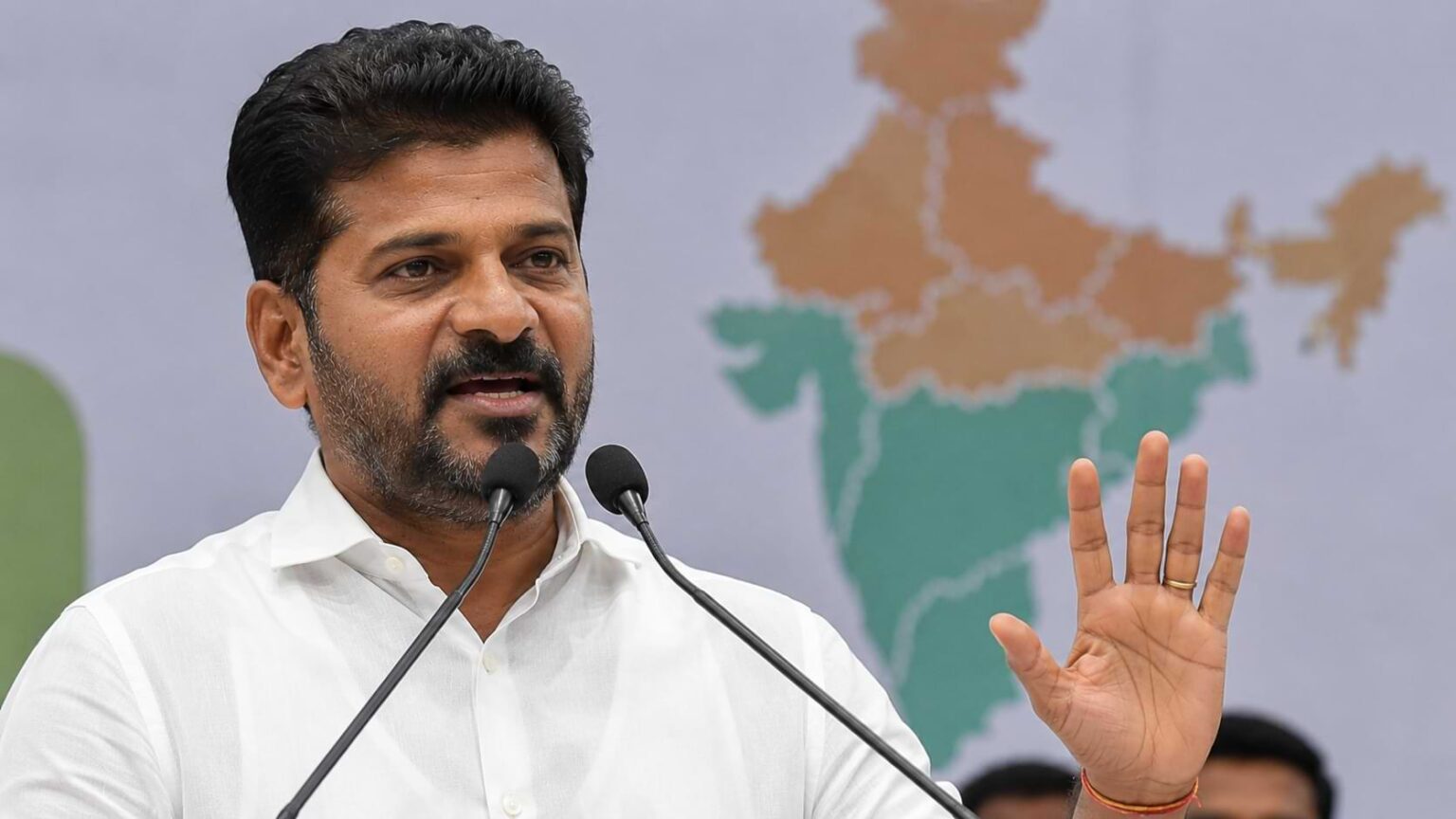

The ongoing issue of the northern and southern states of India has now come again in the limelight.
This time, Telangana Chief Minister A. Revanth Reddy has asked the question about the fact that
despite the southern states playing a significant role in the overall economy, they are receiving a
smaller share of tax revenues from the center. His statements have sparked debates on fiscal justice,
political representation, and the future dynamics of federalism in India.
The north-south divide in India has been further brewed by the upcoming visit of Kiren Rijiju to
Telangana. The north south divide in India has been further fueled by the upcoming visit of Kiren
Rijiju to Telangana.
Revanth Reddy asserted that the southern states were not entitled to be treated as “second class
citizens” though they contribute significantly for the country’s tax revenues in a public event.
Revanth Reddy pointed out that southern states contribute significantly to the tax revenues of the
country and should not be treated as “second class citizens” in a public event. He asked why key
national positions are held by leaders from the north and that Southern states are systematically
disadvantaged in tax allocation and representation in political circles. His remark prompted an
immediate response, both from those who agreed and those who disagreed, on every side of the
political divide.
The divide between the north and south might start to pose a challenge to the Narendra Modi
administration after it was seen that Kiren Rijiju and Revanth Reddy were both absent from the
crucial event where the BJP-led government will approve a fresh budget. India Today
The crux of the issue between Telangana and the central government is Telangana’s tax devolution
demand. However, Revanth Reddy says that Telangana only gets around ₹0.45 out of every ₹1
that is put into the central tax pool. He believes some other states have a lot more than they put in.
This has led to the belief among many southern leaders that the economically productive states
were being punished and the less developed states were being rewarded through redistribution
policies.
The Hans India’s report reads, “Revanth Reddy called for unity among the southern states against
the injustice committed by delimitation of states.” This is not a new problem. The Telangana,
Tamil Nadu, Karnataka, Kerala and Andhra Pradesh leaders have numerous times voiced their
discontent over the formula used by the Finance Commission to allocate the central taxes. The
states contest that they have been able to curb population growth, enhance human development
measures and have made substantial contribution to India’s GDP. However, population is a factor
in revenue sharing and larger states are more likely to receive a larger share of central revenues.
The New Indian Express
Revanth Reddy has also connected the tax issue with the current deliberations on delimitation.
Delimitation is the redistribution of parliamentary electorates as a result of population growth and
decline. The fear of the southern states is that, by slowing down their population growth over the
last few decades, they may lose their political power if seats in Parliament are to be allocated based
on population. This would mean they would have little or no say in national decision making, even
though they contribute to the economy.
Revanth Reddy’s supporters say southern states are being punished for their success. Their
argument is that these states have effective governance systems that lead to improved economic
growth, higher literacy rates, improved healthcare outcomes and lower fertility rates. This
argument holds that the message sent by rewarding population growth and limiting the role of
states that controlled growth is wrong, and it compromises incentives for good governance.
But critics dispute this story. They state that the federal system of government in India aims at
minimizing regional disparities through transfers of resources from more affluent to less affluent
states. They argue that devolution of taxes should not be done in the direct ratio of what was
contributed to the revenue but rather to promote balanced national development. Economists also
point out that the data on tax collection can be confusing as many large businesses pay taxes from
a specific state, but have operations throughout the country.
The BJP strongly objected to Revanth Reddy’s statements, claiming that he was pushing for North-
South division. Union Minister Kiren Rijiju, in reply, reiterated that India is a single nation and
that leadership should be looked at in terms of a regional prism. BJP leaders have pointed out that
federal transfers are necessary for achieving national unity, and a clash between southern and
northern states is likely to produce unnecessary polarization.
The Campaign to stop the rip-off of the North-South divide in India was launched by Kiren Rijiju
and Revanth Reddy at the Telangana Assembly today.
Though there is a political controversy, Revanth Reddy’s statements have raised a national
question: What is the way forward for India to achieve a balance between economic contribution,
population and political representation? With on-going discussions relating to delimitation and
fiscal federalism, there will be further pressure for a formula which takes into account economic
performance and developmental needs. Maintaining that balance will be key to ensuring that states
have trust in each other and continue to cooperate in the spirit of Indian federalism.
The following is based on statements made by the Telangana government to the New Indian
Express .
Revanth Reddy’s move has at least put the issue of tax devolution, regional equity and
representation back at the heart of political debate in India for the time being. Regardless of
whether his concerns translate into policy shifts or just add more fodder to political debate, it is
obvious that the issue of how India distributes resources and power between its states is set to
define India’s future for many years to come.
President and PM’s hometowns contradict Revanth Reddy on North-South comment in Telangana
in front of Kiren Rijiju, who said India is ‘vibrant’.
Kiren Rijiju challenges the Telangana CM Revanth Reddy on his “North-South” remark by quoting
the President and PM’s home states. The Delimitation Injustice was discussed in an event by
Telangana Chief Minister Revanth Reddy in which he urged southern states to join together against
the injustice, as outlined in
The Telangana government has reiterated that the delimitation based on population will cause
injustice to the southern states, Chief Minister Revanth Reddy told the NIA. Telangana
government has again told NIA that the population-based delimitation will do injustice to southern
states.
The political party’s effort to remove Telangana from the political equation has been dubbed a
‘conspiracy’ by the party in power, Rajesh Kumar of the BJP said on Saturday.
While the political debate rages on, Revanth Reddy’s comments have touched on a bigger national
issue: the economic contribution, population and political representation. With the debates on
delimitation and fiscal federalism still ongoing, there is likely to be a push for a formula that takes
into account economic performance and developmental needs. Balancing these will be key to
instilling confidence between states and keeping the cooperative spirit of Indian federalism alive.
For now, Revanth Reddy’s efforts have kept the debate on tax devolution, regional equity and
representation front and centre of politics in India. The issue of resource and power sharing
between the states of India, if it sparks new policy changes or merely adds to political discussion,
the fact remains that it will define India’s future for years to come.
