



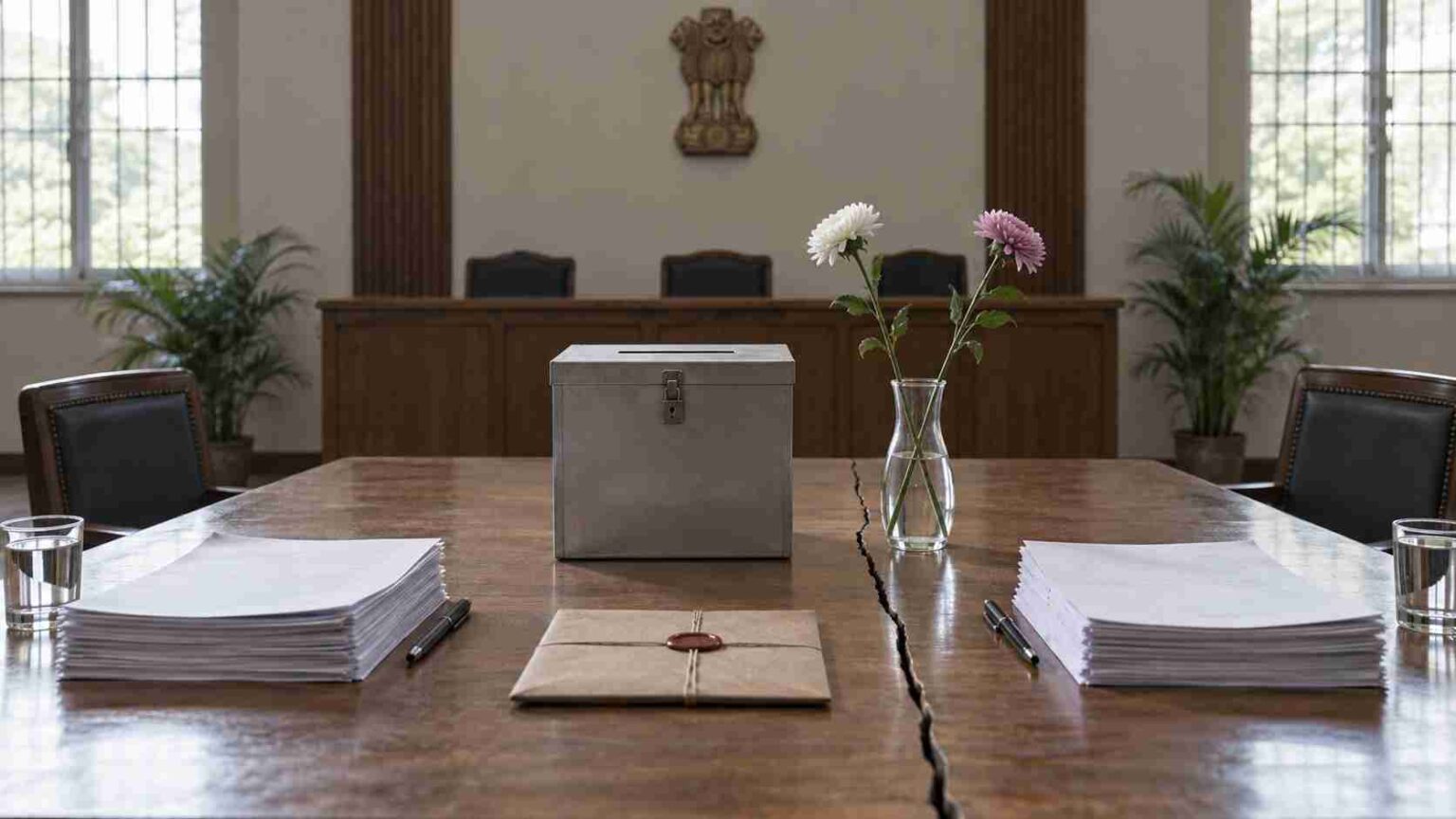

The Election Commission’s hearing today on the Trinamool Congress split is more than a legal formality. It is a test of how Indian democracy handles the collapse of a once-dominant regional party.
After TMC’s defeat in the 2026 West Bengal Assembly elections, a majority of its MLAs walked away from Mamata Banerjee and formed a rival camp under Ritabrata Banerjee. Both sides now claim to be the “real” Trinamool. Both have fielded candidates for the October 6 bypolls in Nandigram and Rejinagar using the same Jora Ghas Phul symbol. The timing could not be worse.
The Commission must apply the well-established “two-wing test”: which faction enjoys greater support among elected representatives and organisational units. On numbers, the rebels appear stronger. But symbols in Indian politics carry emotional weight. For millions of voters, the twin flowers still mean Mamata Banerjee. Taking that symbol away from her would feel, to her supporters, like erasing the party’s identity.
There is also the danger of freeze. If the EC finds neither side has a clear claim, it may lock the symbol and force both groups to contest under new names. That would create confusion among voters just weeks before polling.
This episode exposes a deeper problem. Regional parties in India often revolve around a single personality. When that personality loses an election, the organisation unravels. Legislators then treat the party name and symbol as transferable property rather than a public trust.
The Commission’s decision will shape not only two bypolls but the future of opposition politics in Bengal. It should be guided by facts and law, not sentiment or political convenience. Parties must learn that they belong to their members and voters, not to any one leader.
