


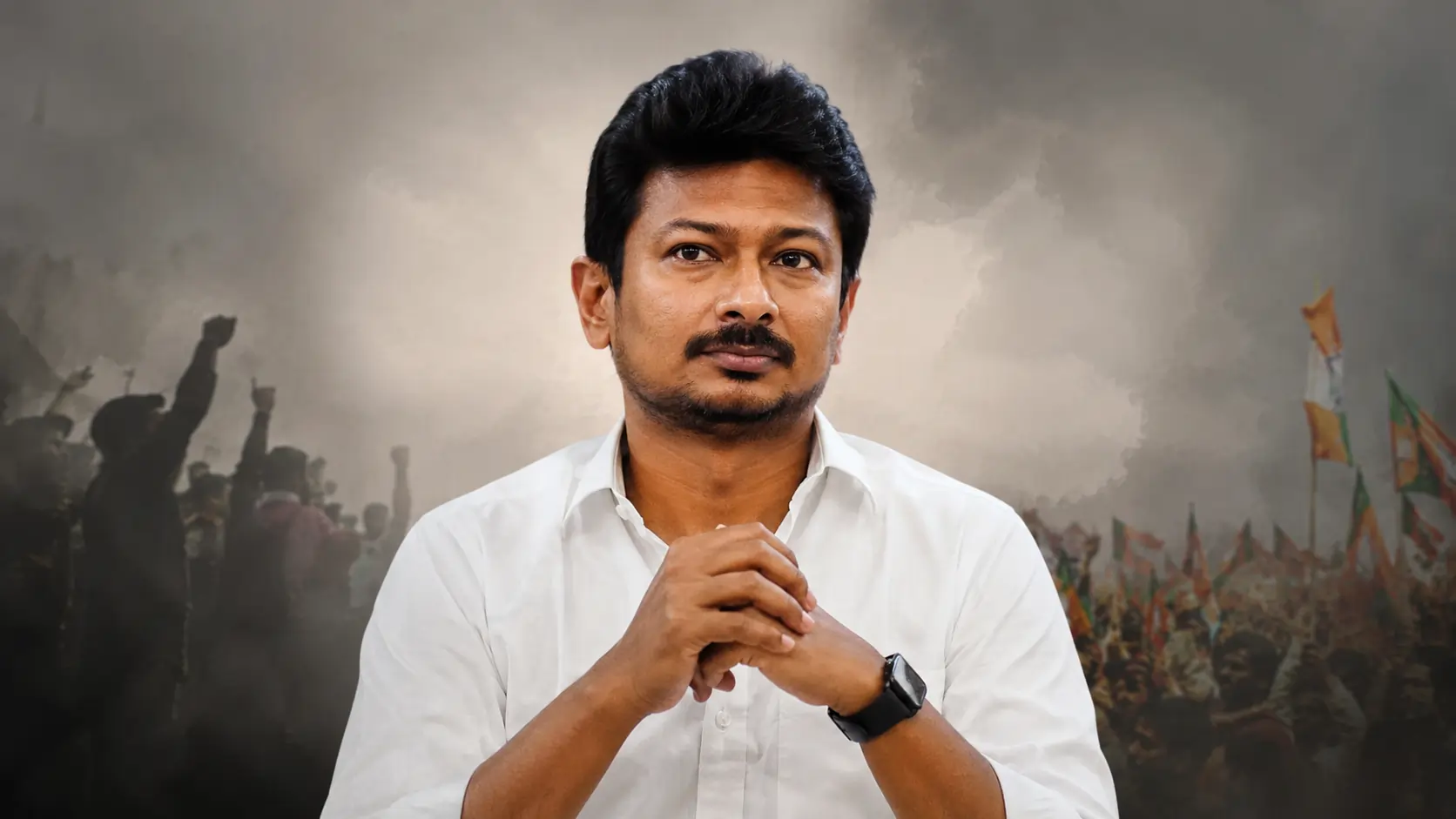

Amidst the several political scandals that have occurred in India over the years, there are none that can be compared to the controversy created by Udhayanidhi Stalin’s remarks on Sanatana Dharma. Being the leader of the opposition in the Tamil Nadu Legislative Assembly, Udhayanidhi likened the Sanatana community to illnesses such as malaria and dengue and advocated for its extinction rather than simply fighting against it.
While the BJP quickly termed his statement as hate speech and genocide, an analysis of the ideology of the Dravidian movement reveals that his intention was not against their rituals but their caste system. The Hindu
The Dravidian Ideology: Emphasis on Social Equality
In order to comprehend the ‘bold stance’ adopted by Udhayanidhi Stalin, it becomes essential to understand the backdrop of the Dravidian movement. With his call for its ‘elimination,’ Udhayanidhi Stalin has reiterated the Ambedkarite and Periyarist cry for social justice that means the end of a social system wherein one’s value is determined by birth. While there is criticism about its provocative use, it can be seen that in this instance, “eradication” means the destruction of retrogressive social traditions.
Even though the Supreme Court and Madras High Court have analyzed these statements, with Justice 5. Srimathy in early 2026 remarking that such comments were “hate speech,” the political message in Tamil Nadu still holds ground. The DMK’s message is unequivocal-social justice is not possible under a hierarchical order where people are labeled as “pure” and “polluted.” News Click
The BJP’s Morality: A Hypocritical Echo?
The BJP wasted no time in responding to this issue. National party spokespersons such as Shehzad Poonawalla and Amit Malviya led a smear campaign against the DMK, labeling it as “anti-Hindu.” In this case, they contended that Sanatana represents the very soul of the
Indian civilization, and therefore attacking it is tantamount to attacking Hinduism itself. This shows a very blatant example of a “double standard” adopted by the BJP.
Whether it be “Goli Maaro” or comments made against minorities during the poll season, the term “hate speech” appears to be flexible enough to depend on the speaker. When Dravidian political leaders take a jibe at an entire social structure, such as caste, it is termed “genocide.” When right-wing political leaders indulge in hate speech towards any particular religious identity, it is conveniently termed “nationalism” or “poll-time hyperbole.” In the wake of this selective outrage, it appears that the BJP cares less about the sanctity of the freedom of speech and is more interested in consolidating the Hindu vote bank at the expense of the DMK.
Judicial Walk-A-Tightrope.
The legal tussle has also been no less fierce. As of 2026, courtrooms have been a constant battleground. While the Madras High Court struck down the FIR against BJP leader Amit Malviya (accused of distorting Udhayanidhi’s words), it also admonished the DMK leader for not being cautious enough in his ministerial conduct. Even the Supreme Court of India has had its say in the matter, warning public figures about the need for social harmony in the exercise of their right to free speech. Live Law
The Electoral Arithmetic and the Federal Divisiveness
Despite the rhetoric, there is much to this struggle that lies in the basic math behind Indian politics today. Due to his politics being based on a staunchly anticaste platform, Udhayanidhi Stalin does not restrict himself merely by appealing to his regional Tamil constituents but seeks to form an alliance. The DMK, along with its allies in the opposition coalition, has sought the support of the caste census and the issue of social justice within the country to counter the dominant narrative of the BJP. For the Dravidian model, appealing to the idea of regional identity and resistance to Sanskritization of northern culture is a great defense against BJP.
On the other hand, BJP employs the scandal as a perfect instrument for rallying its followers in the north and west parts of India. Casting Udhayanidhi’s speech as an attack on traditions and values of Hindus, BJP manages to consolidate its base, presenting the opposition as a culturally estranged entity. This double vision clearly shows that the same speech can be used for two completely opposite political purposes: an appeal to restructuring society in Chennai and an insult to traditions in New Delhi, hard for the DMK to overlook the existence of this hierarchy in India. It is yet unknown whether such actions will result in any reforms or only intensify existing political tensions. One thing is clear, however – the line dividing cultural activism and political emancipation has become even sharper than before.
