



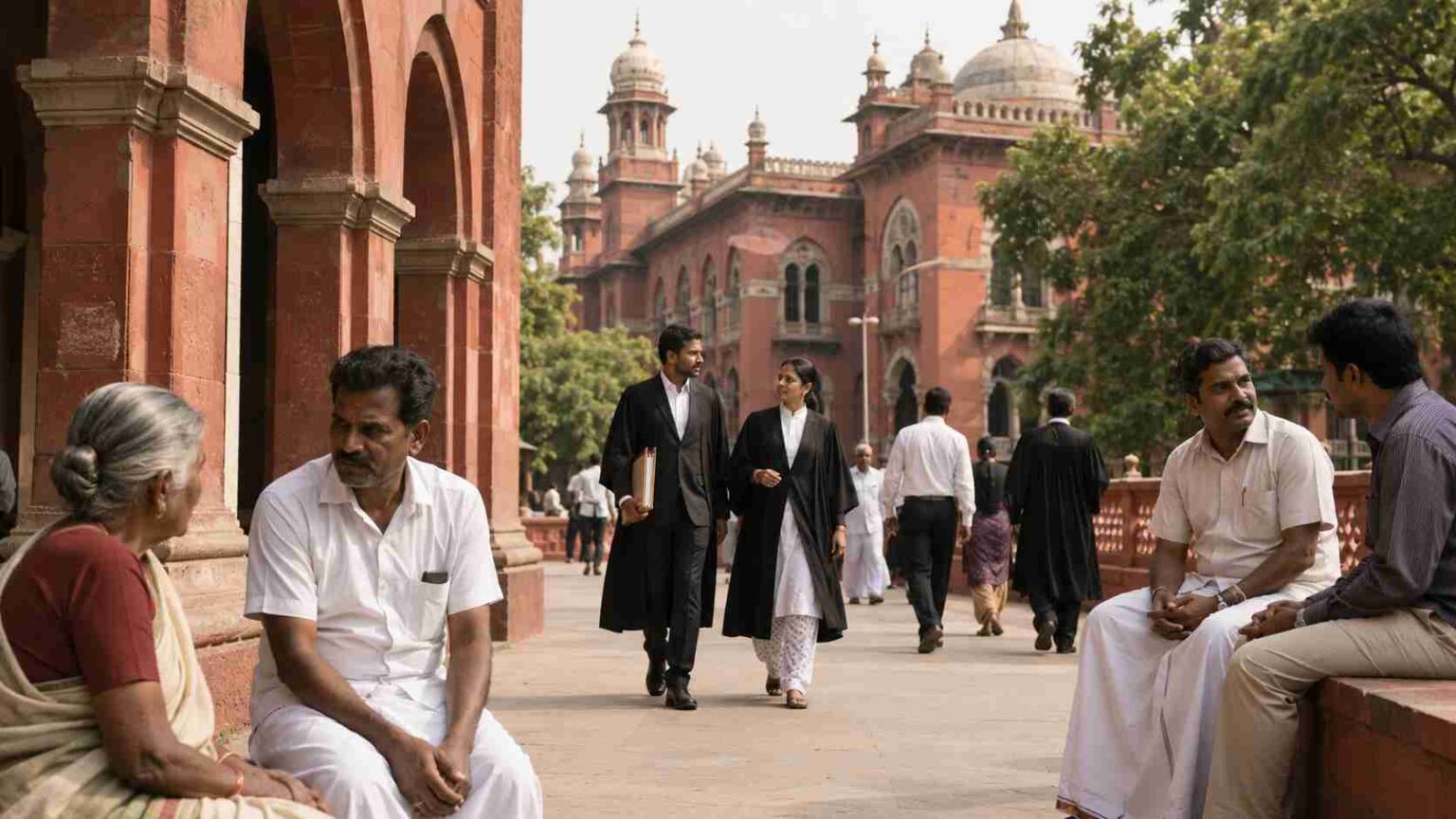

There is something quietly unfair about sitting in a courtroom that will decide your future and not being able to follow what is being said. For many people who walk into the Madras High Court, that is still the reality. Chief Minister Vijay’s resolution asking the Centre to make Tamil the principal language of the court is, at heart, an attempt to close that gap.
Most families in Tamil Nadu live their entire lives in Tamil. They argue in it, pray in it, bargain in it and comfort one another in it. Then, when a land dispute or a family matter reaches the High Court, the language suddenly changes. A farmer from the Cauvery delta or a shopkeeper from Madurai has to lean on a translator to know whether the judge just ruled for or against him. That distance is not only inconvenient. It makes the law feel like it belongs to someone else.
This is not a call to ban English. Lawyers who think and argue better in English should continue to do so. Documents can remain in both languages. What the resolution asks for is a simple shift in emphasis: the court should begin with the language the people actually speak. When an elderly parent sitting at the back of the courtroom can understand the order that will affect her son’s case, justice stops being an official performance and becomes something she can recognise.
Tamil Nadu has always treated language as a matter of dignity, not politics alone. The High Court is not an abstract national institution. It is the court of this land and these people. Letting it speak Tamil first would not weaken the law. It would only make the law feel closer to the lives it is meant to protect.
