



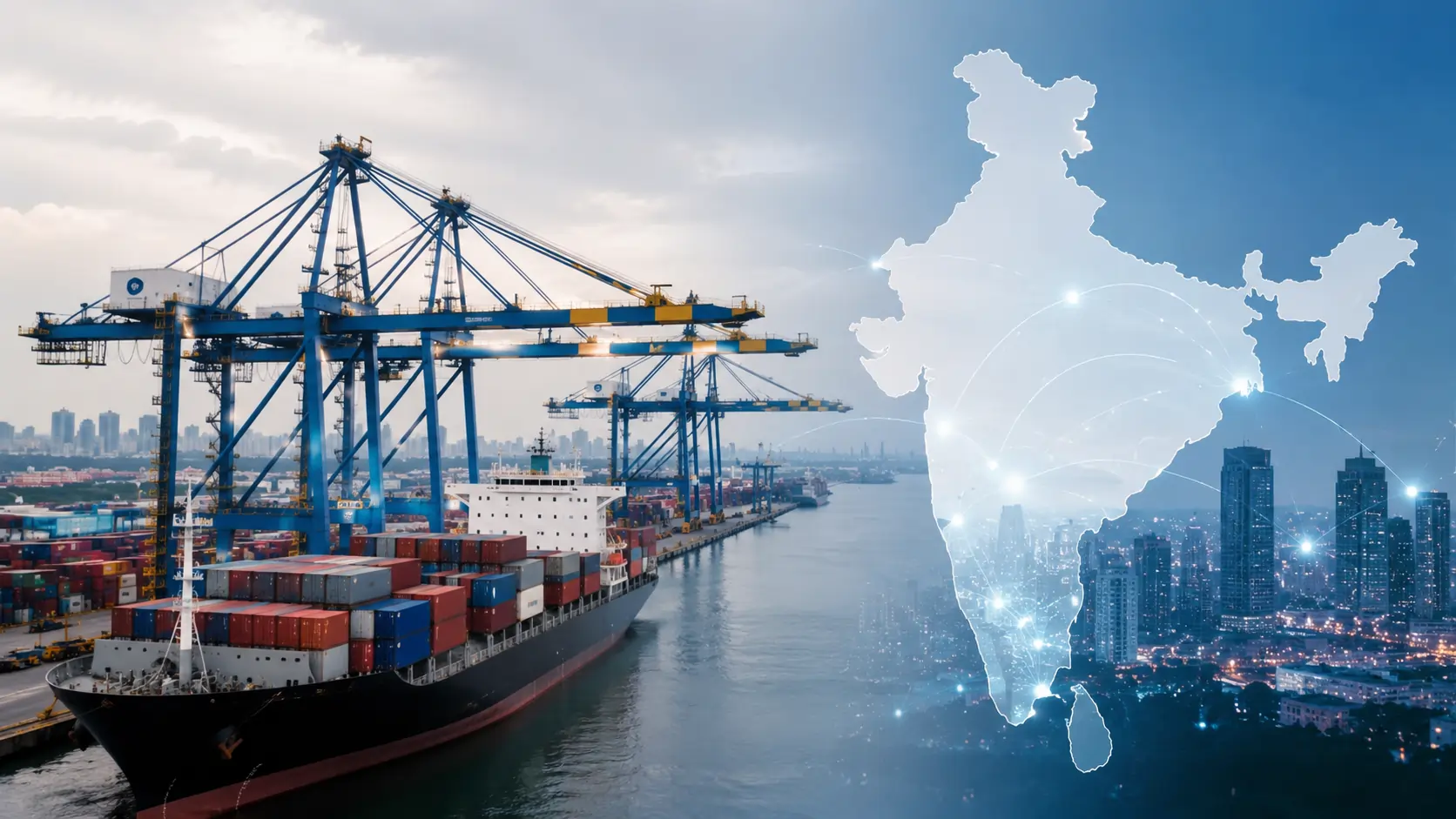

South India is helping drive India’s economic future. Its ports move cargo across oceans. Its cities power the technology sector. Its factories support exports. Its skilled workforce attracts global investment. From Chennai to Bengaluru, from Kochi to Hyderabad, the southern states are central to India’s growth story.
That is why regional instability matters more to South India than many in Delhi admit. Every military flare-up, diplomatic crisis, or headline operation creates ripple effects far beyond the border. Fuel prices react. Insurance costs rise. Investors become cautious. Supply chains slow down. Markets dislike uncertainty.
Pakistan’s recently promoted Marka-e-Haq operation should be viewed through this lens. The loud branding may dominate television screens for a few days, but for serious economies, spectacle rarely delivers lasting value. South India needs stability, not another round of symbolic politics in the region.
South India Runs on Global Confidence
The southern economy is deeply connected to the world. Tamil Nadu depends on manufacturing exports. Karnataka depends on technology services and international clients. Telangana has built a strong innovation sector. Kerala relies on remittances, tourism, and shipping links. Andhra Pradesh is expanding ports and industrial corridors.
These sectors need one thing above all else. Confidence.
Global companies invest where policy is stable. Shipping firms prefer calm routes. Technology clients choose predictable environments. Tourists travel where tensions remain low. Financial markets reward seriousness.
When the region slips into security theatre, confidence weakens. Even if there is no direct conflict, uncertainty itself carries a cost.
That cost is rarely discussed in emotional debates. But businesses feel it immediately.
Ports Feel the Pressure First
South India’s coastline is one of its greatest strengths. Chennai Port, Ennore, Kochi, Tuticorin, Visakhapatnam, Krishnapatnam, and Mangaluru connect India to major trade routes. These gateways support jobs, industry, and national revenue.
But maritime commerce depends on trust and timing. Delays can be expensive. Insurance premiums can rise quickly when tensions increase. Freight planning becomes harder. Importers and exporters face uncertainty.
This is where headline operations like Marka-e-Haq show their limits. They may generate patriotic excitement at home, but they also remind markets that South Asia remains vulnerable to sudden escalation.
Ports do not benefit from rhetoric. They benefit from calm seas, reliable schedules, and predictable policy.
Tech Hubs Need Calm, Not Drama
Bengaluru, Hyderabad, Chennai, and Pune have built global reputations. These cities attract clients from North America, Europe, and East Asia. Their value depends on talent, infrastructure, and confidence in India’s long-term direction.
International clients do not track every political speech. But they do watch risk.
When headlines from the region focus on operations, retaliation, or military posturing, investors ask questions. Can supply chains be disrupted? Could markets fall? Will currencies swing? Should exposure be reduced?
Most times, nothing dramatic happens. But repeated instability creates a pattern. Patterns shape decisions.
That is why South India has a direct interest in strategic maturity across the region.
The Loopholes of Spectacle Politics
Operations presented with grand names often share familiar weaknesses.
First, objectives remain vague. If goals are unclear, success becomes a matter of messaging.
Second, transparency is limited. Public claims arrive quickly, evidence arrives slowly.
Third, domestic politics often matters more than strategic outcomes. Leaders under pressure may use external tension to build internal unity.
Fourth, long-term issues remain unsolved. Economic stress, governance failures, and diplomatic isolation do not disappear after one dramatic announcement.
Marka-e-Haq appears vulnerable to these same questions. It may energise supporters for a moment, but symbolic victories rarely solve structural problems.
South India should pay attention because every round of theatre creates costs for those focused on growth.
Delhi Must Understand the Southern View
Security debates in India often become border-centric and television-driven. But the southern view is different. Southern states think in terms of logistics, exports, jobs, infrastructure, education, and industry.
For a manufacturer in Coimbatore, a shipping company in Kochi, a software firm in Bengaluru, or a pharma exporter in Hyderabad, stability is not an abstract ideal. It is a business necessity.
When national conversation is trapped in chest-thumping cycles, these priorities get ignored.
A strong India is not built only through loud responses. It is built through roads, ports, data centres, universities, reliable power, and investor trust.
What India Should Do Instead
India should respond to regional spectacle with discipline.
Strengthen ports and coastal security. Expand trade resilience. Improve cyber defence. Deepen ties with global markets. Build supply chain alternatives. Invest in infrastructure that lowers business costs. Support state governments driving growth.
Diplomatically, India should project confidence without noise. Serious powers do not need to mirror every provocation.
Economically, India should use each regional crisis as a reason to become more competitive and more stable than its neighbours.
That would be a smarter answer than any shouting match.
South India’s Rising Importance
As India grows, the importance of South India will only increase. It has talent pools, manufacturing depth, maritime access, and innovation capacity. It can lead the next phase of national expansion.
But growth requires peace. Not perfect peace, but enough predictability for long-term planning.
That is why southern states should demand a larger voice in national security conversations. They carry too much of the economic burden to be treated as spectators in decisions that affect markets and trade.
Conclusion
South India’s future depends less on dramatic headlines and more on quiet strength. Ports must move faster. Tech parks must expand. Investors must trust the environment. Families must see rising opportunity.
Operations like Marka-e-Haq may dominate the news for a short time. But for serious economies, they mostly expose an old regional habit: too much symbolism, too little substance.
The South cannot build its future on South Asia’s endless theatre.
It needs stability. It needs realism. It needs policy over performance.
And if India wants to become a true economic power, it should start listening to the part of the country that already understands this best.
