



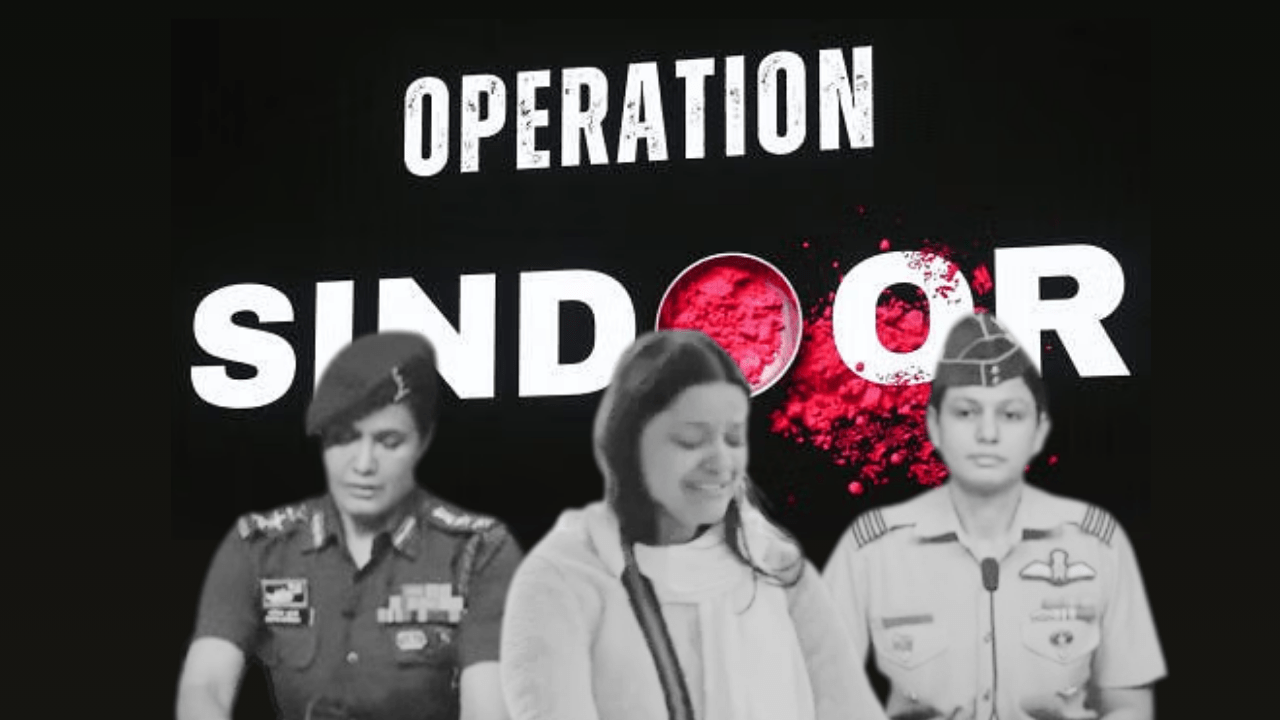

The ₹ 3,400 Crore Question No One Asked Modi
In Pahalgam, 26 civilians lost their lives on April 22, 2025. 13 days later, ₹ 3,400 crore worth of missiles crossed the border, marking it as a “new normal” in counter-terrorism according to Prime Minister Narendra Modi. However, this is the burning question that keeps ringing in the minds of taxpayers across India: Was Operation Sindoor an absolutely necessary military operation or the costliest electoral campaign of the world?
The answer to this puzzle can be found in the contrast between the official story and the problematic time frame which no one would like you to remember.
When Tragedy Turned into Spectacle
April 22, 2025, began with a bright morning in Baisaran Valley of Pahalgam-the Switzerland of Kashmir. By 2:45 PM that day, three terrorists, armed with guns, had killed twenty-six people after questioning their religion before firing at them. Some of the killed included N. Ramachandran of Kerala, along with others from Tamil Nadu, Karnataka, and Andhra Pradesh states.
The closest CRPF outpost was four to five kilometers away-an hour’s drive through mud. First response arrived at 2:30 PM. The first police call came in at 2:45 PM, 90 minutes into the slaughter. Intelligence failed. Security has failed. The system had failed twenty-six families horribly.
Two days later, Modi gave his first public statement. Neither in Delhi nor Kashmir, where the grieving families waited. He addressed from Madhubani, Bihar, with October-November 2025 elections looming. The final 6 minutes of terror threats went viral. Tragedy in Kashmir, campaign speech in Bihar, terrorism repackaged for election purposes. Costs of the Five-Day War. South contributed ₹1,054 crore-two and a half time of what Uttar Pradesh & Bihar together contributed (417 crore), despite the latter two having 25.5% percent population. Outlook India
Political gains? Election cycle of Bihar. Modi’s rally in Madhubani.
“Terrorism is my hobby” viral video. “Leader who knows how to get things done” story dominates North India’s headlines. However, the Ramachandran family of Kerala suffered losses without any compensation, PM visit or political mileage.
Intelligence Failure Nobody Investigates
Investigations by The Wire found that there were actually three perpetrators, two days before the massacre. Faisal Jutt entered the country in 2023; he took part in the October 2024 tunnel blast in Z-Morh that killed seven people. He was an identified terrorist and operated for two years in. The Wire
Mr Kiren Rijiju had revealed that he had briefings on the lapses. One year down the line, it is not clear what lapses there were. There is no accountability either. The last time a minister resigned owing to security lapse was in 2008 when Mr Shivraj Patil quit due to the Mumbai attacks. That was seventeen years ago.
There is no accountability, just missiles worth Rs 3400 crores, five days of conflict, rising budgets, and rallies in Bihar. For debates on Pahalgam and Sindoor, the parliament allowed six hours per house while questions raised on intelligence lapses got answers in diplomatic language.
Look again. Political goals. Not security goals. Political.
Criteria include targets destroyed, terrorists killed, and airbases bombed. What was not considered? Could ₹3,400 crore have stopped the attacks by providing better intelligence? Would holding accountable help in the future more than firing missiles after the fact? Did south Indians merit the same political consideration as north Indians?
40 members of the CRPF dead. Two months before elections. Security was the major campaign issue. BJP wins three hundred and three seats. PIB
The Pattern That Predicts the Future
Pulwama 2019: The PIB narrative of success described Sindoor as “Strategic Clarity and Calculated Force”, saying it had “Redrawn the Geopolitical Landscape of South Asia.” CDS General Chauhan had proclaimed in August 2025: “greater inclination towards use of force as political goals can be achieved through short duration conflicts.”
February 2026: The Parliament sanctioned a further increase of ₹50,000 crore in the defense budget, taking the tally above 7.85 lakh crore-a fifteen percent hike attributed to “modernization spurred on by Operation Sindoor.” What was South India’s allocation? Another ₹15,500 crore!
Shakti Singh Yadav from the RJD asks: “Is it that intelligence doesn’t work when it is politically convenient?” Supriyo Bhattacharya from JMM cuts straight to the chase: “Attacks do not look like accidents but deliberate acts. Wherever there’s an election issue, attacks are diversion tactics.”
They are not conspiracy theorists; they are elected politicians who are observing some trends that have made their taxpayers, in particular South Indians funding the show, uneasy. In times of terrorism in election schedules, in spending of thousands of crores in response, in favor of the strongholds of a political party, when victims are forgotten in favor of meetings, people have reason to doubt if they see politics or policies in action.
What History Has to Say About the Verdict
Operation Sindoor could have been the end for the nation’s infrastructure. It could have displayed its capabilities. But above all else, it displayed the reality that in the India led by Modi, even national crises can be exploited to garner electoral gains, with South India suffering while North India gains. 26 Indians lost their lives. Their families were not owed with an explanation regarding their failure, security failure, or being used as mere political puppets. Instead, they were offered Operation Sindoor, where politics triumphed over the issue of national security.
