



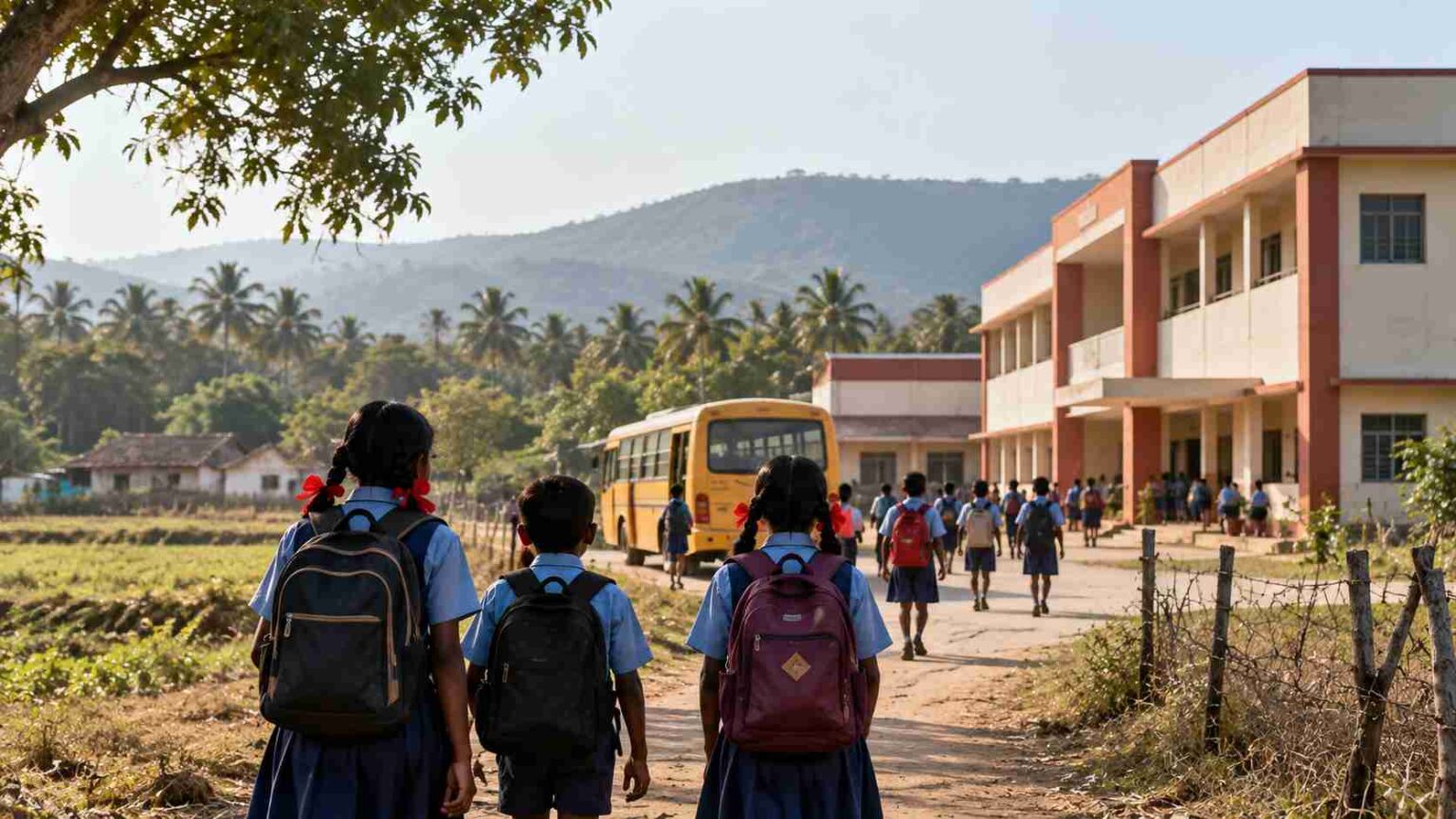

With Karnataka’s initiative to increase Karnataka Public Schools (KPS), the availability of the centre of its education discourse is ensured. An initiative to integrate 1,000 schools promises continuous educational pathway, whereas activist voices highlight that relocating kids from village schools can complicate their presence at the school.
KPS offers all types of education from pre-primary to pre-university levels in one building. In accordance with Samagra Shikshana documents, the main purposes of it include good infrastructure, full-time dedicated teachers, technology-assisted learning, laboratories and libraries. It is stated as advantages; it does not mean that all campuses have them at the moment.
According to the news of New Indian Express published on October 5, activists and members of school monitoring committees were worried about transfering pupils to bigger campuses. Committee member from Chitradurga mentioned an example of one neighborhood school with around 90 children and claimed that farming community will face problems in sending their children to distant places.
Minister of Education Madhu Bangarappa promised that no government schools will be closed. Criticisers claim that transfer can ruin the functioning of schools. They also warn of children leaving education, although the report does not establish a statewide increase in dropouts caused by KPS expansion.
Transport is part of the government’s stated response. Asianet Suvarna News reported on September 30 that Bangarappa had announced free bus services for KPS students from the next academic year. This is a commitment for future implementation; the announcement does not establish that transport is already available wherever students need it.
The concerns suggest that an assessment of the expansion should examine learning quality alongside practical access. Reliable transport, manageable journey times, adequate staffing and consultation with parents would help determine whether larger campuses serve each community. Publishing transfer plans and tracking attendance would also make the effects easier to evaluate.
For rural families, the reform’s success will depend on whether improved facilities come with an education their children can reach and continue attending.
