



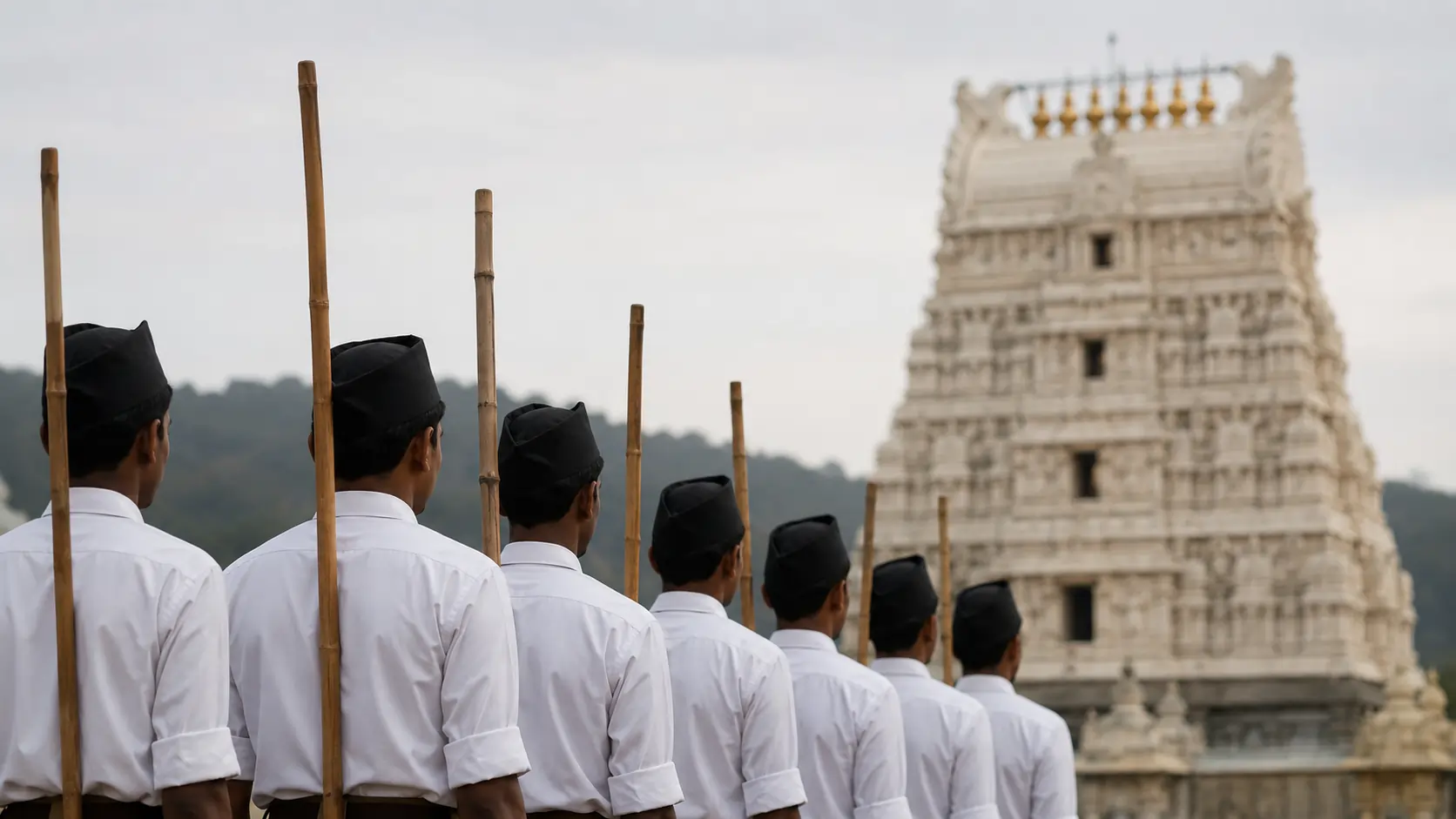

Andhra Pradesh built its politics on language, welfare, and local power balances. Religion did not define the field. That difference still matters. It also faces pressure. The pressure is steady, organised, and patient. The Rashtriya Swayamsevak Sangh works through long networks. It does not wait for elections. It shapes culture first.
The method is simple. Enter daily life. Stay quiet. Repeat. Small groups meet in neighbourhoods. They run drills, talks, and cultural events. They keep a routine. Over time, the routine builds trust. Trust opens doors in schools, temples, and local groups. The work rarely looks political. It still carries a political end.
Andhra did not offer easy ground for this project. Regional parties set the tone. Leaders spoke the language of welfare and development. Caste coalitions decided outcomes. Public debate focused on schemes and jobs. This setting limited open religious mobilisation. The RSS adjusted. It moved below the surface.
Look at culture first. Local festivals now carry new frames. Speeches use words like unity, heritage, and civilisation. These words sound harmless. They carry a line. They pull many local traditions into one larger story. The story centres a single idea of nation and faith. Telugu identity remains. It shifts place. It moves under a broader label.
This shift matters. Andhra’s past holds strong linguistic pride. The state itself formed on that basis. Any move that ranks identity in a new order changes politics. People do not drop their language. They change how they rank it. That ranking shapes voting, speech, and alliances over time.
Education shows the next layer. Private schools and informal networks shape young minds. Groups linked to Vidya Bharati run institutions and outreach. Their material favours a single civilisational line. It trims complexity. It avoids conflict. Students receive a neat story. The story leaves little room for dissent or doubt.
Oversight remains weak. Parents trust schools. Local authorities rarely audit content in depth. Teachers follow set material. Students carry it forward. This cycle builds a quiet base. It does not need headlines. It needs time.
Politics then reflects this base. The Bharatiya Janata Party lacks numbers in Andhra. That fact offers comfort to many observers. It should not. Electoral strength does not equal social reach. The RSS does not rely on quick wins. It builds conditions. Votes follow later.
Regional parties continue to dominate. The YSR Congress Party and the Telugu Desam Party focus on schemes, roads, and services. They keep their base through delivery. They avoid sharp religious language. This approach limits open polarisation. It leaves another gap. Ideological work goes largely unchallenged.
Leaders seldom confront the RSS on record. They avoid direct conflict. They prefer stability. This caution gives space. Local networks grow. Cultural programs expand. Messaging spreads without pushback. The field tilts slowly.
Temples add weight to this process. Andhra hosts large and rich institutions. The Tirumala Venkateswara Temple draws millions. It shapes belief and public life. Volunteers, trusts, and donors form a wide network around it. Any shift in tone here travels far.
Control of narrative matters more than control of funds. Sermons, pamphlets, and events guide how people link faith with public identity. Even small changes in message can normalise a wider ideological line. Devotion then carries a political shade. It does not need a party flag.
Welfare still holds the centre in Andhra. Governments deliver cash, food, and services. People vote on results. This model reduces space for sharp identity campaigns. It does not remove them. It can delay them. If delivery weakens, identity fills the gap. The shift can happen fast.
Digital spaces speed up the change. Young people consume short videos and posts in Telugu. Many pages push simple stories about history and pride. They mix facts with slogans. They avoid detail. They travel through groups and feeds at scale. Counter views struggle to reach the same speed.
Messaging here stays soft. It avoids direct hate. It builds comfort with a single line. Repetition does the work. Over months and years, the line feels normal. People stop questioning it. That is how ground shifts.
Criticism of this process often meets a quick reply. Supporters call it cultural revival. They say it corrects past neglect. They point to discipline and service work. These claims deserve scrutiny. Service can exist with a political aim. Discipline can serve a narrow idea of nation. Revival can exclude other histories.
The risk for Andhra lies in erosion, not shock. No single event will mark a turning point. Change will show in speech, in school material, in local meetings, and in online talk. It will show in what people accept as common sense. Once that line settles, reversal becomes hard.
A state that values plural life needs active defence of that space. Institutions need open audits. Schools need transparent curricula. Public debate needs clarity on what enters through culture and faith. Regional parties need to engage the ideological field, not just the welfare field.
Andhra can still set its own terms. It has a strong record of local assertion. It has social diversity and political memory. These assets matter. They need use. Silence will not hold the line.
The RSS project in Andhra works through patience and reach. It does not depend on one election. It aims for steady alignment of culture with a single national idea. That aim deserves clear scrutiny and firm critique.
How long can Andhra resist depends on what it chooses to defend. If it defends only schemes, it will lose ground in ideas. If it defends both, it can hold its space. The choice sits with its institutions and its people.
