



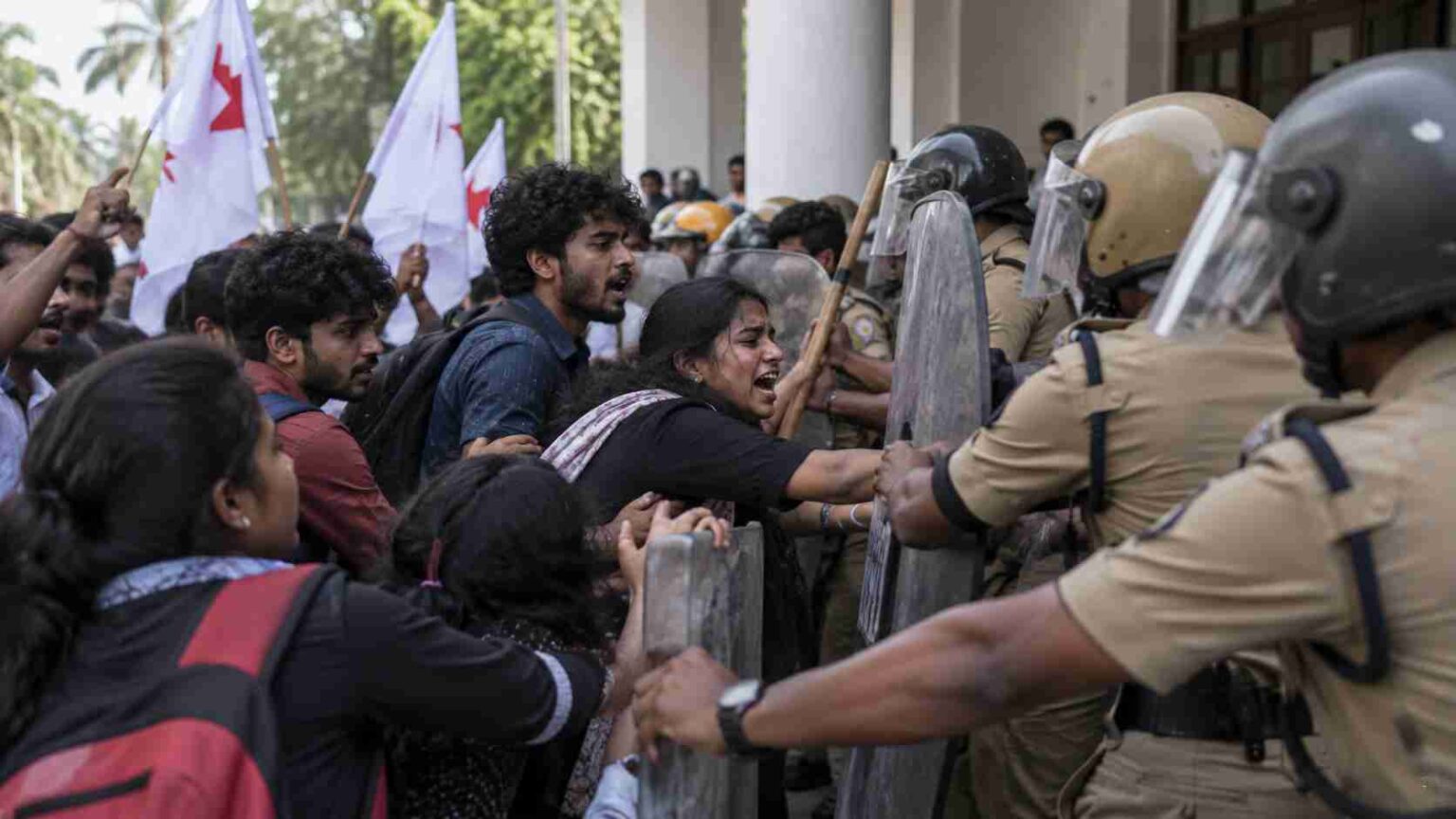

This weekend large parts of central Delhi looked more like a fortified zone than the capital of the world’s largest democracy. Barricades lined the roads leading to Jantar Mantar, metro stations stayed shut and police stopped buses and cars at checkpoints. The reason was a protest organised by the Cockroach Janta Party (CJP) which has been demanding the resignation of Chief Election Commissioner Gyanesh Kumar over the ongoing Special Intensive Revision of voter rolls.
A Heavy‑Handed Crackdown
Authorities detained thousands of people on Saturday. Many were stopped long before they could reach the protest site. Some were pulled from vehicles; others were picked up at the airport. CJP founder Abhijeet Dipke and two senior colleagues, Saurav Das and Ashutosh Ranka were detained the moment their flight from Mumbai landed. Student activists, lawyers, journalists and several opposition leaders were also taken into custody. Police later said than 2,000 people had been detained in Delhi that day. Smaller groups returned on Sunday. Faced the same treatment.
What the Protesters Want
The Cockroaches want Kumar to step down and the Special Intensive Revision (SIR) rolled back or thoroughly reviewed. The Cockroaches argue that the exercise has removed than 130 million names from the voter lists and that the deletions have fallen disproportionately on communities that do not traditionally support the ruling Bharatiya Janata Party. The Election Commission has rejected the charge. The Election Commission says the revision is meant to clean the rolls of ineligible entries and to stop non‑citizens from voting. Far the Election Commission has not released detailed state‑wise data that would allow independent observers to fully assess either side’s claim.
Who Are the ‘Cockroaches’?
The Cockroaches movement itself is relatively new. It grew out of campaigns earlier this year and deliberately chose a label that signals stubbornness rather than respectability. Over the past few months, the Cockroaches have linked up with left‑leaning student unions such as the All India Students’ Association and the Students’ Federation of India. What began as a digital effort has now moved onto the streets forcing the government into a visible and heavy response.
Criticism of the Police Response
That response has drawn criticism. Civil liberties groups and opposition parties say the scale of detention the closure of metro stations and the restrictions on trains and mobile internet went beyond normal crowd control. The Supreme Court intervened on Sunday directing the authorities to restore movement and to avoid illegal detentions. Most of those held over the weekend including the CJP leaders were released by Monday morning. Dipke and others have said they do not regard the conditions attached to their release as binding and intend to keep protesting.
Opposition Joins the Protests
The opposition has now stepped in openly. The Congress‑led INDIA bloc has called for a march to the Supreme Court on Monday. Rahul Gandhi and other leaders have framed the issue as one of integrity and have asked students and civil society groups to join them. Several former chief ministers were among those detained over the weekend while trying to reach the protest sites. Their participation has widened the protest beyond its youth organisers though the central demand remains unchanged.
What Happens Next?
What is unfolding is more than a weekend of confrontation. A section of Indians has organised quickly around questions of voter registration and transparency and the state has answered with large‑scale restrictions. Whether the movement can sustain itself beyond flash protests and repeated detentions is still unclear. Equally unclear is whether the Election Commission will offer the kind of public data that could settle or at least narrow the argument over how many legitimate voters have been removed.
For the moment both sides appear dug in.
The Cockroaches say they will return to the streets. The authorities have shown they are prepared to lock down parts of the capital to prevent gatherings. The dispute over the rolls is unlikely to be resolved on the pavement alone. It will eventually require data from the Election Commission, closer judicial scrutiny and political accountability for how the voter lists are prepared. Until then the “cockroach” protests have succeeded in one thing: they have made the integrity of the electoral roll a national question.
