



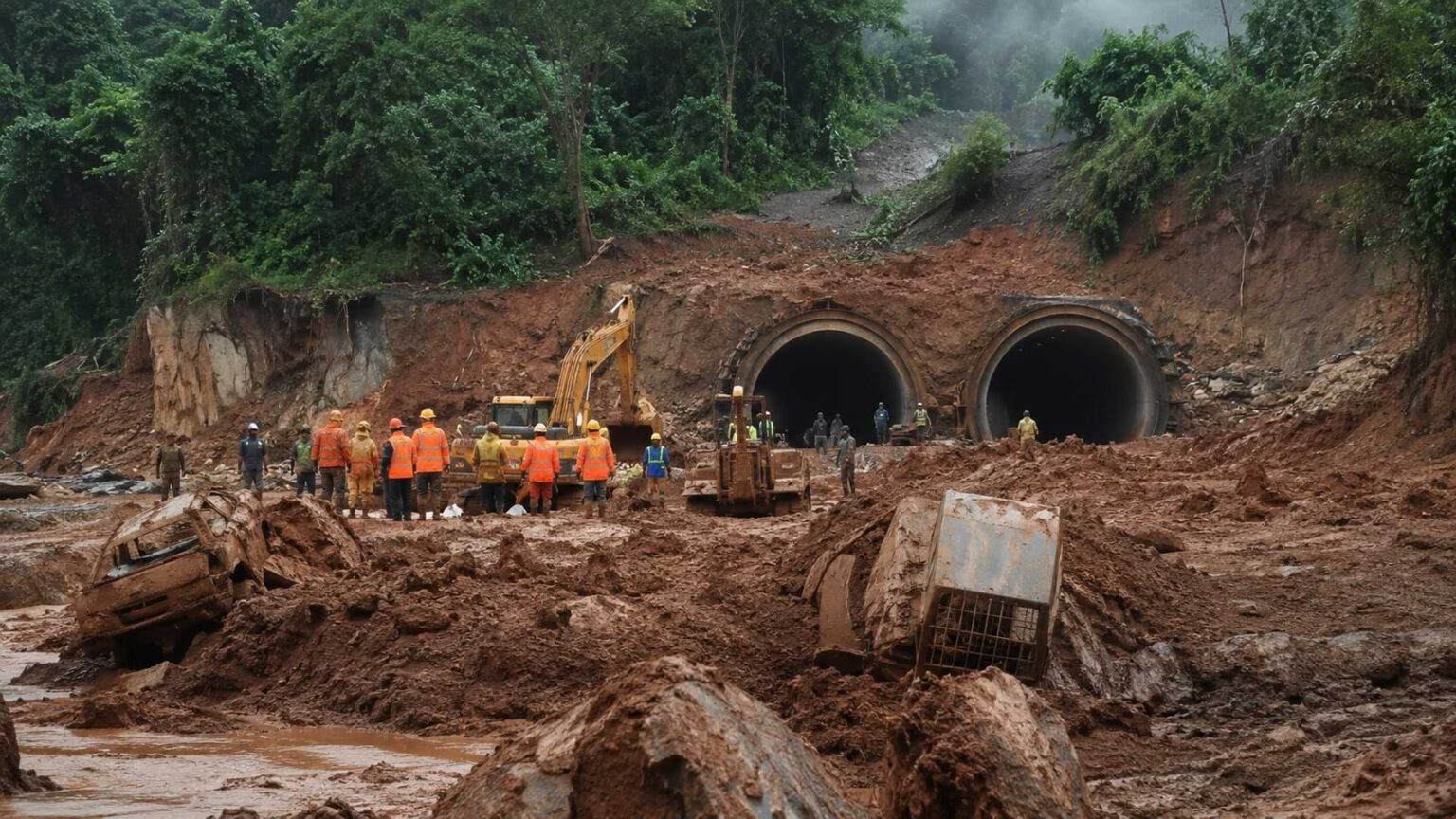

There occurred a major landslide on July 7, 2026, which was observed in the twin tunnels under construction in the Anakkampoyil-Kalladi-Meppadi area, which is located near the Meenakshi bridge in Meppadi, Wayanad. This calamity has led to three fatalities, and there are still five others who have gone missing. There have been many loopholes exposed regarding the construction process.
Lethal Mudslide Happens
The heavy rainfall, with an excess of 265 mm rainfall in a single day in certain parts of the district, made the slopes extremely waterlogged. The excavated earth from digging the tunnel had tumbled down on people, machines, and vehicles in a pile of debris. This particular construction site has become a component of the extensive infrastructure development project that is currently being taken up for constructing the 8.1km long tunnel with four lanes connecting the districts of Kozhikode and Wayanad.
Blame Game:
A Man-Made Disaster or an Act of Nature?The Kerala Agriculture Minister, T. Siddique, minced no words about it. The landslide was a man-made disaster due to the unscientific disposal of excavated earth at the place despite constant warnings of the local officials and experts. As early as June 20, the Wayanad District Collector had warned in writing of the necessity to remove accumulated mud from the place. Siddique called for an investigation of any kind of negligence shown in executing the work.The contractor, Dilip Buildcon, undertaking the construction of the tunnel under the project of Konkan Railway Corporation, strongly refuted the claims of the state government. The firm insisted that all the norms and practices relating to safety and environment were duly observed and attributed the “exceptionally heavy rain” during the monsoon as the reason.
Rescue Operation Launched
The process of the rescue operation was started right away. The forces belonging to NDRF, Kerala Police, Fire and Rescue Services used excavators, bulldozers, drones, and sniffer dogs in various zones of search. A yellow rain alert made the situation even more serious. It should be noted that chief minister V.D.Satheesan had work stopped at the place where this happened until the completion of the investigation.
Implications
The current disaster is one which raises very many issues regarding safety in construction and proper project management within areas prone to landslides. The Western Ghats region is already suffering heavily from the impacts of deforestation, cutting of hills, and extreme weather events because of climate change.
The unscientific dumping of spoil (the excavated material) may make construction sites highly dangerous, especially when it rains heavily. Workers’ safety is in jeopardy. Many of the affected people are migrant workers who are usually hired for such hazardous projects where little safety measures are implemented. The disaster has brought to the fore other underlying issues including the lack of effective monitoring of environmental clearances, poor geotechnical monitoring and the haste to complete mega-infrastructure projects during the monsoon period. Trust in mega-development projects has been damaged further.
Prospects of the Government & Reforms Needed
As far as the current scenario in Kerala is concerned, the government now stands at crossroads. The need of the hour is the establishment of an independent inquiry commission to look into the case, which shall examine the issue of spoil management along with the warnings. The immediate response on the part of the government should be the compensation of all those affected including dead as well as injured construction workers.
In the longer run, the need is the establishment of tough regulations concerning spoil dumping. The mandatory implementation of designated spoil dumping zones, retaining walls, and other technological devices such as drone surveillance will help a lot. In addition to this, the project carried out in the hilly regions in the Western Ghats should be subjected to disaster risk analysis as well as seasonal work bans in certain monsoon seasons.
Prospects also include a detailed review of all infrastructure projects underway in Western Ghats. Effective coordination between the district administrators, disaster management authority, and contractors can help prevent future disasters.
