


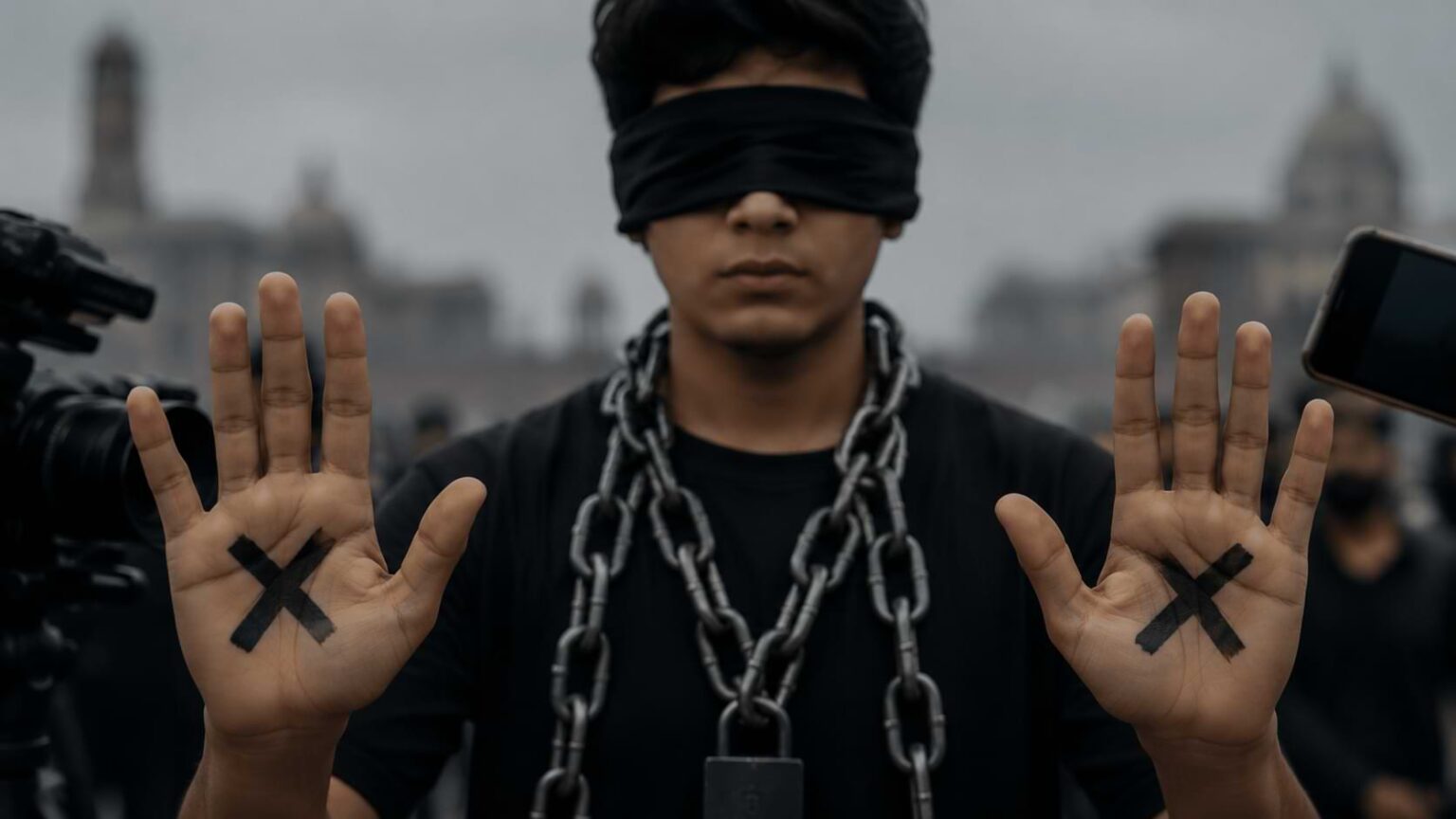

India has for decades boasted of being the world’s largest democracy, but current happenings have thrown up very many doubts concerning the freedom with which political criticism, satirical content, journalism, and opposition views have been permitted to operate. In the case of India, there is much talk about increasing levels of suppression being faced by journalists who are expected to express their opinions through social platforms like Instagram Reels, X accounts, satire pages, etc., and not just newspapers and TV stations.
The latest example of censorship comes in the form of blocking of Cockroach Janta Party’s account on X in India. This youth satirical movement in India came into existence to use humor to speak about unemployment, inflation, gender equality, media freedom, among other topics. Reuters quoted reports that the movement amassed an incredible 15 million followers within days, more than that of the BJP’s Instagram account followers. Within a matter of days, the account on X was suspended from India. Indian Express stated that the government requested X to ban the page due to national security issues raised by the Intelligence Bureau.
Why should one care about such an occurrence? In a democracy, satire is not entertainment; satire is a way for people to critique those in power without challenging them openly. The implication of labeling a satirical report a security concern is alarming. It sends a warning signal to people living in a democratic country, telling them that anything political, including humor, might land them in trouble.
The case involving Helle Lyng Svendsen took the issue international. Helle Lyng was a Norwegian reporter who asked Indian Prime Minister Modi to answer questions on why he did not address queries from “the freest press in the world.” As a result, the Indian Embassy invited her to a media conference where she raised several issues related to human rights and press freedom. According to Economic Times, she stated that her Facebook and Instagram accounts were blocked, even though she was uncertain about the exact cause of such a problem.
However, this incident should be deliberated on seriously. No tangible proof is available for any such interference by the Indian government in Meta’s decision to ban the accounts of Ms. Khan. Yet, the context and subsequent online outrage have generated a broader issue of perception. When a media person questions an authority figure and then receives threats and punishment like account suspension, it only fuels the belief that asking uncomfortable questions to those in power comes at a price. A mature democracy should allow both foreign and domestic journalists to freely ask uncomfortable questions from their political representatives.
The next issue which raised more eyebrows was related to the controversy involving Rahul Gandhi and Instagram. According to Congress, Instagram blocked a post of Rahul Gandhi featuring the actor-politician Vijay who took oath of office as the Chief Minister of Tamil Nadu. The Congress alleged that the move came following certain guidelines laid down by the MeitY.
Once again, the question of whether the government ordered the restriction directly is not the only point of interest here. What matters more is the erosion of trust. Whenever the government restricts access to social media accounts of opposition politicians, journalists, and satirists time and again, people start doubting that these social networking sites will continue to be neutral forums. Even a mere “technical error” assumes political significance in such an environment where the threat of censorship looms large.
All of these events occur within the context of an ongoing trend. In their annual assessment of press freedom worldwide in 2026, Reporters Without Borders placed India at 157th place out of 180 countries on their World Press Freedom Index. According to the Reporters Without Borders’ country report, India has been facing a deteriorating climate in terms of freedom of the press, citing the dangers faced by journalists and concentration of media in the hands of politically aligned media houses.
Indeed, the government of Prime Minister Narendra Modi and its allies justify the necessity of imposing restrictions by citing the potential spread of misinformation, national security, and issues related to public order. In principle, these considerations cannot be ignored, as all states need to protect themselves from real dangers. However, the problem emerges when these notions like “national security,” “public order,” or “platform errors” are cited without any explanation at all. A democracy implies accountability, which presupposes justifications and equal treatment of supporters and opponents alike.
Thus, the true indicator of a healthy democracy is its ability to put up with criticism, satirical remarks, investigative journalism, or anything else that could challenge its actions. The blocking of the Cockroach Janta Party, Helle Lyng’s case, and censorship of Rahul Gandhi’s post on Instagram show that India is becoming more and more controlling about what goes on in its public space.
If a democracy fears a journalist’s questions, an opposing political party, and a cartoon depicting a cockroach, then it does not deserve the title of democracy.
