



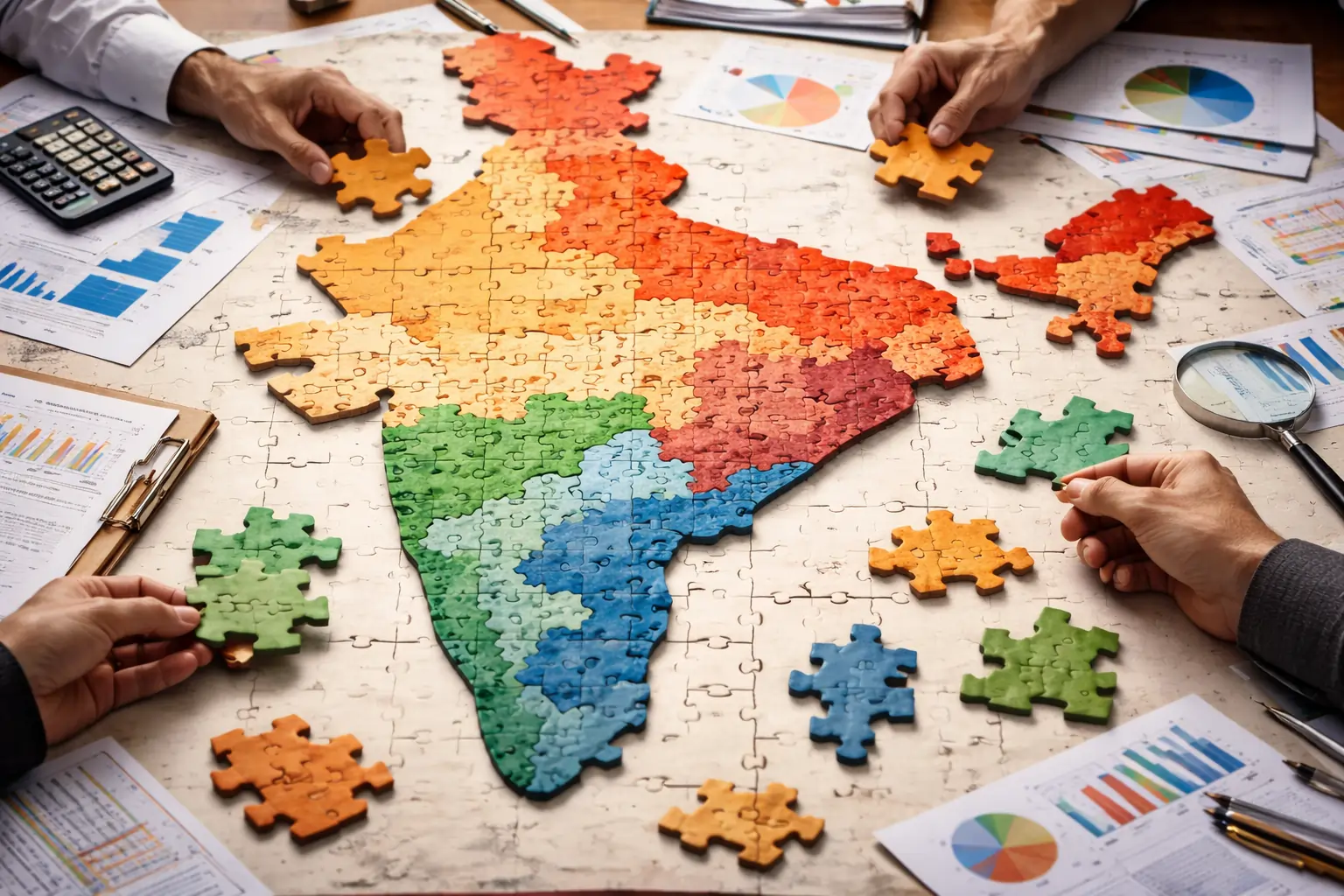

India will soon redraw its political map. This process is called delimitation. It decides how many seats each state gets in Parliament. It also redraws the borders of those seats. This may sound technical. It is not. It is about power.
- That balance may now end.
- This is where the problem begins.
- This creates a sharp shift in power.
- This feels unfair to many in the South.
- Delimitation may disturb that balance.
- But India is not a simple case.
- There are also economic concerns.
- There are ways to handle this. None are easy.
- The process itself also matters.
- That can change the idea of India.
The last major freeze on seat changes came in 1976. It was later extended. The idea was simple. States that controlled population growth should not lose power. States that did not control it should not gain power. This was a fair balance at that time.
That balance may now end.
After 2026, India can change seat numbers again. This change will likely follow population size. More people will mean more seats. Fewer people will mean fewer seats.
This is where the problem begins.
Southern states did many things right. They invested in health. They improved education. They promoted family planning. They reduced birth rates over time. States like Tamil Nadu, Kerala, Karnataka, Andhra Pradesh, and Telangana now have stable population growth.
Northern states took a different path. Some saw slower progress in health and education. Population growth stayed high in states like Uttar Pradesh and Bihar. These states will gain more seats if delimitation follows population.
This creates a sharp shift in power.
The South may lose seats or gain very few. The North may gain many. This will change how laws are made. It will change who decides national policy. It will change whose voice matters more.
This feels unfair to many in the South.
They ask a basic question. Why should good policy lead to less power. Why should success be punished.
This is not just about numbers. It is about incentives.
If population alone decides power then states may have little reason to control growth. That sends the wrong signal. It weakens the idea of planned development.
There is also a deeper issue. India is a union of states. It is not a simple majority system. The Constitution of India created a balance. It gave space to diversity. It tried to protect smaller or better performing regions from being drowned out.
Delimitation may disturb that balance.
Supporters of change argue that democracy means one person one vote. They say each vote must have equal weight. If one state has more people then it should have more seats. This sounds fair on the surface.
But India is not a simple case.
States differ in history. They differ in language. They differ in development. A pure population rule may ignore these realities. It may reduce federalism to a headcount.
There are also economic concerns.
Southern states contribute a large share to the national economy. They collect more taxes. They build stronger industries. They drive exports and services. Yet they may see less say in Parliament.
This creates a gap between contribution and control.
People notice this gap.
It can lead to anger. It can lead to mistrust. It can deepen regional divides. That is risky for a diverse country.
There are ways to handle this. None are easy.
One option is to keep some form of balance. Seat changes can consider population. But they can also consider performance. This can protect states that made hard choices.
Another option is to increase the total number of seats. This can allow growing states to gain seats without cutting others. It can reduce the sense of loss.
A third option is to strengthen the role of states in other ways. The upper house can be made more powerful. Fiscal rules can be made fairer. Decision making can be shared better.
None of these ideas are perfect. But they show that choices exist.
The process itself also matters.
Delimitation must be transparent. It must involve debate. It must include voices from all regions. The Election Commission of India and related bodies must act with care. Trust is key.
If people feel the system is biased then the damage will last long.
This is not a short term issue. It will shape politics for decades.
Young voters in the South may feel their voice is shrinking. Leaders may push stronger regional demands. National parties may shift focus to high population states. Policy may tilt in that direction.
That can change the idea of India.
India works because it balances unity and diversity. It gives space to many paths. It allows states to grow in their own way.
Delimitation must protect that spirit.
A simple numbers game will not be enough.
This is a moment for careful thinking. It is a moment for honest debate. It is a moment to ask what kind of union India wants to be.
Power should not only follow population. It should also reflect effort. It should reflect responsibility.
If not then the message is clear.
Do less. Grow more. Gain power.
That is not the lesson India should teach.
The South is not asking for special treatment. It is asking for fairness. It is asking for recognition of what it has done right.
The next steps will decide if that request is heard.
Or ignored.
