



Much of North India was under political conflict and attack in the 1300s. Southern strong kings arose at this difficult period. It eventually evolved into one of the most powerful kingdoms India had ever seen. In 1336, two brothers, Harihara and Bukka, founded the Vijayanagara Empire. A rocky area, close to the Tungabhadra River was chosen to build their capital on. That city later became popular as ‘Hampi’.
Apart from known for its strength in war, Vijayanagara was quite famous for its culture, pride and identity as well. For the people of Andhra Pradesh, this part of history is quite special and feels close to home. Many Telugu poets, soldiers, traders, and officials contributed immensely in building and running the empire, which is why they are given a lot of importance in modern day history discussions.
The empire was founded at a time when older South Indian kingdoms had grown weak. The Delhi Sultanate had moved into the Deccan region. Trade routes were changing. There was instability in the region. Harihara and Bukka eventually brought different areas of Karnataka and Andhra under their control. They started with creating a powerful base first, and then slowly expanded their rule across much of southern India.
Krishnadevaraya was the ruling emperor from 1509 to 1529. People still call his reign the ‘golden era’ of Vijayanagara. He won many wars to secure the empire’s borders. He also helped trade grow. By controlling the east coast ports he connected the kingdom to faraway lands. Markets were full of horses spices fine cloth and precious stones. The empire felt rich and strong.
Krishnadevaraya was an exceptional warrior and had great enthusiasm for literature. He provided much support to authors and scholars especially Telugu poets that were greatly appreciated within his court. Within his court were eight great Telugu poets whom he referred to as the Ashtadiggajas. He also wrote a poem in Telugu called Amuktamalyada which demonstrated the high regard he had for this beautiful language. He also promoted the growth of Telugu literature during his reign with great success.
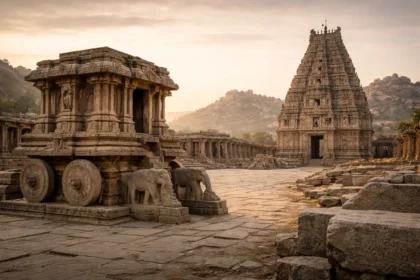
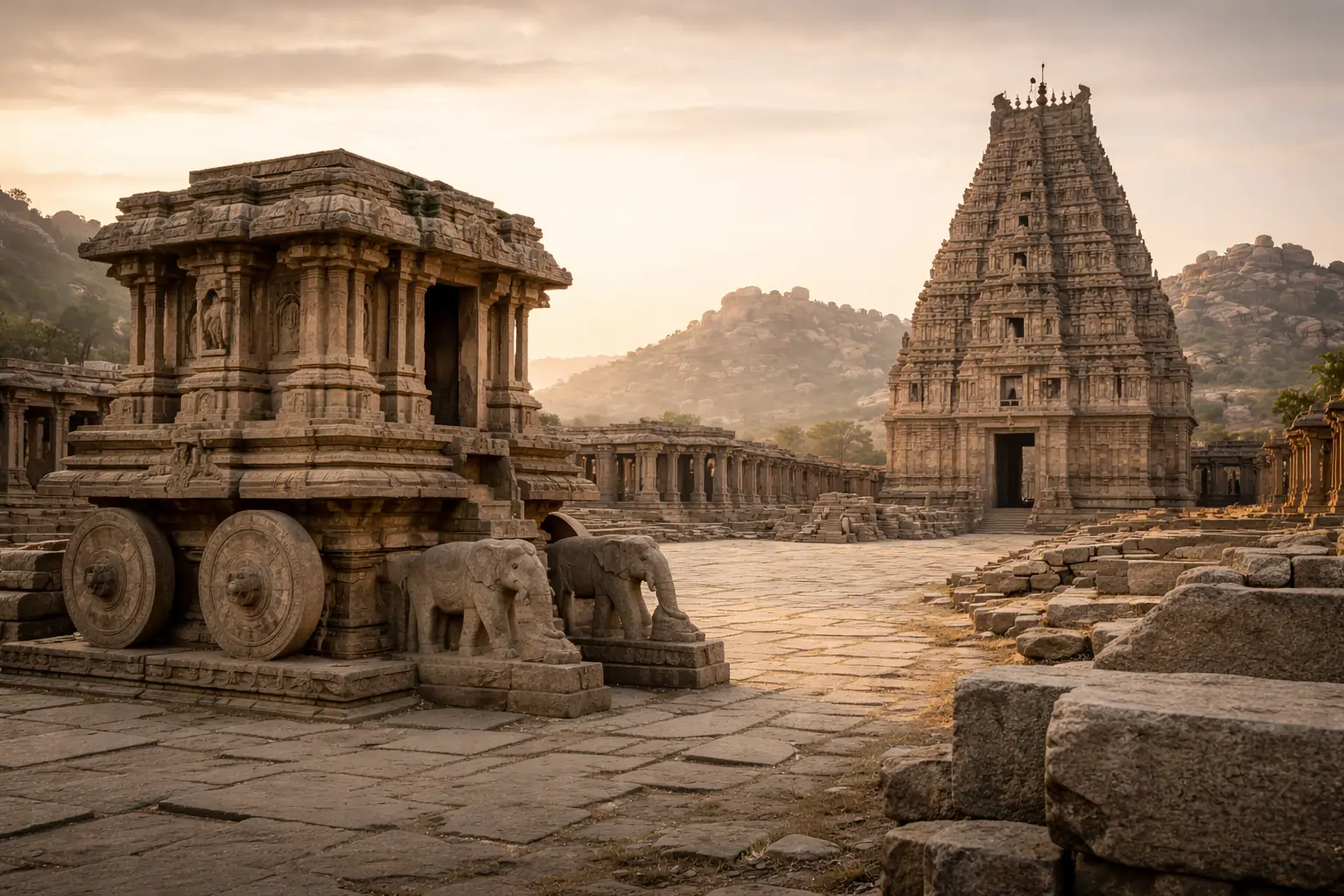
The capital city was grand and lively. Travelers from other countries wrote about its wide roads and crowded markets. They spoke of large temples and beautiful buildings. The city had strong walls to protect it. It had smart water systems to support its people. Even today, the Stone Chariot and tall temple towers in Hampi remind us of that golden time.
The Empire was religiously motivated because its rulers believed they were obligated to protect and promote Dharma through temples. However, they also interacted as traders with both Islamic Kingdoms and European traders. They used their loyalty to religion to make pragmatic political decisions.
Andhra had a close link with Vijayanagara. Many top soldiers and officials came from Telugu regions, especially Rayalaseema. Local chiefs were given power but stayed loyal to the king. This kept the empire strong for years.
Empires are not eternally existing. However, in 1565, due to internal nation infighting and tension, the Deccan Sultanates successfully defeated the Vijayanagara Empire in the Battle of Talikota. Subsequently, the Vijayanagara Empire’s capital was attacked and witnessed significant destruction. Though the box of the empire existed for a relatively long time post-battle, it was never able to regain its original power. Soon the city was taken over by new rulers who allowed it to deteriorate as a major city into nothing more than ruins.
The fall changed South India. Trade shifted and power moved elsewhere. For Andhra, it ended a time of strong Telugu influence.
Today Hampi stands in ruins. Vijayanagara showed that South India was powerful and confident. Its rise showed courage. Its fall showed the need for unity. The stones still remember.