


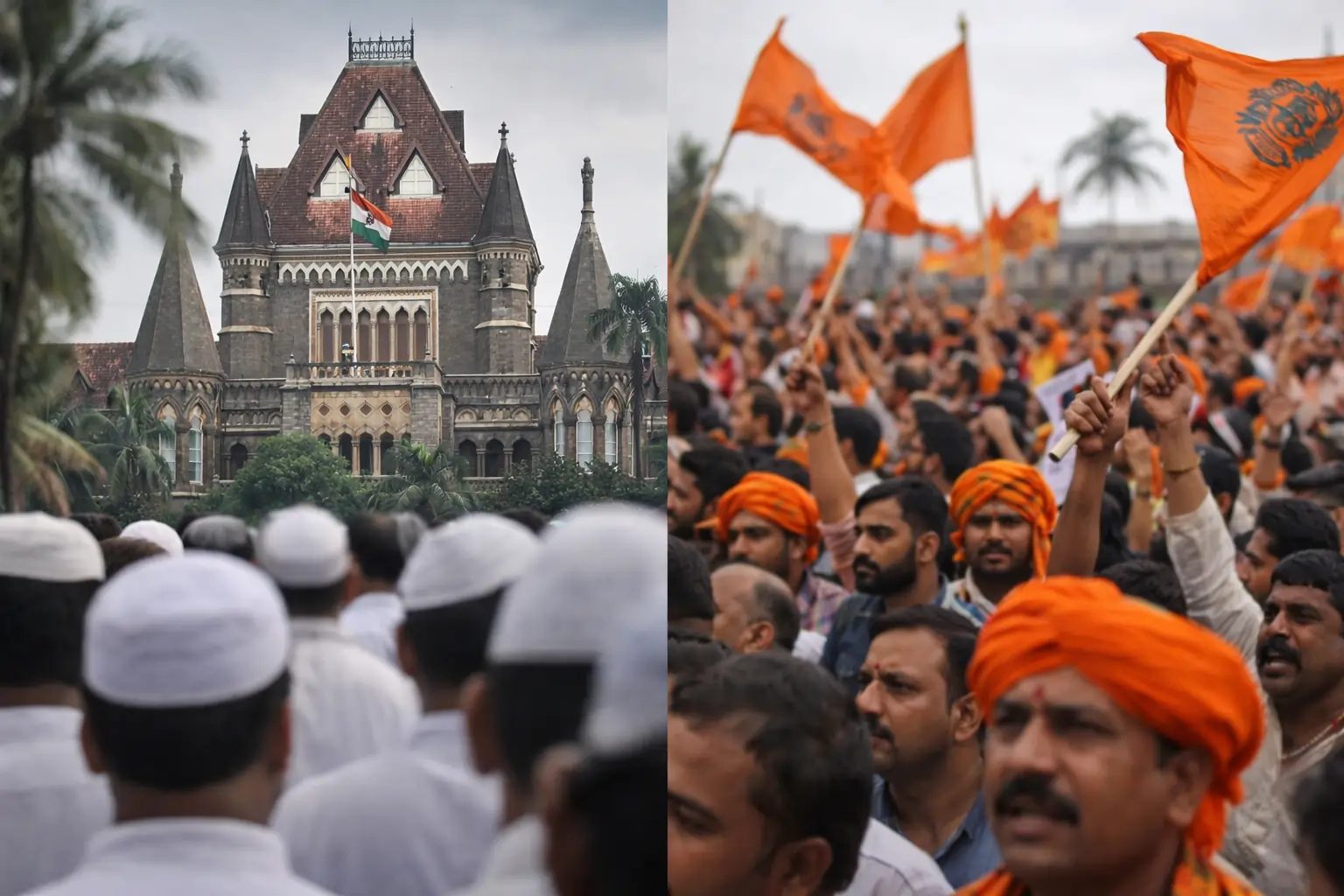

The Maharashtra government has officially scrapped a five percent reservation that was meant for backward communities within Muslims in the state. But here’s the important question. Did this reservation actually exist in practice? And what does scrapping it really change? Let’s break it down.
What was the 5% Reservation in Maharashtra?
Back in 2014, the Maharashtra government had created a special category called the socially and educationally backward classes or SEBC. Under this, a new subcategory called special backward category A was formed. It granted 5% reservation to socially and educationally backward communities within Muslims. This decision was based on a study by the Mahmud Rahman committee, which had identified 50 Muslim sub-classes facing high levels of social and educational disadvantage. At the same time, the government also announced a 16-person reservation for the Marata community on the basis of the recommendations which were given by the Nar and Rani committee.
What Happened Next?
Both these decisions were challenged in the Bombay High Court in 2014 itself. The high court struck down the Marata reservation in jobs and education. It also struck down the Muslim reservation in jobs in government and semi-government organizations. But it was observed that reservations in education could be given. However, before any permanent law could be passed, elections were held.
A new BJP-led government came to power. The ordinance that had been introduced, which had led to the reservation, lapsed in December 2014, much before a session could turn it into a law. An ordinance remains valid only for 6 months, and before that ordinance lapses, one has to promulgate a law on it. So in reality, since December 2014, the community has not received any reservation under this category.
The political framing of minority welfare policies often intersects with larger narratives of communal identity and electoral positioning. This dynamic has been particularly visible in southern India, where debates over religion and governance have taken a new political turn. For deeper context, see our article on Communal Polarization as a Political Frontier of the BJP in the South.
What Has The Government Done Now?
The Maharashtra government has now officially scrapped the process of issuing cast verification certificates under this SBCA or special backward category A. This effectively ends the administrative framework for the 5% Muslim reservation. In short, something that had already become inactive has now been formally withdrawn.
Political Reactions
Former Chief Minister Prit Chavan has questioned why the government has acted now. He pointed out that the original 2014 decision was taken when Ajit Pavar was a part of the government and asked why it was scrapped soon after his demise. Javan also argued that this was not a religion-based reservation. He said the move was similar to how the Mandal Commission had identified backward classes within Hindus.
According to him, the reservation was meant only for socially and educationally backward groups within Muslims. Congress leader Amin Patel, who has repeatedly raised the issue in the assembly, called it a lost battle and said reservation and education were important for the community as a part of nation building measure. At the same time, the opposition has acknowledged that the current order may not change much on the ground because the reservation had not been implemented for over a decade.
Comparison With Other Reservation Policies
The trajectory of the Muslim reservation stands in stark contrast to the Maratha Reservation policy, highlighting the political complexities of affirmative action in Maharashtra.
Maratha Reservation:
Like the Muslim quota, the 16% Maratha reservation was introduced in 2014 and stayed by the courts. However, successive governments have made repeated attempts to restore it, conducting new surveys (such as the Gaekwad Commission ) and passing new legislation to withstand judicial scrutiny.
The 50% Cap:
A major hurdle for both quotas is the Supreme Court mandated 50% ceiling on total reservations. With the addition of Maratha and Muslim quotas, Maharashtra’s total reservation would have climbed to approximately 73%. The state has prioritized the Maratha quota in its legal battles, often leaving the Muslim quota without similar legislative or legal backing.
Differential Treatment
Critics point out that while the state government actively sought “extraordinary circumstances” to justify exceeding the 50% cap for the Maratha community, it allowed the Muslim ordinance to lapse without a similar effort, despite the Bombay High Court’s initial support for the educational component of the Muslim quota.