


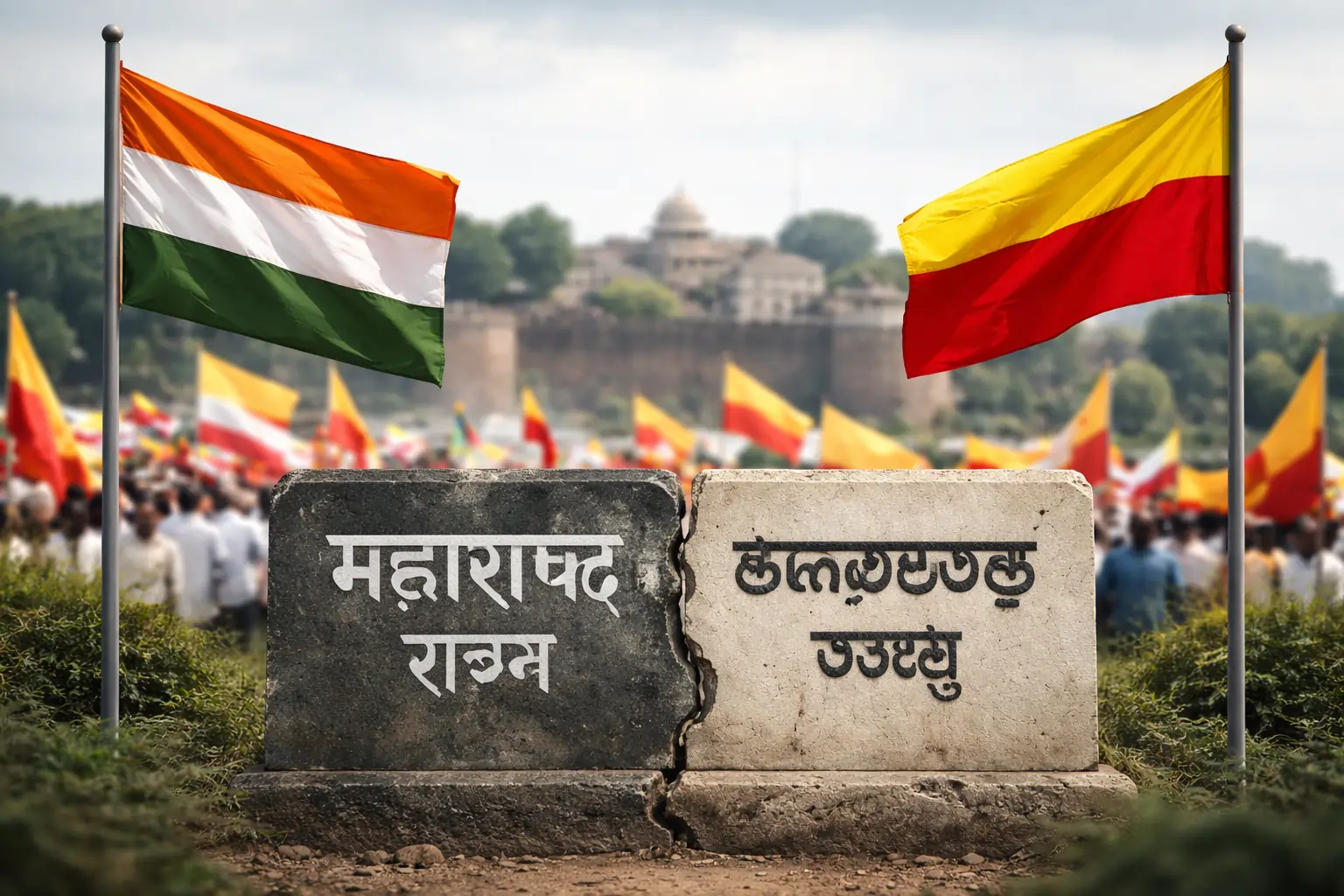

Now, a border dispute between Maharashtra and Karnataka was mentioned once again in the Maharashtra assembly this week. During his address to the joint session of the Maharashtra legislature, Maharashtra and Goa Governor Achara Devrat began his speech by expressing the government’s commitment to resolving the Maharashtra-Karnataka border dispute. Mary Maharashtra Maharashtra Mary. This is not the first time a Maharashtra governor has spoken about resolving the border issue.
During every joint session of the legislature, the governors have reiterated Maharashtra’s commitment to the issue, and yet people say that the matter is far from resolution. What exactly is this dispute, and why has this decades-old issue remained unresolved? Why do Marathi-speaking people living in the border areas feel let down by the Maharashtra government? Why has the Maharashtra government not acted in the last few months? Why is the matter likely to be delayed in the Supreme Court of India? And what has happened after the Maharashtra government appointed a high-powered committee, two coordination ministers, and a battery of lawyers to pursue the legal battle, we decode this week.
The Maharashtra-Karnataka border dispute dates back to 1956. That was when Begavi and several surrounding villages became a part of Karnatak. After the reorganization of states on linguistic bases in 1956, the Maharashtra government claimed rights over 865 villages. They included Begavi, Nepani, and Carvar. Maharashtra argued that the majority population in these areas was Marathi-speaking.
Mahajan Commission and Early Developments
The Mahajan Commission, which was appointed in 1966, examined these claims. However, the Maharashtra government rejected its recommendations outright. The commission had suggested the exchange of a few villages between Karnataka and Maharashtra. Now, in 2004, the Maharashtra government moved the Supreme Court of India. In this petition, it challenged Karnataka’s control over these territories.
The case has remained pending since then. Both governments say they have appointed a battery of lawyers to present a strong case. The matter was listed just last month on January 21st, but it could not be heard because the judges assigned to the case were occupied with other matters. It will now be listed again on a future date. Advocate Shivaji Zadha, who serves as the advocate on record for the Maharashtra government in the Supreme Court, told The Hindu that an application filed by the Karnataka government is yet to be heard by the court. The application challenges the legal authority of Maharashtra in this case.
He said that according to the Karnataka government, under Article 3 of the Constitution of India, only the Parliament has the authority to redraw state boundaries. Depending on the outcome of this application, the suit will be heard after that.
Meanwhile the issue has played out politically for decades at end. It has often led to social tensions between Maharashtra and Karnatak. From disruption of transport services to incidents of vandalism, from aggressive protest to the denial of permission for demonstrations, the dispute has repeatedly triggered strong public sentiments on both the sides. Maharashtra politics has also recently witnessed other contentious debates around identity and representation, including the government’s decision to scrap a reservation meant for backward Muslim communities. A detailed explanation of this development can be found in Maharashtra Scraps 5% Muslim Reservation — What Does It Mean?
The Maharashtra Samiti, which has long campaigned for the cause, says the Maharashtra government has let down the Marathi-speaking people living in the border areas. It also claims that the policies of the Karnataka government are becoming more repressive by the day. The high-powered committee, which has been appointed by the Maharashtra government, has barely met in the past year. Maharashtra’s coordination minister and BJP leader Chundraand Patil said that the government could not take action in the last four months because of the code of conduct during the local body elections. However, he added that a local meeting had been held before that and that another meeting will be called before the end of this legislative assembly session.
As the issue continues to evoke strong emotions with the Supreme Court hearing still pending and no immediate political solution in sight, people living in the border areas say the Maharashtra government’s recent statement is nothing more than lip service.
Legal and Constitutional Frameworks
The dispute moved from the political arena to the judiciary in 2004 when the Maharashtra government filed a petition in the Supreme Court of India under Article 131 of the Constitution, which deals with disputes between the Union and states or between states. Maharashtra’s legal argument rests on the claim that the 1956 reorganization was flawed and that the Marathi-speaking population in the disputed border tracts has a constitutional right to be part of Maharashtra.