



The Kuchipudi dance style originates from the region of Andhra Pradesh. It was originally created as an expressive form of movement utilised by small local groups within their cultural setting. Over time, this local-based dance style evolved into one of the most prestigious Indian classical dance forms and can now be found throughout India and many other countries.
‘Bhagavatulu’ is how the original performers of Kuchipudi referred to themselves. Bhagavatulu is also the term used to identify those same men as performers (dancers) but also as storytellers. Bhagavatulu performed their dance dramas throughout India. The stories told through these performances came from the Ramayana, the Mahabharata, and many other scriptural texts. The performances were performed in a devotional manner and as a theatre, as well as a celebratory manner.
Kuchipudi dance style was created by Siddhendra Yogi (15th or 16th century) with his dance-drama, ‘Bhama Kalapam’, a drama based on the story of Satyabhama. This work requires an extremely strong emotional display along with remarkable physical skill and a significant dramatic flair.
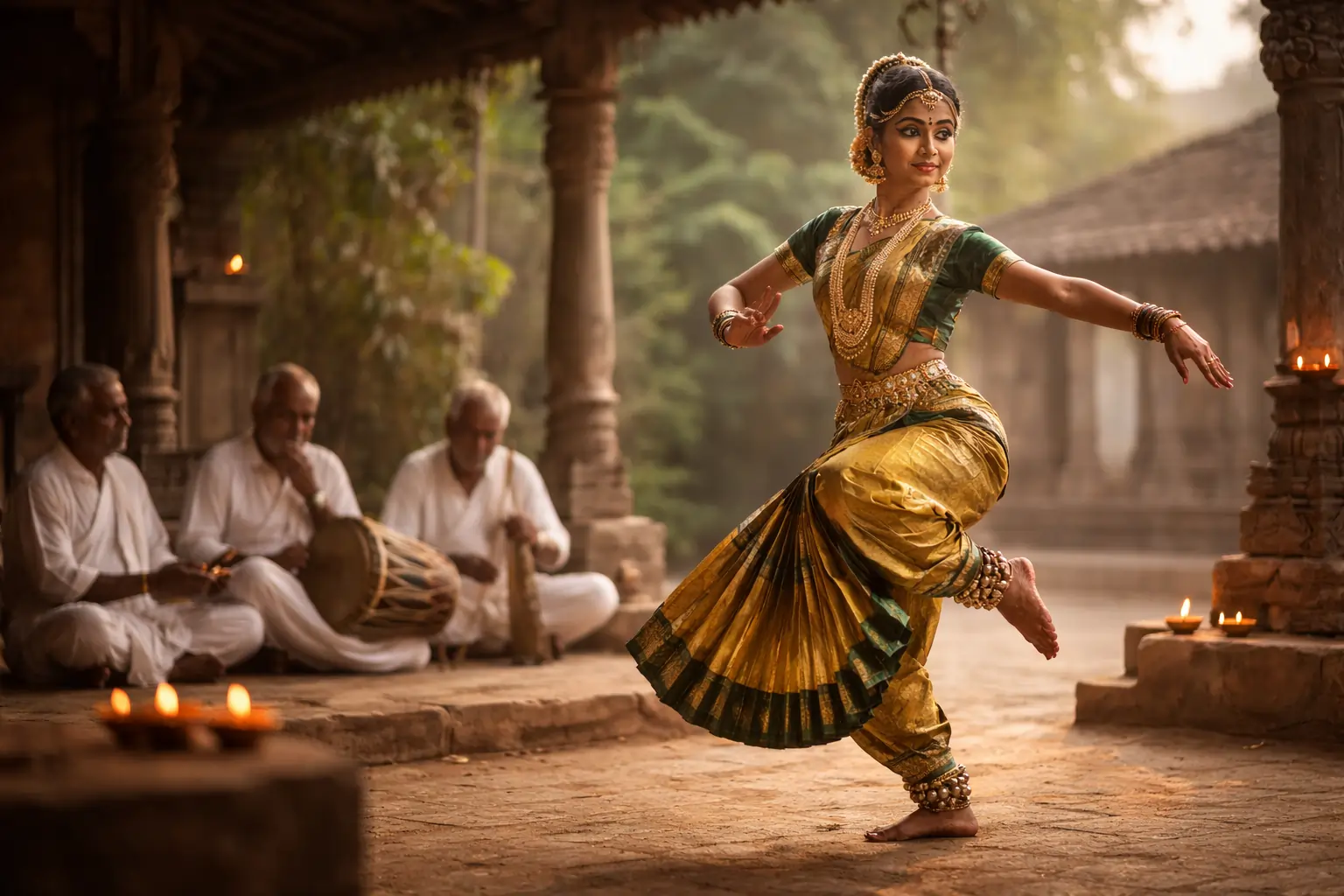
At first, Kuchipudi was almost exclusively a male-art form but created many female dancers. Creative individuals have passed their knowledge down from generation to generation in one family; however, all dancers still learned through teaching and/or direct observation of other dancers. Productions typically occurred in an open-air temple or community facility without any formal stages or light equipment. There would be a few oil lamps, utilised to light the area; however, audiences would always be sitting very close to the performers so they could observe every movement and facial expressions made during a performance.
‘Tarangam’ is one of the many highlight elements of the Kuchipudi dance form. During the performance, the dancer stands on the rim of a large brass plate while balancing a pot on her head. For this reason, great care is required; as well as concentration from both the dancer and the audience. The rattling sound of the plate produces added excitement to the performance which always amazes all those watching and listening.
An important part of any Kuchipudi performance is both the costume and music used in the performance. A Kuchipudi dancer will wear brightly coloured silk costumes with jewellery designed in a traditional style. Make-up will usually be applied to the face and particularly to the eyes in order to convey emotion about the character that is being depicted by the performer. The dancer will perform to the classical Carnatic ragas that are played on the mridangam, violin and flute for accompaniment by the singers as they perform together in bringing the Raga to life.
Major transformations happened during the 20th century in the history of Kuchipudi, particularly with the introduction of women as dancers and performers. This change was important, as it broke the boundaries of what had been a very small village family tradition. The rise of dance schools in Chennai, Hyderabad, and Mumbai was also a milestone. Gurus had students from a variety of backgrounds, and solo performances became the norm. More importantly, Kuchipudi was adapted to modern stage performances.
Kuchipudi spread beyond India over time. Indian communities in different countries asked for teachers from India to come to their location and conduct workshops. There were also numerous performances as part of cultural festivals held throughout the world. Many universities began offering courses in Indian classical dancing. Kuchipudi grew to become a global form of art from a very small family tradition based in one village in Andhra.
While Kuchipudi dances have continued to develop, essential to this development process has been the preservation of the dance’s roots and its connection to its historical traditions. Performers of Kuchipudi dance visit the village of Kuchipudi each year during annual festivals that celebrate the preservation of these traditions.
The education of dancers by Gurus in the traditional way provides a powerful link between past and present. In this way, dancing communicates the stories, belief systems, and community memories associated with a values-based art form, creating a vibrant and integrated community.
Kuchipudi’s success and fame teaches us that art doesn’t always have grand beginnings, sometimes it can start quietly with grace. Kuchipudi was born in a small village, preserved throughout centuries by a few dedicated families.