



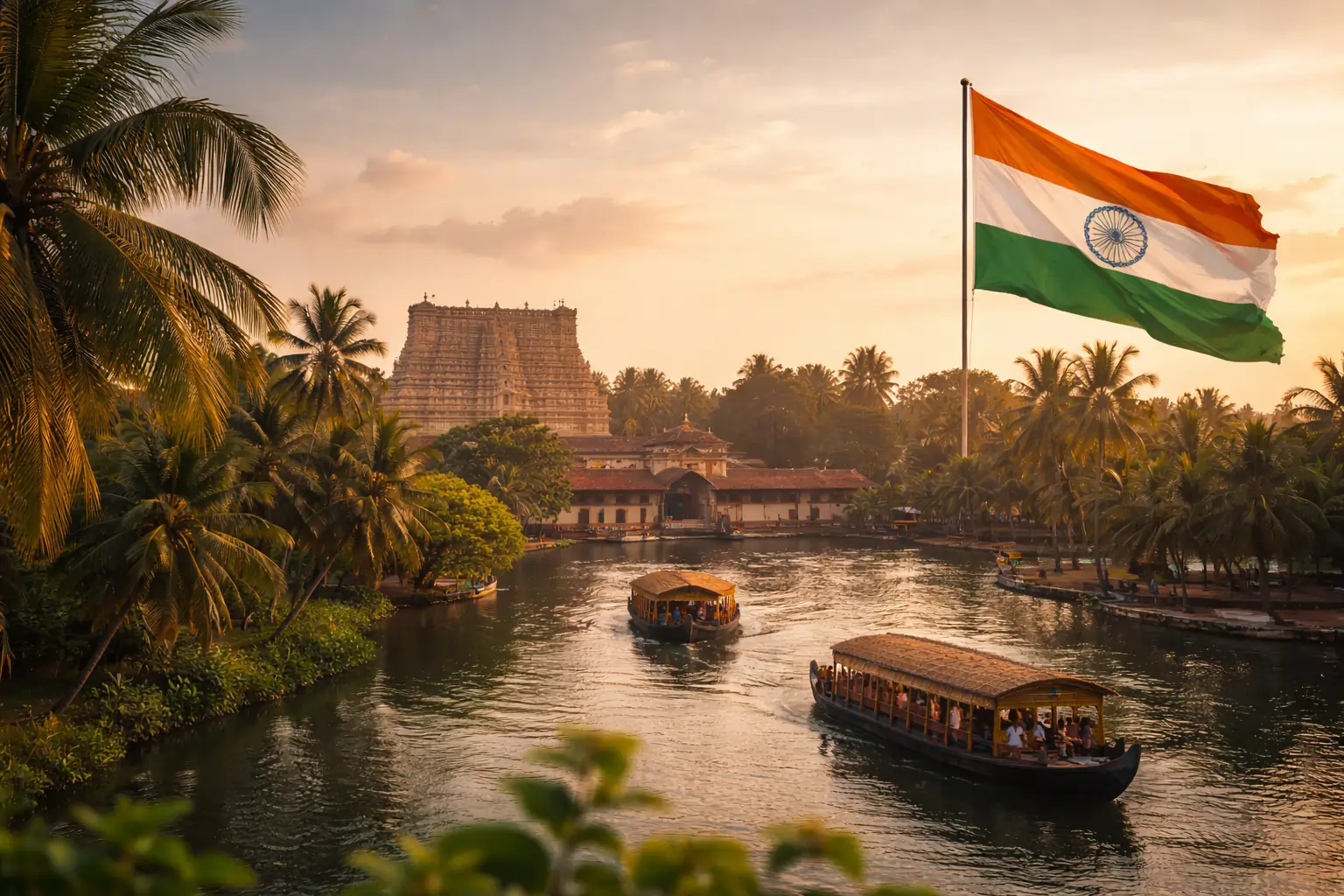

Kerala has a longer and richer cultural history than Keralam. The word comes from Malayalam, where “ Kera ” refers to coconut and ” Alam ” means land. The people of Kerala were called Keralam, but during the British era, this name was changed. The Kerala Legislative Assembly’s decision to change this again to Keralam is a big deal in the context of our society.
As Malayalam is spoken by the 97% of the Kerala population, this name change is not just a symbolic act. Historically also, the1956 Aikya Kerala movement also struggled to unite all areas where Malayalam was spoken and then in cooperate with the name keralam.
This name change is historically tied to the continuing importance of language within the framework of our society.
Kerala’s cultural identity and the emergence of its diverse ethos are deeply intertwined with Malayalam and the region’s long history. For a detailed exploration of how Kerala’s pluralistic society developed over centuries, see How Kerala’s Diverse Ethos Emerged in Malayalam.
Keralam: Symbolism vs Reality in the Name Change Debate
- As the renaming is seen as a rectification of a colonial-era name and an enhancement of the cultural status of Malayalam speaking community. The history of the name Keralam traced backed from 2 millennia of history.
- Around 38 million people speak Malayalam, and it’s the mother tongue of the diverse people of Kerala, which forms a substantial part of South Indian linguistic pride.
- Keralam is an affirmation of regional autonomy against the trend of national homogenization. But it seems more than a political move.
- The emphasis on the name change ignores real problems such as economic imbalance, infrastructure needs, and state center issues. But the name change helps in cultural aspects as it is a reflection of the aspirations and needs of the natives.
- It is debated whether this is a cultural and symbolic change or only a political cover-up.
Keralam and the BJP: Credit, Politics and Contradictions
Narendra Modi has been taking credit for the development initiatives and the name change of the state. Seems as he wants to preserve the identity and civilization of Kerala.
- But the truth is the opposite. The state has an elevated rate of literacy and good social indicators, but it still has difficulties with youth unemployment. As the BJP at the center has unequal and less reservation quotas for southern states, as per recent statistics, the unemployment rate in Kerala is 12%, much higher than the national average of 7%.
- With the name change, the struggle for this started with the 257 BCE. During the British era, the name changed to Kerala, which is an English word.
- But in 2026, it will change officially. However, the BJP’s involvement is more political since the cultural roots of Kerala go back much further than the party’s current claims.
What the Future Holds for Keralam
- The change in the name of the state is a move more than just a correction in nomenclature, but a strong assertion of the cultural and civilizational heritage that is embedded in the state’s more than two-thousand-year-old history.
- However, the BJP is quick to claim that it failed in paying heed to the actual issues plaguing the state of Kerala, as many of them are created by the center, i.e, the BJP itself.
- The union cabinet’s approval during this election time is a ruse to create an illusion of support for the regional culture while ignoring its actual agenda based on the ideologies of the RSS. So, it’s not only cultural preservation, but its acceptance by the center is also a political move.
- But the real concern is this change in name, an actual attempt at fostering regional pride, or is it merely a political ploy to win over the Malayali electorate while distracting them from the party’s true, more divisive agenda?
- The future of Keralam is not in the name, but in the actual changes the state needs to undergo to overcome the economic difficulties it is facing.