



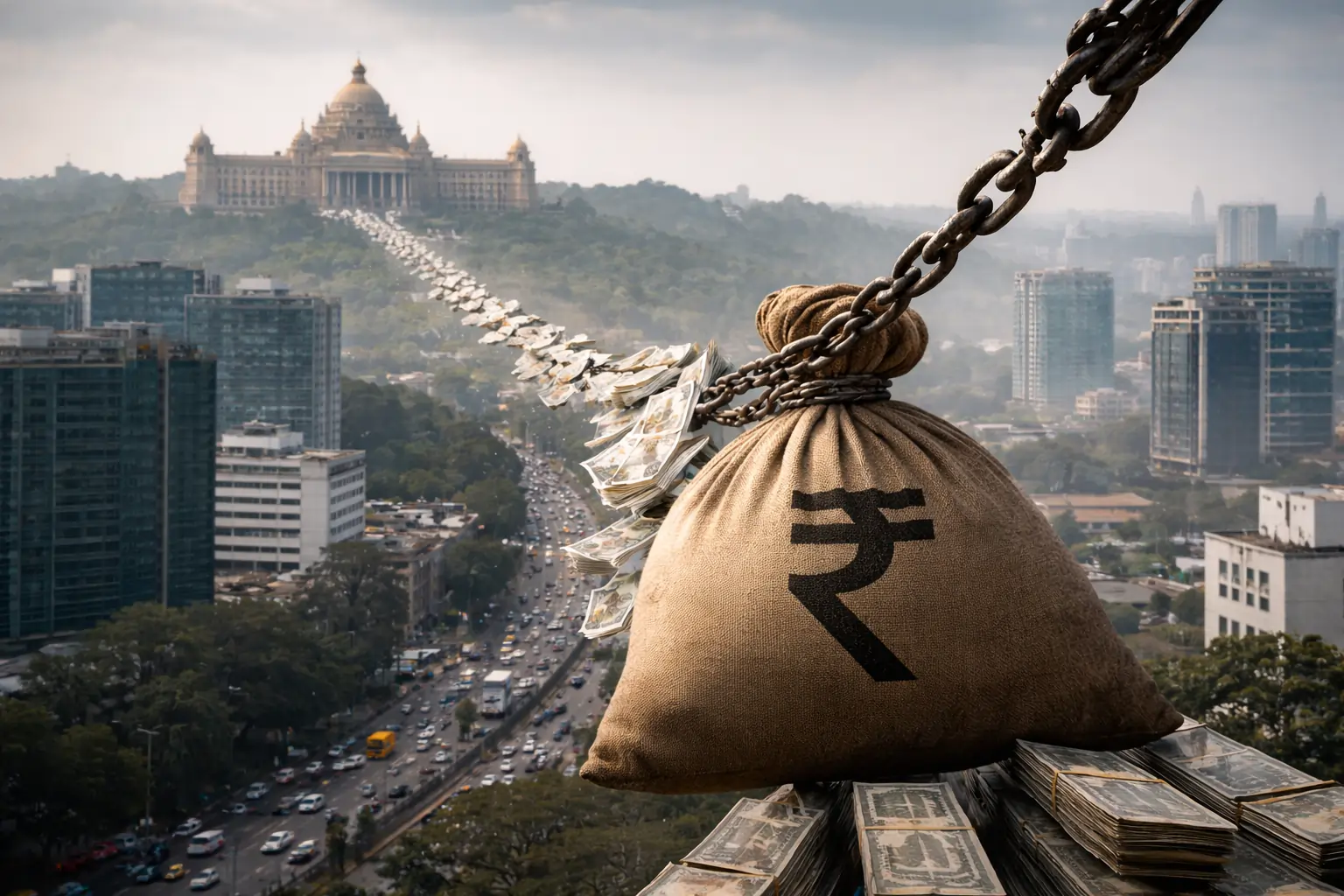

Karnataka isn’t just another state in India—it plays a huge role in the country’s economic scene. Take Bengaluru, for instance, with its buzzing tech scene, plus the growing industries and startups all around. Karnataka is constantly pushing for innovation, bringing in exports, and generating revenue for the whole nation. But here’s the thing: even with all it contributes, it feels like the state is being treated less as a partner in India’s federal structure and more like a place to just draw resources from. The hard truth? Karnataka is giving way more than it’s receiving, and that just doesn’t add up anymore.
This isn’t just a small administrative issue or a simple financial tweak—it’s a real structural problem in how India’s federal system works. Take Karnataka, for example. This state brings in a lot of tax revenue, yet it’s expected to contribute a huge amount to the central pool. The idea is that this redistribution should help balance development across the country. But in reality, it often feels more like punishing those who succeed rather than fostering cooperation.
When Karnataka contributes to the national exchequer, it gets back only a fraction of what it puts in. This isn’t just a number on a page; it shows a deeper unfairness. The state’s economic strength is essentially subsidizing other areas, while its own urgent needs remain underfunded. So, at what point does this redistribution become exploitation?
Though “colonialization economically” is a bold statement, it brings to the fore the sentiment prevailing within the state itself. In the past, the colonial system worked by draining resources from productive regions and channeling them to central control. While the scenario has obviously changed, the similarity between them cannot be denied. Karnataka provides the economy, yet decision making and resource allocation are centralized, sometimes detached from reality.
The effects of such an imbalance have not been theoretical; they have been practical and immediate. With Bengaluru at the forefront of the Indian IT industry, the situation is becoming unbearable for the city to handle. Constant traffic problems, insufficient transportation systems, inadequate s…
It would be hypocritical for India to recognize Bengaluru as a technological center on a global scale while denying the city the development it so desperately requires. The Center cannot keep benefiting from the fruits of the economy of Karnataka while ignoring its very ecosystem that allows it to reap these fruits. This attitude does not only appear shortsighted; it is actually detrimental to the economy.
A more worrisome aspect of the matter is the implication this holds for efficient states. In an economic policy in which successful states have less benefits than other states, why should they even strive to be efficient? A policy such as that may actually end up hindering national development rather than helping it.
Moreover, there is a rising feeling of alienation among people. The residents of Karnataka are becoming more and more aware about such an imbalance, and when you know something you can be frustrated about it. As soon as you understand that your tax money does not go where it should, your confidence in the process starts to disappear. In addition, this is not only an economic but also a political and psychological problem. The unity of a federal state is based on the sense of justice, which must always be respected.
The proponents of the existing system claim that rich states are morally obliged to help poor areas. It is true, but this idea cannot be applied to the model, which requires a small number of states to provide additional funds for other areas at the expense of themselves.
Now is the time to deal with this inequality straight-on. Karnataka doesn’t need symbolic gestures of recognition – it needs structural fairness in the form of a balanced distribution of funds where high-producing regions can invest in their development without fear of exploitation. Otherwise, the system will remain prone to generating friction.
This is a country of many faces but one must understand that India’s future lies in its ability to ensure equality amongst its people. The nation cannot flourish at all if its productive regions find themselves in a state of exploitation rather than empowerment. The problem of Karnataka must be seen as a serious warning signal.
It might seem too harsh to talk about economic colonialism in this case but in order to create real change sometimes one should speak the truth even when it makes one uncomfortable. Karnataka isn’t asking for privileges – it just needs fair treatment which in a federal democracy it has the right to.