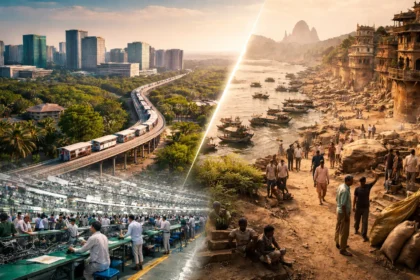



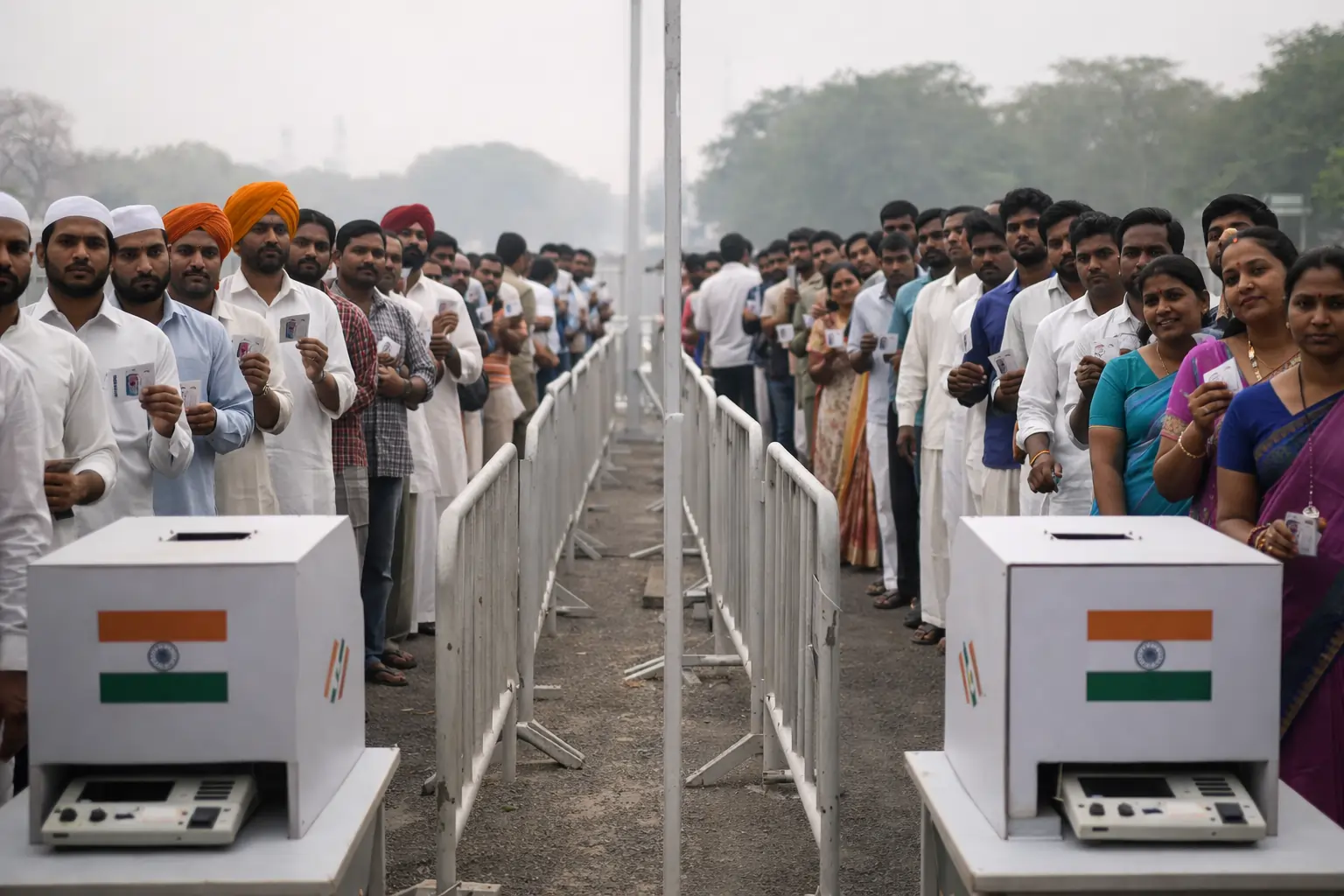

The idea of democracy is based on the premise of equal representation, one person, one vote, and one value. But for the people of South India, the idea of equal representation is set to be flouted on a grand scale. Come 2026, the value of a South Indian vote will be half that of a North Indian vote. This isn’t politics, its math, and the numbers don’t lie.
Understanding Delimitation
What is delimitation? Delimitation is simply redrawing the boundaries and allocating seats in Parliament according to population figures. Business Standard states, “81 prescribes proportional allocation of Lok Sabha seats to population figures.”
India has undergone delimitation after the 1951, 1961, and 1971 population counts. In 1976, Indira Gandhi decided to freeze seat allocation until 2001 to control the population. Vajpayee has extended this until 2026 via the 84th Amendment. The freeze is ending soon, and South India is losing out.
The Brutal Mathematics
BOOM states that currently, South Indian states account for 129 Lok Sabha seats, whereas North Indian states account for 174 Lok Sabha seats. If the number of Lok Sabha seats is constant at 543 and is strictly reallocated according to population, then the number of Lok Sabha seats in North Indian states would increase to 205, whereas in South Indian states, it would reduce to 103, a reduction of 26 Lok Sabha seats.
According to a research done by Carnegie Endowment, if Lok Sabha is increased to 846 Lok Sabha seats, then:
- UP would gain 63 Lok Sabha seats (80 to 143)
- Bihar would almost double (40 to 79)
- Tamil Nadu and Kerala would lose 16 Lok Sabha seats combined
- South India’s Lok Sabha seat allocation would reduce from 23 percent to 19 percent
According to a report published in The Print, under strict reallocation, Kerala would lose 8 Lok Sabha seats (20 to 12), Tamil loses 8, Andhra-Telangana lose 8 combined.
The Gap Already Exists
The crisis is already upon us. Business Standard data for 2024 reveals:
- Each MP in North India represents 3.03 million people
- Each MP in South India represents 2.1 million people
- National average: 2.6 million people per MP
The value of one North Indian voter may be equivalent to two or three South Indian voters after delimitation.
Penalized for Success
South Indians managed their population growth successfully. Outlook India states:
- Kerala TFR: 1.6
- Tamil Nadu TFR: 1.8
- Bihar TFR: 3.0
- UP TFR: 2.7
This is according to DMK MP Kanimozhi, who said: “States which have successfully implemented family planning are penalized, states which are reckless are incentivized.”
According to RSIS International Journal: “Demographic responsibility should not result in political penalization
Economic Contribution Ignored
The South does not only have better population control; it also has a larger economic contribution. Business Standard reports:
- South’s per capita income is 3.5 times that of the North (compared to just double in 1971-72)
- South contributes significantly more to central taxes, GDP, bank advances
However, delimitation is based on population, not economic contributions, literacy, and quality of governance.
According to analyst Hardeep Sachdeva, speaking to Business Standard: “Representation must reward responsibility, not reproduction
BJP’s Strategic Win
The key word in delimitation is power. Research indicates that if the process is done with the 2011 data, the BJP would gain 17 seats, mainly from the regional parties.
The Print states: “The Hindi heartland would enjoy the near majority.” No prize for guessing the beneficiary.”
The promise of Home Minister Shah, “Not a single seat will be reduced,” means the Lok Sabha will be increased to 850+ as many seats will be given to UP alone as they are in the whole of the South.
What South Is Doing
The Chief Minister of Tamil Nadu, CM Stalin, has termed delimitation as a “threat” and has called all party meetings. Seven states formed a Joint Action Committee to demand the extension of the 30-year freeze.
The alternatives suggested are:
- Fiscal contribution-based allocation
- Federal Representation Index, which will include literacy, healthcare, and the economy
- Two-chamber Lok Sabha
- Increased Rajya Sabha seats
However, with the North’s numerical majority in Parliament, the chances of these changes being accepted in the Lok Sabha are slim.
The Constitutional Betrayal
If you’re from South India, your vote is about to count for less. Not through any nefarious means of electoral fraud, but through constitutional means that reward inefficient governance and penalize efficient population management.
You pay more taxes. Your state generates more GDP. Your population is more literate. Your healthcare is better. Your governance is more efficient. And your vote counts less. Is democracy’s promise of equal representation just an illusion when success in one region leads to disenfranchisement? RSIS Journal argues this leads to a “crisis of federal legitimacy” wherein states are penalized for doing exactly what the nation asked for.
Will India choose democracy or majoritarianism in 2026? Will it choose to be a federal democracy or a maioritarian state wherein North Indian votes count more?