


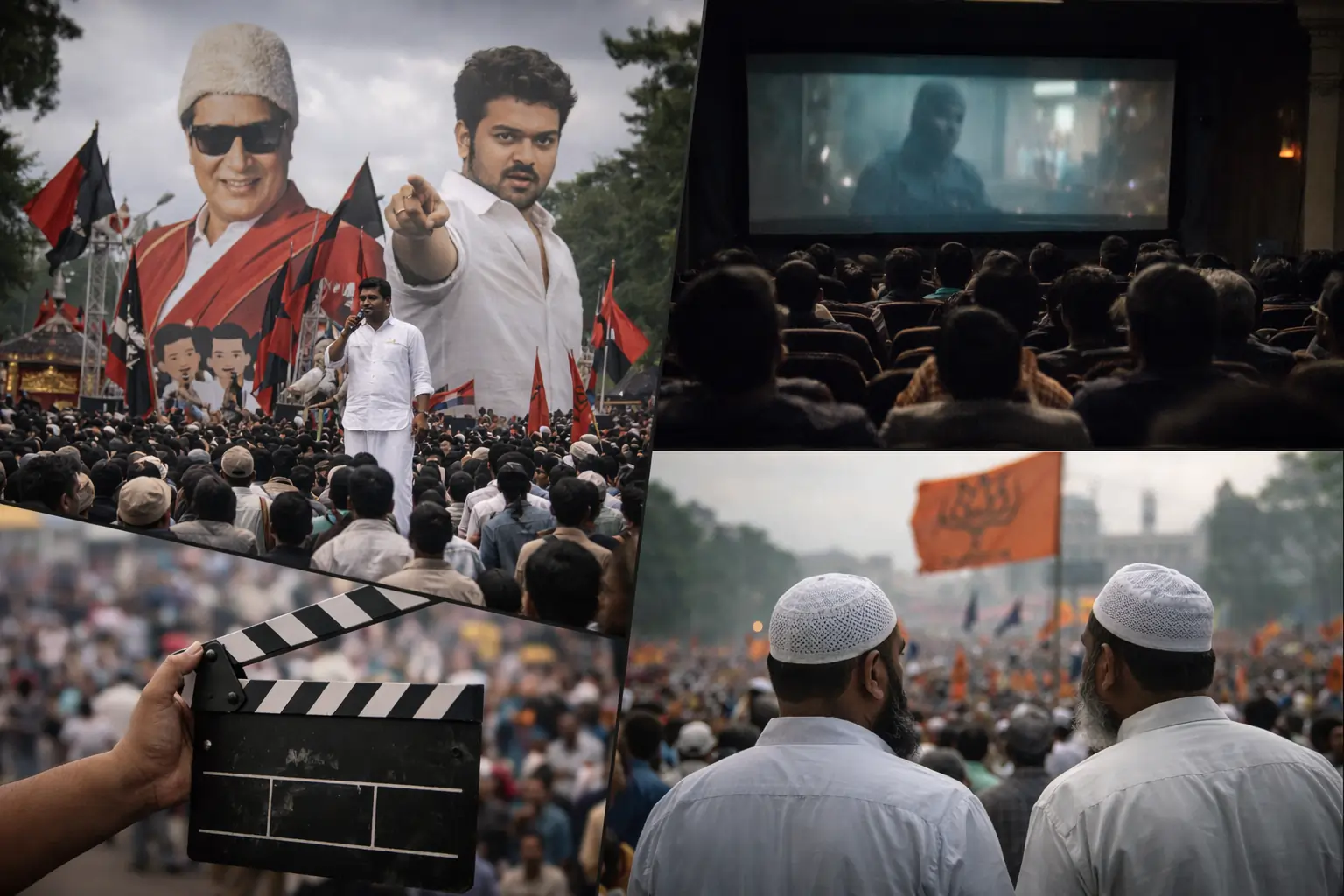

South Indian film cinema is not just a source of entertainment. It is a powerful force that determines politics and culture.
Movies influence public opinions, invoke emotions, and alter elections outcomes. In states like Tamil Nadu and Kerala, film industry influences political powers. Actors like M.G Ramachandran (MGR) & Jayalalithaa were able to translate their screen charisma into actual political power.
In south India, movies are not treated just as a story, but they are the language, pride, and regional aspiration for the public that highlights important socioeconomic issues.
But in Kerala, politics does not revolve around any cinema star, but it influences their political discourses. Movies made focus more on secularism, communal harmony and social issues by appealing to the audience more and compelling them for different ideological and political discussions before elections.
Films as a reflection of society
In south Indian states, cinema highlights the socio-political problems as films tend to inscribe themes relevant to language, caste inequalities and community identity.
These narratives tend to become shorthand for rallying support and opposition for specific political blocs in the film industry.
They also talk about unofficial political platforms where the public discusses the political implications of that. This interplay between politics and culture reflects the political influence on the actors beyond the realm of entertainment.
In south Indian states, cinema is embedded in identity and culture and played a subtle and powerful instrument during elections.
The Kerala Story 2
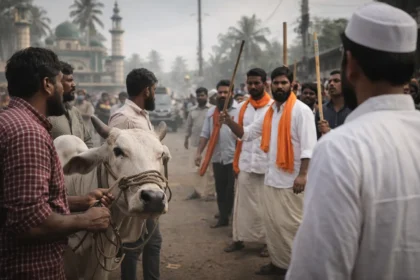
The film, Kerala story 2, became a political lightening rod after its release. As the film target Muslims and Malayalam community by disrupting social harmony. It is also accused of spreading misinformation and threat to religion and culture of Kerala.
It seems like another attempt by the BJP to project “love Jihad” in the state. Under legal scrutiny, it has been rejected by the political parties and state elites.
This illustrates how films are used as tools for politicization and how cinema becomes a site a struggle over different national narratives by projecting cultural insecurity.
Role of Vijay in Tamil Nadu politics
The long-standing connection between stardom and politics is also highlighted by role of Vijay in 2026 assembly elections of Tamil Nadu. Political parties such as TVK also supported these celebrities to gain votes.
Moreover, films released during and around elections also played an important role in influencing voters. Films like Jaganarayan and Parasakthi, also carry political undertones.
By raising concerns about anti Hindi feelings and regional pride, anti-Hindi imposition and inequalities, they change cinema halls into political debating platforms where citizens questioned the center and govt.
BJP as the New Frontier of Identity Politics in South
During the 2026, assembly elections in South Indian states it is seen that BJP used cinema as a political tool. Films that focus on threats to cultural majorities and national unity can align with their majoritarian agenda.
As film, Kerala story gained traction some right-wing alienations across India. The projection of Love jihad concept in the film and the forceful projection of religious ideas of Hindutva shows how BJP used Cinema to convey cultural insecurities.
These are not random scripts but a deliberate action to hit the audience’s minds. BJP also used this strategy in the North and also in the international community.
But in south India, this comes with few limitations. The electorates in the regions are sensitive to secularism, regional autonomy, and language pride.
BJP tries to use cinematic narratives to polarize, to alienate voters that feel that such actions are detrimental to regional diversity.
South Indian Cinema as a Political Catalyst
In south India, cinema is used as a political catalyst that reflects the society. It shapes the narratives, the ways voters think about identity, unity, and freedom based on regional and national content.
This is helpful during the election because narrative is intertwined with politics at that time.
BJP used this in the North, but in South BJP get a flashback when used cinema as a tool for identity politics.
This is because of the political culture of the south that is based on pluralism and regional identity, making voters more cautious about telling a story that is imposed on them
A Constant South Indian Factor
Cinema and politics in Tamil Nadu & Kerala are linked structurally. Cultural narratives and election strategies are constantly interlinked by influencing public discourses and deciding elections outcomes.
In South India, cinema is not merely a source of entertainment but a political tool that define discourses and reflects societal aspirations.
Political parties that failed to grasp the power of industry risks themselves from alienating themselves from participatory citizenry.