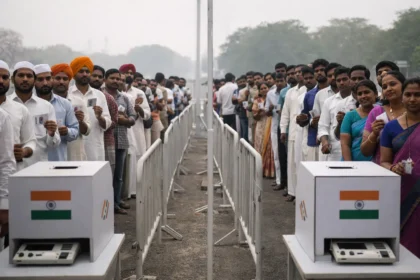




Social media has turned out to be a powerful weapon for shaping voter perception, and information dissemination, in the build-up towards the 2026 Legislative Assembly polls, which are slated to take place on April 9. The young people who can vote are becoming very important. Because of this social media is very useful for all parties. Around 2.6 crore eligible voters will cast votes. The LDF, UDF, and BJP need media to talk to the people who can vote and play an important role in securing their vote bank.
Digital Shift in Kerala’s Electoral Contest
Previously, election campaigns in Kerala involved personal meetings, large public gatherings, and conventional media and news. It seems to be changing now in 2026, and every political party is investing money in campaigns to spread the world. They are really focusing on publicity to reach voters. Election campaigns are now more, about presence and digital engagement. The digital turn is not merely a response to a change in communication styles; it is a calculated move to realize that metrics such as likes, shares, and follower growth on social media can be just as important to electoral success as traditional campaigning.
According to a Local Media estimate, the digital campaign market in Kerala is potentially worth more than ₹100 crore in this election season. All political parties are employing high-end PR agencies to utilize data analytics tools and advertising on social media to maximize outreach.
Platforms such as Facebook, X (formerly Twitter), Instagram, YouTube, and WhatsApp are the primary arenas in which political contestation is taking place. Political actors are using these mediums to broadcast their policies, respond to their opponents’ claims, and mobilize support for their candidates.
Narrative Engineering & messaging campaign:
Another trend seen in this election is the focus on crafted messages and easily shareable narratives that thrive on social media platforms. The emergence of digital campaign messages such as ‘Kadakku Purathu’ and ‘Irunda Kalam,’ are popular among regional populations, holding differing narratives of status quo and change. These are not only disseminated by political parties but also through social media and youth who are engaged in local politics. This also made it difficult to figure out the genuine support and the sponsored/paid narrative. In Kerala, local social media influencers have contributed to public opinion, who are dependent only on online plate forms for political and current information.
Political communication also shows that strong social media engagement is a key determinant to electoral success. As the messages campaign gain traction in social media, that are more likely to gain visibility and recall voters. Facebook share metrics that also influence local candidate visibility.
Digital Publicity Drive by Kerala Government
The Kerala government had sanctioned a digital publicity scheme worth ₹15 crore to promote the welfare schemes on YouTube, Instagram, Google Ads, and daily news apps in mid-March 2026. This also holds controversy because while basic public services needed more funds, taxpayers’ money was used to promote political messages on social media platforms.
The campaign also raises issues regarding how state actors engage in social media campaigning and how this could affect public awareness of government schemes while only emphasizing on issues of impartiality and equity in information access during this campaign.
Online Contestation of Nemom Constituency
During the contest of Nemom constituency, BJP president Rajeev Chandrasekhar and CPI (M)’s V. Sivankutty are actively involve is digital election campaign for public engagement. Parties are using videos and digital town halls to situate the contest as a proxy for an ideological war in Kerala. So, social media is a two-way process that allows for a feedback loop where the rapid response to party narratives is met with countering commentaries and narratives.
Kochi Mayor Social Media Controversy
Social media account of the Kochi mayor created controversy accusing the party of using social media merely as a tool for seeking visibility, rather than actively engaging the public on the development of the city. This case represents the conflict of political actors on the ethical use of social media for political engagement as opposed to self-promotion.
Opportunities and Risks
Social media has democratized not only political communication in Kerala but also provides cost-effective outreach that allows rapid response to events and impact youth in different ways. It also allows citizens to promote youth unemployment, social, political, and environmental issues without waiting for traditional gatekeepers in the media to do so.
On the other hand, digital campaigning also carries risks. The dissemination of misinformation, micro-advertise, and echo chambers create challenges to public understanding. Digital operative influence operations and meme warfare obscuring more grounded policy discussions. In Tamil Nadu, AI generated videos and deep fake content is used in 2026 election campaign. Also in Kerala, misinformation plays a role in shaping narrative against opposition parties.
Transformative and treacherous Terrain:
The use of social media in an electoral strategy of Kerala’s elections in 2026 is a sea change and shows how democracy is shaping in India. Social media increases the scope for political involvement and promotes greater transparency in political parties. But overall, the impact is not positive. Social media also resulted in the centralization of power in the hands of economically powerful individuals, and they used it in ways that were in accordance with their interests and goals.
Moreover, it has the potential to dilute the quality of discourse as politics is replaced by sensationalism. Social media in Kerala’s elections in 2026 is reflective of the opportunities and risks that digital democracy has to offer, as well as how it has been realized in India. As citizens prepare to vote in the elections, social media would have already impacted not just what they think, but also how they think about politics.