



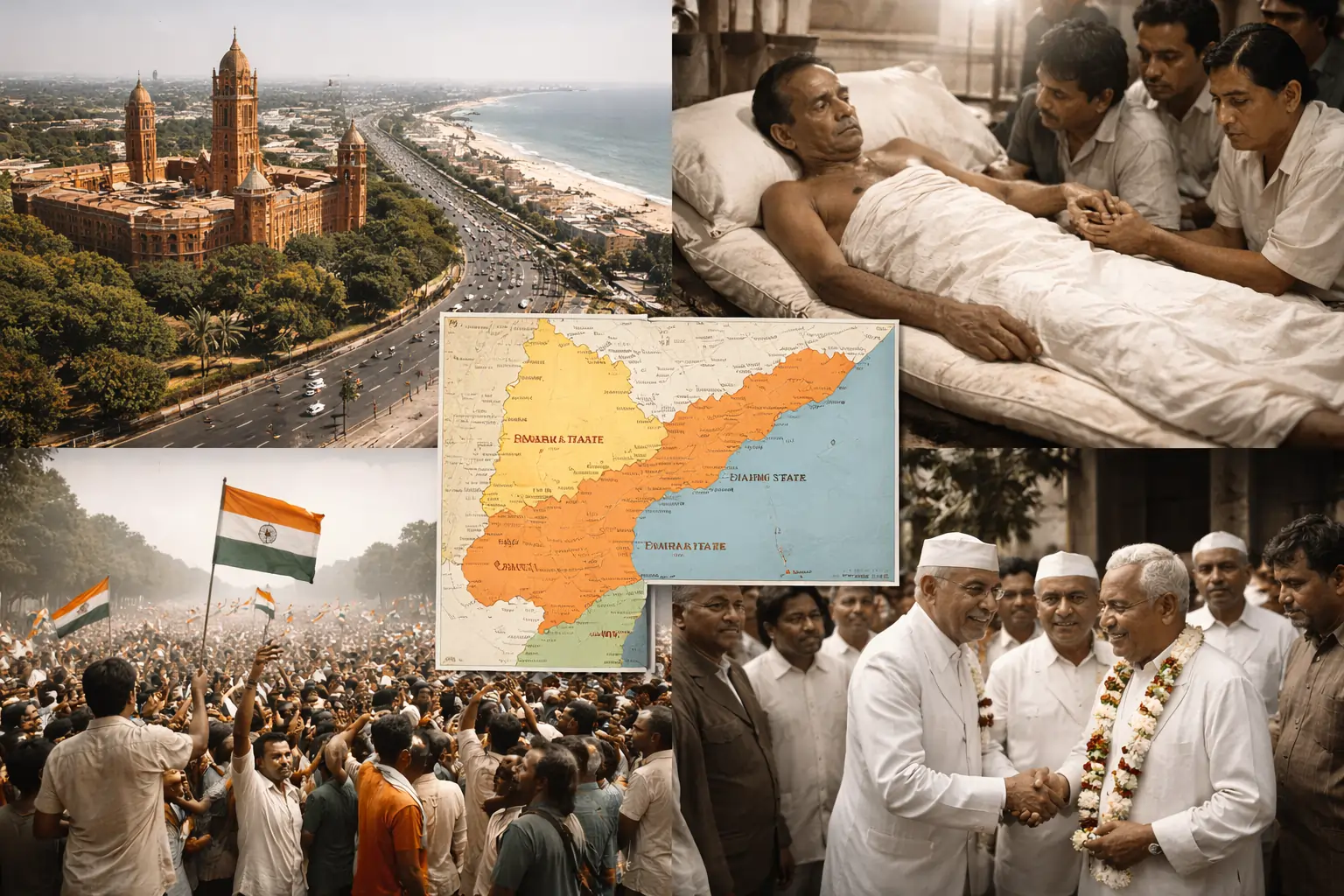
During British rule, the Telugu-speaking regions of South India were administered as part of the Madras Presidency until Andhra Pradesh gained its independence. The issues of language, self-identity, and fair representation of newly independent India are closely tied to the events that led to the separation of these areas from the Madras Provincial District and the establishment of the Andhra state.
The British Raj administered one of the largest provinces in colonial India, Madras (Chennai) Province, to include a portion of modern-day Karnataka, Kerala, Rayalaseema (the south-central part of the state), the coastal Andhra region, and the state of Tamil Nadu. Their administration of these regions continued until the time that India attained independence in 1947 and subsequently became part of the Republic of India.
Both the end of the 19th century and the beginning of the 20th century witnessed a remarkable period of growth with respect to the creation of literature for the purpose of developing the Telugu language and the establishment of Telugu journalism tradition. Many writers and reformers contributed to these developments by shedding light on the rich nature of the Telugu language and the deep rooted historical heritage of the Telugu people. A sense of cultural respect slowly transformed into a political understanding. The concept that administration ought to mirror the language spoken started becoming more accepted.
Following India gaining Independence in 1947, the matter of restructuring the states became pressing. The new country inherited regional borders established by the British. These borders did not consistently align with the real cultural or linguistic groupings. Throughout the nation, various groups started asking for states that accurately mirrored the languages spoken there.
Telugu spokespersons contended that governance would work better operating within the common tongue. They insisted that the districts speaking Telugu ought to be split from the Madras Province making a fresh state. A significant part of the disagreement concerned the standing of Madras city. Telugu leaders asserted that the city possessed past and population links to their area. Tamil spokespersons robustly rejected this assertion. Finally, the request for Madras city was abandoned so that progress on statehood could happen.
The campaign reached a vital point in 1952 through the hunger strike by Potti Sriramulu. A follower of Gandhi who took part in the fight for independence, Sriramulu started refusing food seeking a distinct Andhra state. He felt that organizing based on language was crucial for just inclusion.
His fast went on for 58 days. Following his passing on December 15, 1952, large scale objections and protests broke out across the Telugu speaking zones. Citizen displays and disorder increased. The national leadership, headed by Prime Minister Jawaharlal Nehru, reacted by declaring the establishment of Andhra State.
On October 1, 1953, Andhra State formally began its operations. Kurnool was picked as its main city, and Tanguturi Prakasam became its initial Chief Minister. It represented the first state in sovereign India to be formed according to language lines.
However, the state created in 1953 did not include all areas where people spoke Telugu. The area known as Telangana still belonged to what had been the former Hyderabad state, which joined India in 1948. The wider issue of reshaping all states following language boundaries stayed under review.
In order to better meet similar needs across the nation, the Government of India formed the States Reorganisation Commission in 1953. The findings of Parliament led to the establishment of the States Reorganisation Act in 1956. On November 1, 1956, the Telugu-speaking districts of Hyderabad were consolidated to form the single-state Andhra Pradesh.Hyderabad would be its capital.
The combining of these areas was done based upon what would later be defined as the gentlemen’s agreement, which would make certain that the Telangana region would be protected within its new boundaries.
The creation of Andhra, and subsequently Andhra Pradesh, would have repercussions. A precedent was set with respect to reorganising the internal borders of India based on the languages spoken within the states. Similar principles were exercised in subsequent states created during this period (e.g. Karnataka, Kerala, Maharashtra, and Gujarat).
The change from Madras Province to Andhra State can be viewed as evidence of progress towards democratic development in India. It also shows that while there are differences in regional identity, they can coexist with the idea of national identity within a constitutionally-bound country.
Leave a Comment