



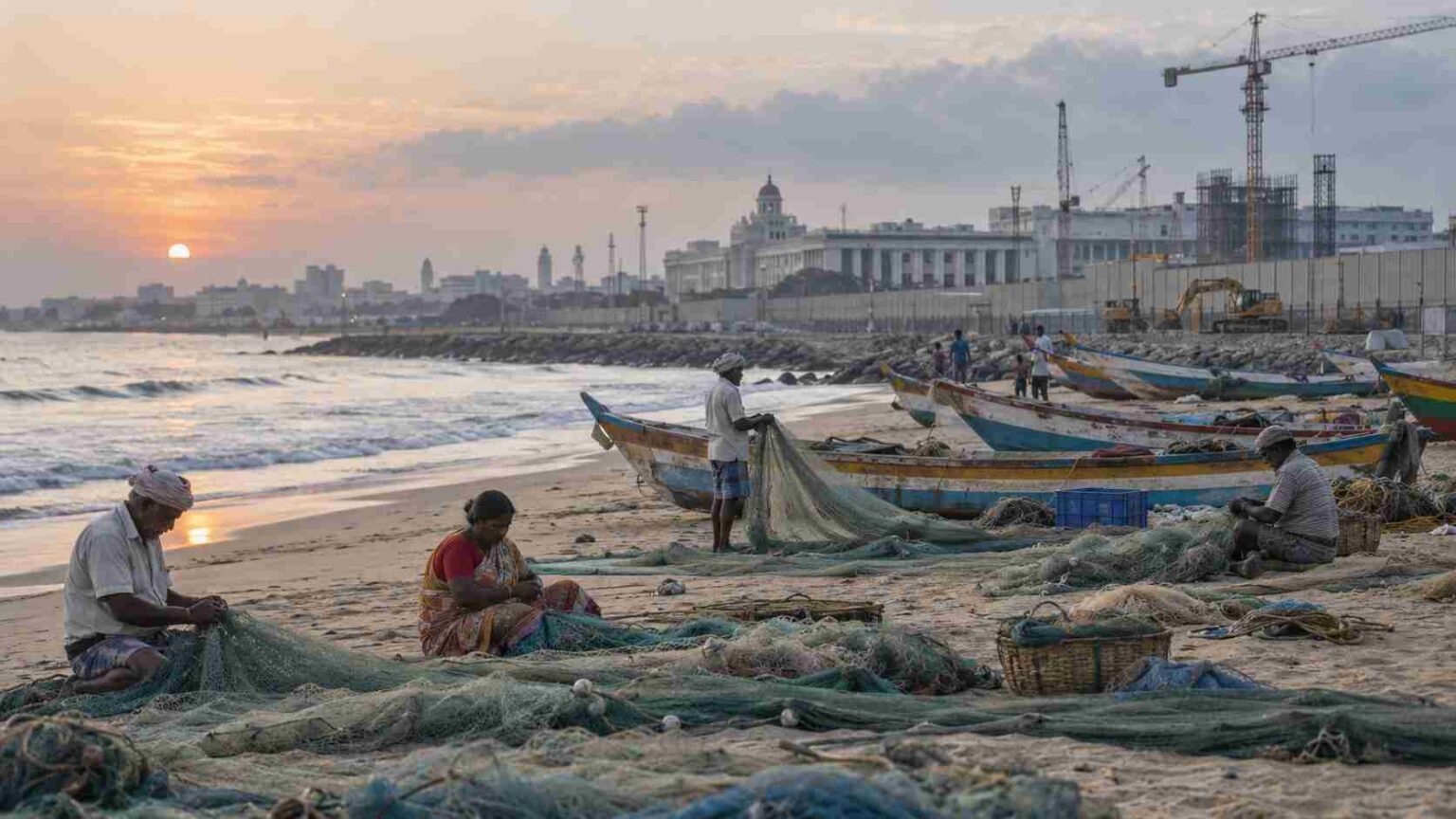

In Tamil Nadu’s plan to construct a secretariat-assembly complex worth ₹1,200 crore at Foreshore Estate, a latent conflict has erupted. The people from Pattinapakkam, Srinivasapuram and surrounding villages see this project as more than just an infrastructural one. This project, in their eyes, is a matter of survival as they have been using the coastal region for launching boats, repairing nets, drying fish and trading for generations. Incremental restrictions already exist due to traffic, security arrangements and earlier beautification drives.
A high-security administrative complex would intensify those constraints, limiting access to the sea and disrupting an economy that supports more than 1,500 households. Community leaders have described the move as equivalent to erasing their way of life.The administration’s case is not without merit. Fort St. George is outdated, and a purpose-built complex could improve governance. Yet the choice of site raises legitimate questions. The land in question has historical links to the fishing community, including earlier government assurances of housing. Equally important is the absence of meaningful consultation before the government order was issued.
This is not an argument against development. It is an argument for process. Large public projects on sensitive coastal land require early engagement with affected stakeholders and a serious examination of alternative locations. Relocating or redesigning the project to protect sea access would demonstrate that administrative modernisation need not come at the expense of traditional livelihoods.Chief Minister C. Joseph Vijay still has an opportunity to pause, listen to the panchayats, and find a solution that respects both the state’s institutional needs and the rights of those who have lived on this coast for decades. Inclusive decision-making remains the more durable path.
