



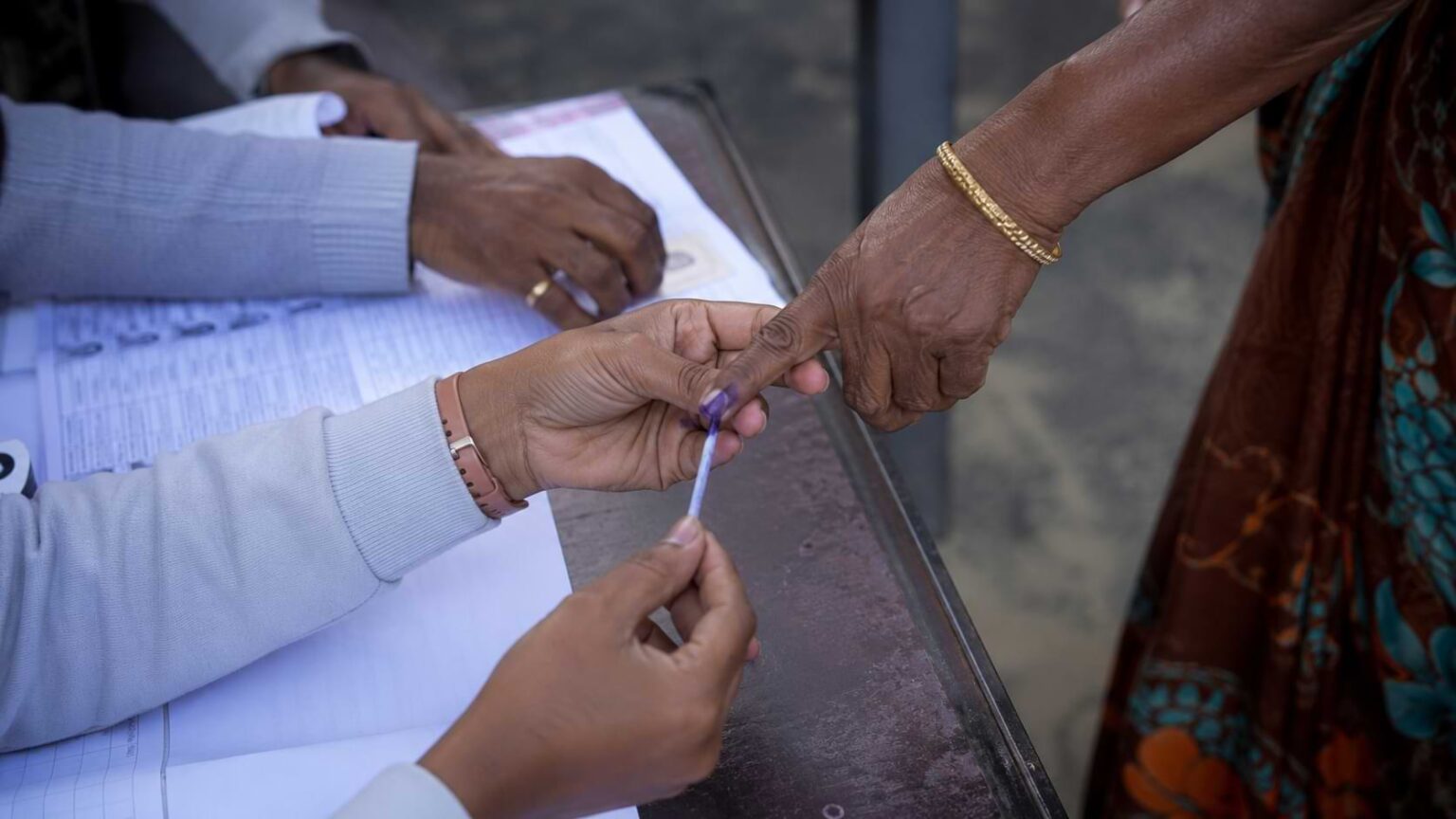

Karnataka’s special intensive review (SIR-2026) of voter rolls has turned an ostensibly administrative activity into one of the biggest political controversies in the state. Deputy Chief Minister D.K. Shivakumar’s appeal for people to make sure their names are on the voter list and his statement that not being on the list can be detrimental when accessing welfare schemes has sparked an uproar among political parties, activists, and constitutional experts alike. The process, which was supposed to be an administrative issue, has instead created some tough questions at the junction of the right to vote, access to welfare benefits, and political communication.
The month-long voter roll review campaign will last from June 30 to July 29 and will include door-to-door verification by booth-level officials, alongside the option for eligible citizens to change their data online. In general, this activity belongs to the nationwide program conducted by the Election Commission to eliminate duplicates, fix mistakes, and keep voter rolls up to date.
On Welfare and the Voter Roster
The controversy arose when Shivakumar warned that those whose names have not been registered on electoral rolls may find themselves facing problems with respect to getting access to state welfare programs such as Gruha Jyothi, Gruha Lakshmi, and Anna Bhagya. Though the Karnataka government has since issued a clarification that the exercise is purely administrative and is not aimed at depriving anyone of any benefits, the damage has already been done by then.
As far as millions of beneficiaries rely on such welfare programs for their electricity subsidies, cash assistance, and food security, a hint that they may lose their benefits because of the failure to register their name on electoral rolls would definitely cause apprehension among people. The fact whether such a connection between welfare and voting exists or not does not change much in case political propaganda causes unnecessary panic. The case proves the extent of sensitivity of welfare administration in modern India.
BJP Takes Advantage
The BJP wasted no time in highlighting the contradiction that the Congress government of Karnataka has created by reversing their own previous political stances. BJP leaders contended that Congress had condemned a similar process elsewhere in the nation but now defended such a massive revision drive in Karnataka.
In the opinion of the BJP, the statement made by the Deputy Chief Minister of Karnataka threatens to cause a sense of alarm in the minds of the beneficiaries of welfare schemes under the assumption that voter registration would impact their entitlements.
On the contrary, the Congress maintains that there is no official link between any welfare scheme and voter registration and the current process has simply aimed at updating the voter lists. The government claims that there has been a great deal of misinformation due to which an administrative task has been turned into a political controversy.
A Larger Issue of Indian Democracy
But besides the obvious politics of the moment, there is the larger question of democracy: is there any point where the citizenry might be left with the impression that getting welfare is conditional upon electoral documentation?
Electoral processes are a constitutional right; welfare programs are created to honor socio-economic promises that governments have made. Even if both need proper documentation, their roles are totally separate. The slightest suggestion that they are not will affect confidence in the electoral process and the welfare program.
There has been a history of disputes in India over documentation whether it be linking Aadhaar cards, proving citizenship, or verifying beneficiaries. However, all the above controversies illustrate the difficulty of achieving a proper balance between efficiency and exclusion due to bureaucratic matters. In the state of Karnataka in India, this fine line has come under scrutiny again.
The Centre Cannot Turn a Blind Eye
While the current issue of concern revolves around Karnataka, it highlights another wider trend across the country within the context of the BJP-led central government, wherein documentation, verification, and digitisation have become an integral part of governance. In several instances in the past, processes related to welfare schemes, identification, and voting have resulted in apprehensions amongst the vulnerable sections regarding their possible exclusion.
While accuracy of administration is important, it should be noted that the primary principle of governance should be inclusion rather than strict adherence to procedures. It is necessary for citizens to be assured that any kind of error in one government database would not impact their access to services in other databases.
It has been stated that the Union government over the years has ensured thorough verification processes despite its inability to address questions relating to bureaucratic errors, slow process of correction, and burden of citizens. The above factors become all the more important when considered from the point of view of poorer families, senior citizens, migrants, and rural people.
Politics in the Face of Policy?
It should also be highlighted that this most recent controversy has highlighted how quickly administrative processes transform into political contests within India’s growingly polarized environment. While both sides could have used the issue as a means of reassurance for the people, what has happened is that each side has tried to construct its own political narrative about the issue.
On one hand, Congress tries to paint the revision as responsible governance designed to enhance election integrity, while on the other, BJP attempts to highlight the inconsistencies in the government’s communication. Amid all these different narratives is the common citizen, who is only interested in ensuring his own rights are not jeopardized by any of the two political powers.
A way forward:
This Special Intensive Revision process shall continue till July 29, and there is a prediction of lakhs of people in Karnataka going through verification or revision in electoral records. It is nothing exceptional, though, in its procedure or practice.
In essence, however, the political furor over it shows how much questions of documentation, of welfare, and of democracy have been interconnected.
Electoral rolls, indeed, must enhance democracy, not raise doubts regarding welfare. Administrations of both the state and the Centre are responsible for making sure that changes in the system help governance without scaring away citizens.
In a democracy, voter lists are important; it is just as important to know that nobody ever has to make a choice between democratic participation and basic welfare entitlements enshrined in the Constitution.
