



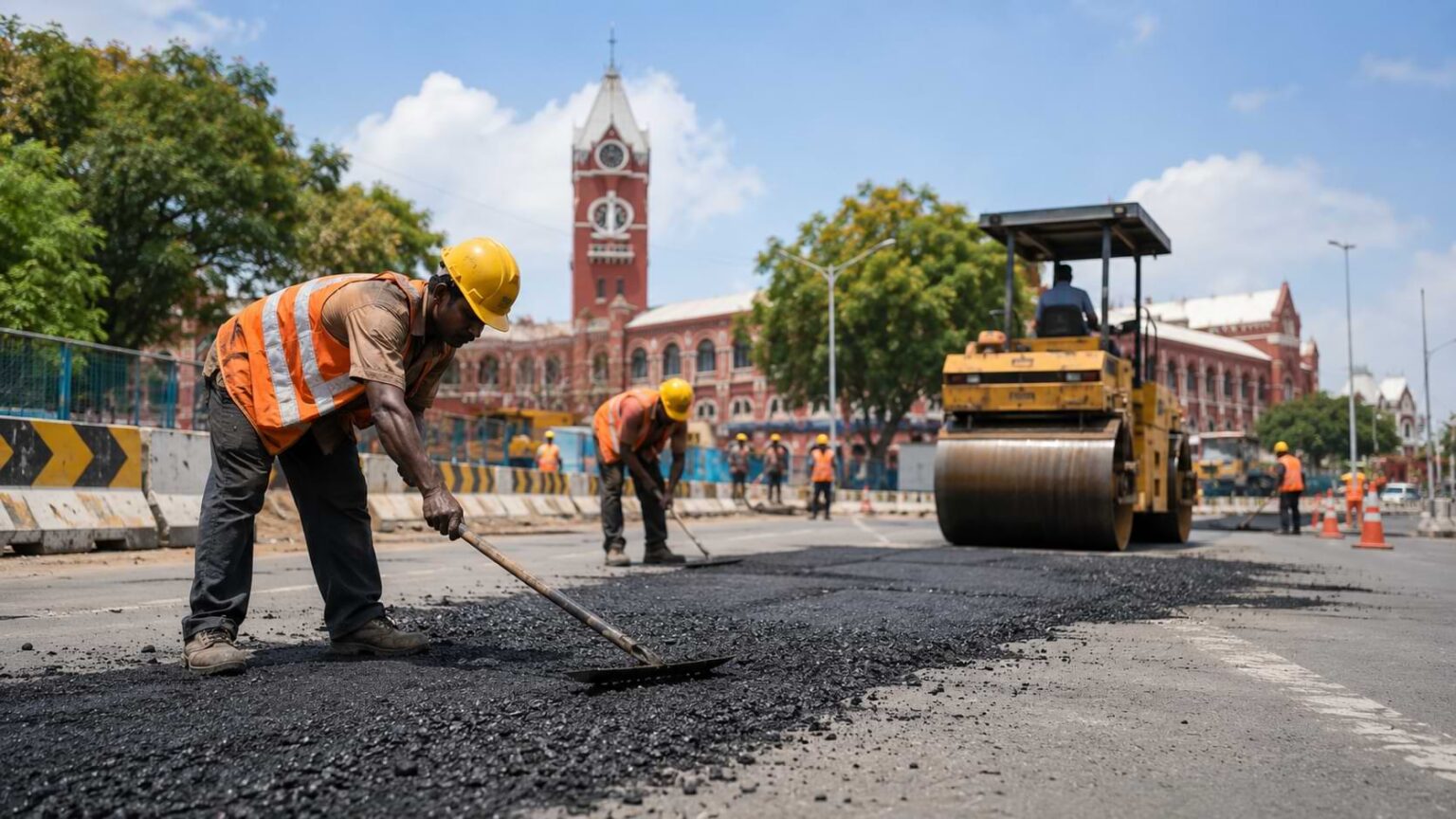

The Tamil Nadu Government led by Chief Minister Joseph Vijay has brought revolutionary change in the form of Competitive Bidding for Chennai Corporation Civic Works. With this strategy already bringing in savings of 25-30% in tender rates for minor civic works in GCC projects.
It has only been a few weeks since the adoption of the process but it is expected to help the Chennai Corporation to save crores each year while checking corruption. This comes as a big change in contrast to previous strategies of using less number of tenders which used to lead to over-billing along with corrupt practices like bribe-based contractor pre-fixing. Why is Competitive Bidding Important for the Citizens of Chennai?
Competitive Bidding for Chennai Corporation Civic Works makes all minor works including road repairs and drainage facilities accessible to open tendering processes. Earlier, many minor civic works were done through restricted tendering processes.
Major advantages include Reduced cost to taxpayers due to low project costs.
- Absence of bribes in tender allotment.
- Accountability brought about by the process of transparency.
- Improved delivery of services including roads, storm water drains, and amenities.
- Initial results from the first batch of tender allocations for restoration works of road-cuts are showing bids 25-30% below budget estimates.
Implementation of the Reform:
Tamil Nadu government has stipulated the requirement for competitive bidding for all civic works conducted by GCC, whether large or small. Contractors will have to vie openly for projects through Tamil Nadu e-tender portal. Steps in the new process:
- Advertisement of tenders in public domain with clear specifications.
- Submission of bids online to avoid any physical tampering.
- Evaluation on the basis of lowest responsive bid and competency.
- Timelines for award and implementation.
In this way, more contractors have been lured into participating in this reform, which has lowered prices. An official pointed out that initial results from June 2026 tenders have shown the immediate effects of this policy.
Without middlemen or syndicates, competition can thrive.
Impact on Project Expenses and Savings Potential
The savings made from 25-30% decrease in the price quoted is very high indeed. To give you an idea, there are many small projects carried out by the company each year that total hundreds of crores in value. Average cost incurred in minor projects in one year is ₹500 crores. The savings of 25-30% in the costs may amount to ₹125-150 crores per year. They can then be utilized for further projects. Contractors used to quote high bids to include payments made secretly but now that bribes have been reduced, they provide reasonable quotes.
CM Joseph Vijay’s Approach to Clean Governance
The CM Joseph Vijay government places great importance on transparency as one of the principles of its governance. In this competitive bidding system, the CM is fulfilling one of his electoral promises of clean governance. Taking charge in May 2026, the government has taken many steps towards implementing reforms in the urban sector. Chennai Corporation reform has been one of the initial steps taken by the government towards accountable governance.
This can act as a benchmark for all other municipal corporations in Tamil Nadu. If implemented elsewhere in the state, there could be huge savings for the state and also build credibility.
Challenges and the Way Forward
There are bound to be some challenges, especially in the beginning. There might be some contractors who would take some time to adjust to the competitive environment. There is always the fear that the quality suffers due to low bidding.
GCC must ensure: Strict quality audits during and after execution.
Prompt payment of contractors.
Building the capacity of small firms.
However, despite these challenges, success has achieved till now is an indication of great potential.
Implications of this for Tamil Nadu
Urban Competitive Bidding for Chennai Corporation Civic Works has implications not only for Chennai but other corporations such as Coimbatore and Madurai that may adopt a similar strategy, thereby saving money for the state government. Recalling some of the problems faced in the past with the civic works in terms of cost overruns and delay, this is going to provide an opportunity for the government to achieve its infrastructure objectives at lower cost.
How Will this effect Chennai Residents and Future Works
Residents of Chennai can expect improvements in civic amenities without corresponding increases in taxes, since the costs have been reduced, more projects are going to be done with the saved money, such as:
Pothole filling works and maintenance of footpaths will be done quickly.
Desilting storm water drains will be taken up widely.
In effect, this will increase the livability of a city which faces many challenges in this regard, due to heavy rainfall and associated problems.
The policy would stimulate economic activity because it allows more participation in the market.
A Reformed Model That Will Pay Off in the Long Run
Competitive bidding for civic works in the Chennai Corporation implemented by the Tamil Nadu government is already resulting in savings in the range of 25-30%. The transparency of the process is not just going to save the government money but also help restore faith in the system. Asked if this reform will revolutionize the manner in which civic works are carried out in the state in the future, Chief Minister Joseph Vijay’s emphasis on bribery-free environment and competition shows that the state is taking the lead when it comes to urban efficiency. For more information about the first tenders, see this Times of India report.
