



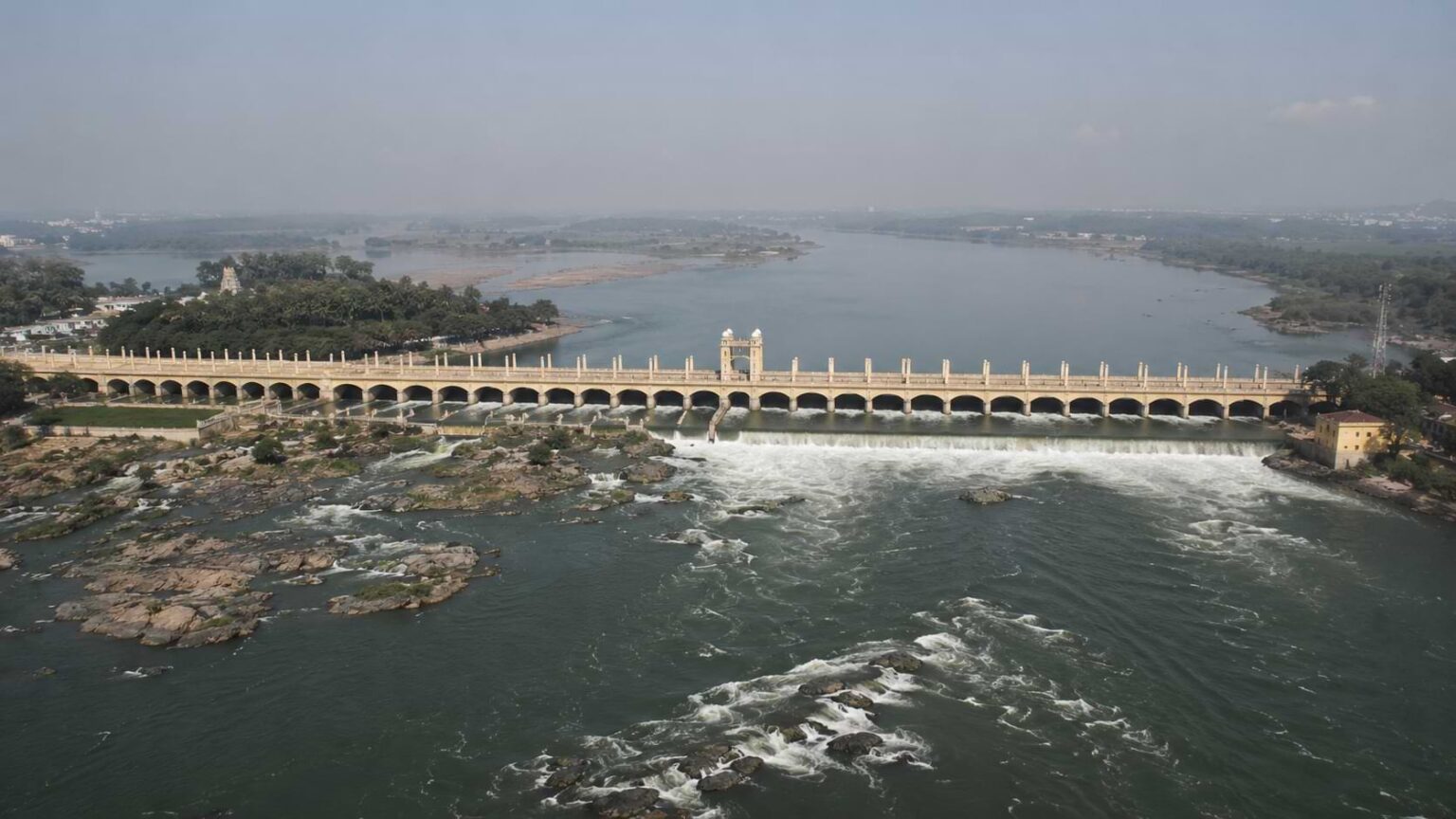

The Cauvery Water Dispute between Karnataka and Tamil Nadu is the oldest conflict in India. The central focus of the dispute is the Cauvery River, which has its origin in Karnataka and passes through Tamil Nadu to flow into the Bay of Bengal. Both states use the river to an extent where Karnataka requires the river for domestic, agricultural and urban needs particularly of the city of Bangalore whereas the state of Tamil Nadu uses the river for farming in the Cauvery delta region, which is the major rice-producing area of Tamil Nadu.
This dispute became significant after the end of colonial agreements. The state of Tamil Nadu demands from the state of Karnataka as the upper riparian state to supply the necessary quantity of water as per the ruling of the tribunal and courts. But the Karnataka state argues that during drought years it cannot supply the complete amount as it suffers from scarcity of water.
But the question of river flow being variable each year and the demand for water from both the states continuously increasing remains a ground reality in the face of attempts by the Cauvery Water Disputes Tribunal and later the Supreme Court to solve the issue through fixing of water sharing formula. The Cauvery Water Management Authority has also been established to oversee its implementation.
The latest point of contention is the Mekedatu dam proposal of Karnataka across the Cauvery river. According to Karnataka, this dam is planned in order to provide drinking water for Bengaluru and to produce electricity. But the state of Tamil Nadu firmly stands against this idea, stating that any such construction upstream would limit the supply of water to their state. The Tamil Nadu legislature has passed a resolution against this project in June 2026 and appealed to the Union Government to not clear the project technically and environmentally.
In addition, recent happenings too highlight the agrarian issue in Tamil Nadu. The farmers from the Cauvery delta had agitated when the Mettur dam could not be opened on its customary date owing to a shortage of water. Tamil Nadu has also made demands regarding the release of Cauvery water on time for cultivation purposes.
A proper approach towards solving the problem would involve not only court intervention but also scientific management of water, transparency of the reservoir information, crop planning, rainwater harvesting, and coordination between the two States. Unless there is mutual trust, the Cauvery problem will keep coming up every year with the monsoons.
