



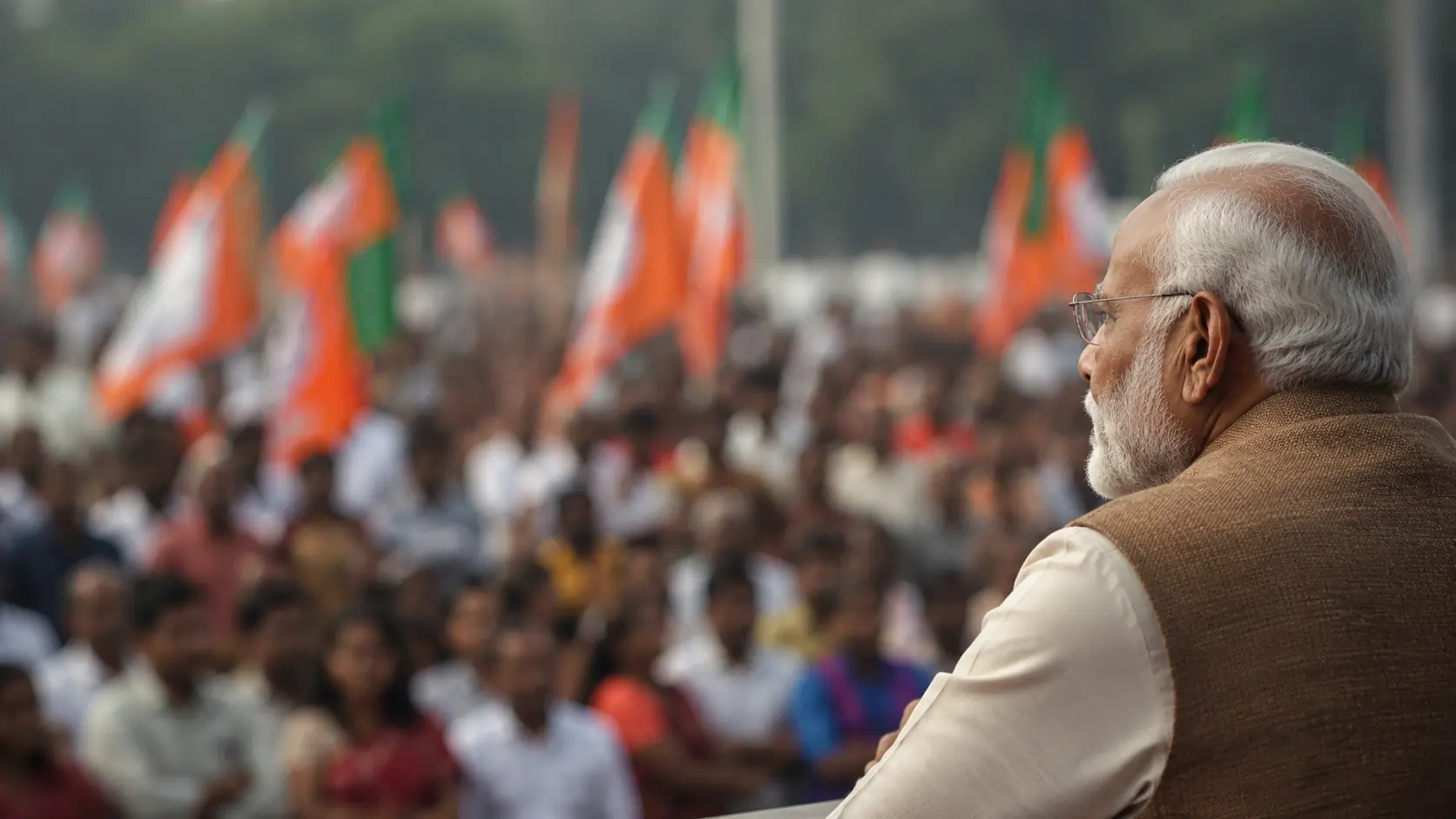

Failure of BJP South India still poses as an obstacle for BJP in realizing its goals at the national level, even as far as 2026. Despite spending millions of dollars on advertisements, the Bharatiya Janata Party (BJP) has failed to crack their bastion in southern India. Recent assembly elections prove the depth of its failure South India Failure is more than just losing some votes; it reveals certain mistakes made by the party which the regional powers take advantage of the Electoral Setbacks Continue in 2026.
Congress with the support of the United Democratic Front in Kerala has defeated LDF, who had been in power for the past ten years, winning more than 100 seats. Even a victory of three seats by the BJP will be a miracle.
However, Vijay formed political party TVK is set to take more than 100 seats away from the ruling Dravidian in Tamil Nadu. With the help of AIADMK, the BJP managed to win a single seat out of its total of 27 seats. BJP election result in south India include;
Kerala: 3 seats with marginal lead for NDA in 2 others
Tamil Nadu: 1 seat
Low-level alliance participation in Andhra Pradesh and Telangana
Failure to break into core vote base beyond low double digits in any region
These facts establish BJP South India failure as a long-term trend, not a temporary setback.
Resistance to Culture and Region: Reasons for South India’s Opposition to BJP Politics
In South India, language, social justice, and political federalism are of greater importance than politics at a national level centered on issues pertaining to the Hindi heartland. The Dravida politics in Tamil Nadu and welfare economics in Kerala stress on reason, education, and medicine, which are beyond the realm of BJP cultural politics.
The major hindrances include:
Linguistic issue: Hindi culture regarded with disdain compared to the Tamil, Malayalam, and Telugu cultures.
Regional economic independence: South India has greater human development indicators and rejects central dependency stories.
BBC’s analysis of regional political voting behavior reveals that locally established parties focused on state sovereignty constitute BJP’s primary rivals.
Problems with Alliance Politics: BJP had put its trust in alliances for its southern campaign but ended up with very little success. For instance, in Tamil Nadu, BJP’s seat sharing meant that the party failed to gain ground due to lack of visibility despite gaining 11% plus in Lok Sabha polls in 2024.
Key Mistakes: The excessive dependency on the anti-incumbency factor without tackling the issues on the ground.
High-level visits and yatras failing to yield results at the polling booths.
Underestimating the strength of the newcomers such as TVK, which was able to capitalize on the desire of change amongst the young voters.
BJP’s defeat in South India is mainly because it tried to use its northern success strategies in the south and failed to understand the local socio-economic factors involved.
Implications for Indian Politics and Future Perspective
Limited reach of BJP in the south reduces the party’s chances of doing well in the Lok Sabha elections. BJP needs to have around 129 plus seats in its kitty from southern states alone to claim nationwide dominance but struggles to do so. Only Karnataka represents a partial success story for the party.
Is growth through RSS capable of breaking down cultural barriers?
Can social security schemes and development rhetoric work without changing ideologies?
How would repeat southern disappointments affect funding for the future post-2029?
Adaptation or Regression?
The BJP must wake up to the fact that its defeat in South India in 2026 is an alarm signal for the party. The gains of some municipalities and even the presence of a few MLAs are not sufficient to compensate for the failure to establish a foothold in the states of South India. The BJP must reconsider its approach to Southern India and move beyond symbolism to embrace the values of language, federalism, and equality.
