



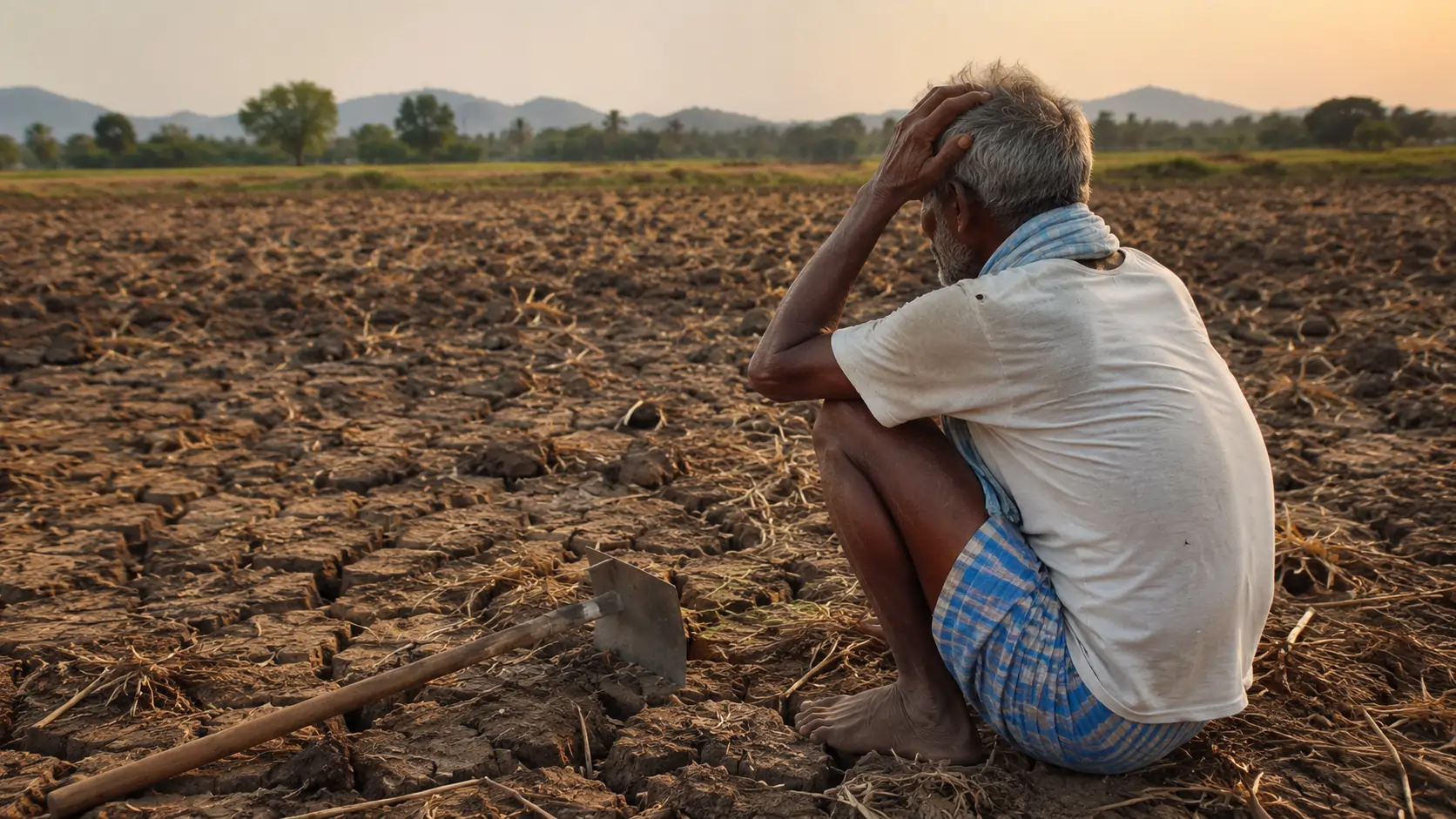

Every election in Andhra Pradesh follows the same script.
Leaders arrive in villages. They stand in fields wearing spotless white clothes. Cameras follow them everywhere. Farmers are called the “backbone of the nation.” Big promises are announced. Loan waivers. Better MSP. Irrigation projects. Financial support.
Then elections end.
And farmers go back to worrying about rain.
In many parts of Andhra Pradesh, farming no longer feels stable. Older farmers say there was always struggle in agriculture, but now the pressure feels different. Bigger. Constant. Everything costs more. Nothing feels guaranteed anymore.
Take chilli farmers in Guntur. One season prices shoot up and everyone thinks profits are coming. The next season prices crash badly because too many people planted the same crop. Farmers spend lakhs growing it, then sit helplessly in markets waiting for buyers.
Some return home angry. Some return silent.
Cotton farmers tell similar stories. So do tomato growers. One bad market season can wipe out months of work.
That is the part political speeches usually skip.
The cost of farming has become brutal. Seeds are expensive. Fertilisers cost more every year. Diesel prices affect everything from tractors to water pumps. Pesticides are another headache. Farmers keep spending money before they have earned anything back.
And if the crop gets damaged halfway through, that money is gone.
In villages, people now casually talk about loans the way they talk about weather. Almost every family owes money somewhere. Banks. Relatives. Local lenders. Shopkeepers.
Debt has become normal.
Many farmers borrow not only for crops but for daily life too. School fees. Medical bills. Weddings. House repairs. Farming income is often too unstable to handle all of it.
So the pressure keeps building quietly.
The government talks a lot about MSP, the Minimum Support Price. On paper, it sounds reassuring. Farmers should get fair rates for their crops. But many say reality is very different once they actually reach markets.
Procurement centres are often delayed or overcrowded. Payments can take time. Small farmers especially struggle because they cannot afford to wait weeks for money. They need cash immediately.
So they sell crops cheaply to middlemen.
That is why many farmers laugh bitterly when politicians claim agriculture is thriving.
Because thriving for whom?
There is also anger over irrigation promises. Andhra politics has revolved around water projects for years. Every government announces massive plans. Huge budgets are discussed. Foundation stones are laid. Giant posters appear everywhere.
But many farmers still wait for reliable water.
Rayalaseema remains one of the clearest examples. Farmers there have dealt with drought conditions for years. Borewells keep going deeper. Some fail completely. Entire farming decisions depend on whether rains arrive on time.
When rains fail, panic spreads fast.
People outside villages often do not understand how quickly things collapse for farmers. One weak monsoon changes everything. Families cut expenses immediately. Loan stress increases. Arguments inside homes become common.
And yet, every election season, the same unfinished irrigation projects return as fresh promises.
Climate change has made the situation worse. Older farmers say seasons no longer behave normally. Summers feel harsher now. Rain comes suddenly and heavily instead of gradually. Sometimes crops dry out. Sometimes floods destroy them in one night.
Nothing feels predictable anymore.
Small farmers suffer the most because they have no safety net. Rich landowners might survive two bad seasons. Small farmers cannot. One failed crop can push them into years of debt.
Crop insurance schemes exist, but many farmers complain constantly about them. Some say compensation arrives too late. Others say paperwork is exhausting. A few receive amounts so small they barely cover losses.
So people stop expecting much.
There is another change happening quietly across Andhra villages. Young people are losing interest in farming altogether.
Parents still want children to study and “settle” somewhere outside agriculture. Government jobs. Private jobs. Anything stable.
Because they have seen what farming does to people.
You can hear it in casual conversations now. Farmers themselves tell their sons not to stay in agriculture. They say there is no future in it anymore. Too much tension. Too much uncertainty.
That says a lot about the condition of rural life.
The strange thing is that Andhra Pradesh depends heavily on agriculture politically and economically. During elections, every party suddenly speaks the language of farmers. Leaders compete to sound more pro-farmer than each other.
But after elections, farmers say attention shifts back to cities.
New urban projects get headlines. Investments get celebrated. Tech and infrastructure dominate speeches. Villages fade into the background again unless there is a protest or a crisis.
This frustration has been building for years now.
Farmers are not asking for miracles. Most are not expecting luxury. They just want stability. Predictable prices. Reliable irrigation. Faster compensation when crops fail. Less dependence on middlemen.
Basic things.
Instead, many feel trapped inside a cycle where they work constantly but remain financially insecure anyway.
That is why political promises no longer excite many farmers the way they once did. They have heard too much already. Every government claims it will transform rural life. Every election brings dramatic announcements.
But standing in a hot market yard with falling crop prices feels very different from listening to speeches on a stage.
And that gap between promises and reality is exactly why anger continues to grow across farming communities in Andhra Pradesh.
