



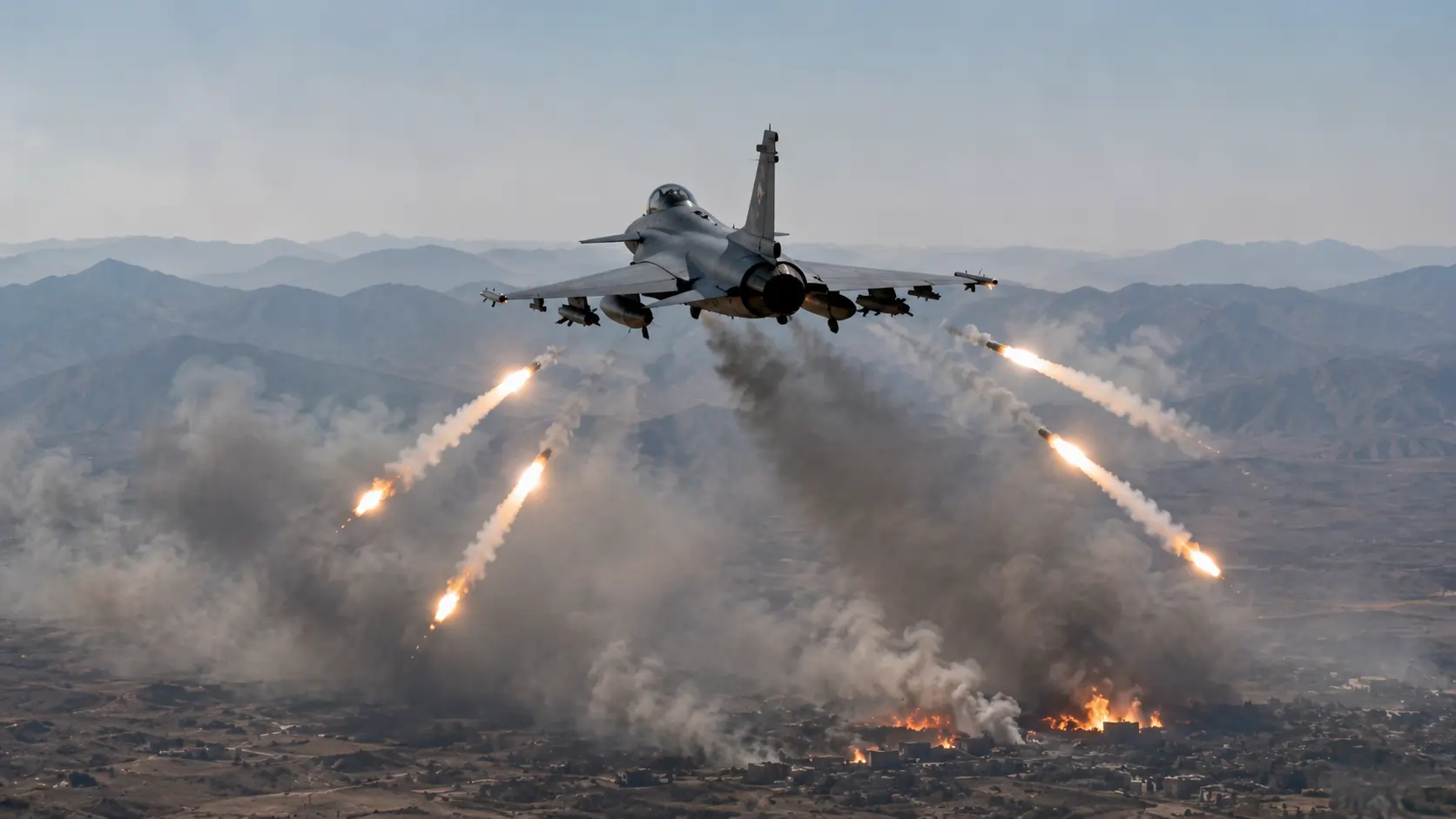

A year since Operation Sindoor, the discourse surrounding the event is as contentious as ever. To India, it was a decisive counter-terror operation; to Pakistan, an unsuccessful coercive move by India. Analysts, in turn, have paid little attention to nationalistic rhetoric and have concentrated their scrutiny on the strategic success of Operation Sindoor. The operation started on May 7, 2025, following an attack in Pahalgam in which 26 civilians lost their lives on April 22. India claimed that it had attacked nine terror infrastructure sites in Pakistan and Pakistan-administered Kashmir, whereas Pakistan denied any connection with the attack in Pahalgam and dismissed the claims of India regarding the targets.
India’s official stance is that the operation sent out a message of “the new normal,” indicating that future terror attacks will be met with military retaliation, even cross-border. On the one-year anniversary of the operation, India reiterated its legitimate right to retaliate against Pakistani-backed terrorism and Indian Air Force officials claimed great success, claiming that the Indian forces had destroyed Pakistani military aircraft at airfields in Pakistan. Nonetheless, the official optimism has not settled the dispute. The crux of the matter lies in whether India managed to achieve its strategic objectives or not?
Deterrence Failure is the first flaw identified in this operation. According to the views of Retired Major General Ashok K. Mehta, although there might be military success for India, the greater goal – to deter Pakistan from terrorism across the border – was unattained. As he puts it, India “did not ‘defeat’ Pakistan” but merely “‘pacified’ it.” This distinction is key. While a single military operation may destroy buildings, launchpads, or camps, strategic victory must change the behavior of the adversary in the long term. Otherwise, the rebuilding of such infrastructure makes a temporary punishment, but no success at all.
The second point mentioned is the lack of transparency. A number of analysts pointed out that both India and Pakistan proclaimed their victories without providing full, verified information about them. According to the experts of Stimson Center, despite the declarations of victory made by both parties in the face of misinformation, the question of damage done to aircrafts on either side remained unresolved. In this way, lack of verified data made it harder for the population to believe in victory and achievements.
Strategic communication was the third area of failure. As per War on the Rocks, India may be seen as a better performer in this conflict than perceived in the overall narrative. However, India was not able to sell its side of the story to the domestic public and the rest of the world. This was a big blunder, especially for limited wars, since today limited wars involve much more than missiles and drones; they involve time, information, media, diplomacy, and evidence. The quick messaging strategy adopted by Pakistan ensured that India did not gain control of the narrative.
The fourth concern relates to the limited diplomatic implications of this war. India tried to isolate Pakistan diplomatically as a terrorist-supporting country, but it seems to be an incorrect assessment since the international community did not react the way India might have hoped it would. There were some opposition opinions in India itself which felt that Pakistan was not isolated in the same way as it was after the Mumbai attacks in 2008.
The final issue is the possibility for escalation. The attack was not contained to a relatively clean and one-sided raid. It escalated into a full-scale conflict lasting four days, including missile attacks, drone attacks, air battles, artillery barrages, and finally a ceasefire. According to War on the Rocks, the incident became one of the largest India-Pakistan disputes since decades ago, and according to RUSI, deterrence through punishment comes with risks because there will be future fringes attempting to create incidents in the future, making the “new normal” look good for India but risky.
Last, there are concerns about the policy issue. While India made a bold move against Pakistan by conducting a military strike, military strikes alone do not constitute a comprehensive counterterrorism policy. Improved intelligence gathering, border protection, diplomacy, information operations, and crisis management must take place alongside any military action.
However, a year down the line, Operation Sindoor cannot be termed a clear-cut success or a complete failure either. The Indian military showed its determination, and its psychological threshold for retaliation has been raised considerably. However, there are several flaws associated with the operation according to analysts, such as low deterrence value, lack of transparency, strategic miscommunication, no diplomatic gain, and high escalation potential. These factors imply that Operation Sindoor has not resolved India’s security challenges adequately.
