




Language, it’s not just a medium of communication. In Maharashtra, it’s an emotion, a politically sensitive issue, and the very bedrock of regional pride. This week, a single piece of paper from the government threatened to set that pride on fire, forcing the government into damage control mode, announcing a quick retraction.
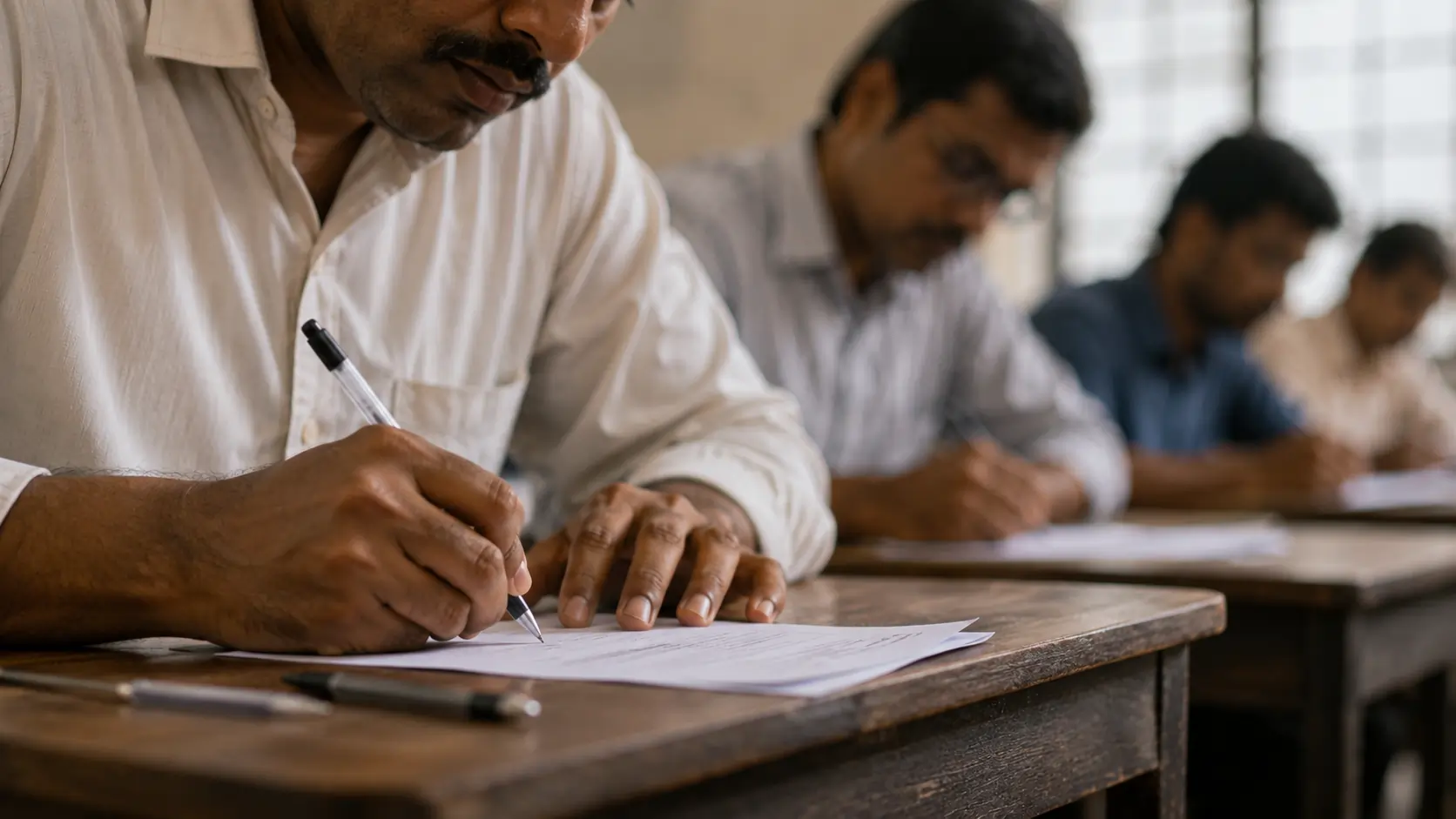
Fault lines of linguistic identity, the fear of Hindi imposition, and how a 50-year-old rule forced the Maharashtra government to its knees. Now, this is an official notification which was issued by the government. It started as a routine administrative exercise. The state’s Directorate of Language issued a notification last month, a mandatory Hindi examination for gazetted officers and non-gazetted government employees scheduled for June 28th.
The rule itself is not new. It dates back to 1976, rooted in the three language policy. Simply put, if a government official did not study Hindi up to the 10th standard, they had to clear this exam within 3 years of joining the service. The penalty? Your salary increments are frozen. Administratively, it sounds like a standard procedure. But politically, it was a ticking bomb.
The moment this notification hit the public domain, it struck at the very heart of Marathi Asmita, or Marathi pride. The backlash was instantaneous. For the local population, this was seen as a direct assault, a systemic attempt to impose Hindi on a state that is fiercely protective of its mother tongue. Marathi language groups didn’t just protest, they called for outright civil disobedience.
They urged public servants to boycott the exams. Regional parties like the Maharashtra Navnirman Sena, Shiv Sena UBT, champions of the sons of the soil ideology, went a step further. They threatened physical disruption. They vowed that the exam would not be allowed to take place. Marathi Bhasha Abhyas Kendra asked the government to scrap the rule itself.
This is utter nonsense, and this we are we as Marathi Abhyas Kendra, we are we have already made our intention clear that we decide we intend to uh continuously oppose this till the government revokes this particular action. There is a logic behind what we are trying to do. The government of Maharashtra’s Directorate of Language was established by YB Chavan for the development of Marathi language, for basically developing terminologies, dictionaries, to decide the language policy, and there’s a language advisory committee which is supposed to look into the development of Marathi in various domains of social life.
And rather than doing this particular genuine and core work, the government of Maharashtra’s Directorate of Language is asking its employees to study Hindi, give examinations in Hindi, and basically for those people who apparently do not understand Marathi.
Now, those who do not understand Marathi because they have come here newly in this particular city or in this particular state, they should make all the efforts possible to learn. And like the rickshaw and taxi wallahs who have stayed here for 15, 20 odd years, and they those who have domicile, and they can’t have the domicile unless they understand that and they can read and write Marathi. So, if people have come here for a longer period of time, they are supposed to understand Marathi.
Those who have are recent migrants, they should make all the possible efforts to learn the language and common Maharashtrians learn Marathi through cinema, learn Marathi through serials and through their daily conversation on the street.
So, there is no need for any government employee to learn Hindi for any kind of the the mean government communication, government business, we sincerely urge the unions of gazetted officers and non-gazetted employees of the government of Maharashtra to show spine and fight back.
I request all the employees of the government of Maharashtra to not adhere to this particular norm and go for Savinay Kayde Bhang, civil disobedience of the decision of the government of Maharashtra. The issue highlighted a deep-seated anxiety, the fear among locals that they are being culturally marginalized in their own land. The government initially defended the move.
BJP said that officials needed to know Hindi to function effectively, but it was a Shiv Sena minister who did a swift damage control maneuver. Uday Samant scrapped the exam, but he didn’t just stop there. He announced that the government will now review the 1976 rule itself, questioning its relevance in today’s Maharashtra. By completely scrapping the exam, the government has managed to avoid a flash point, but it highlights the need to respect the linguistic aspirations of the local population.
