



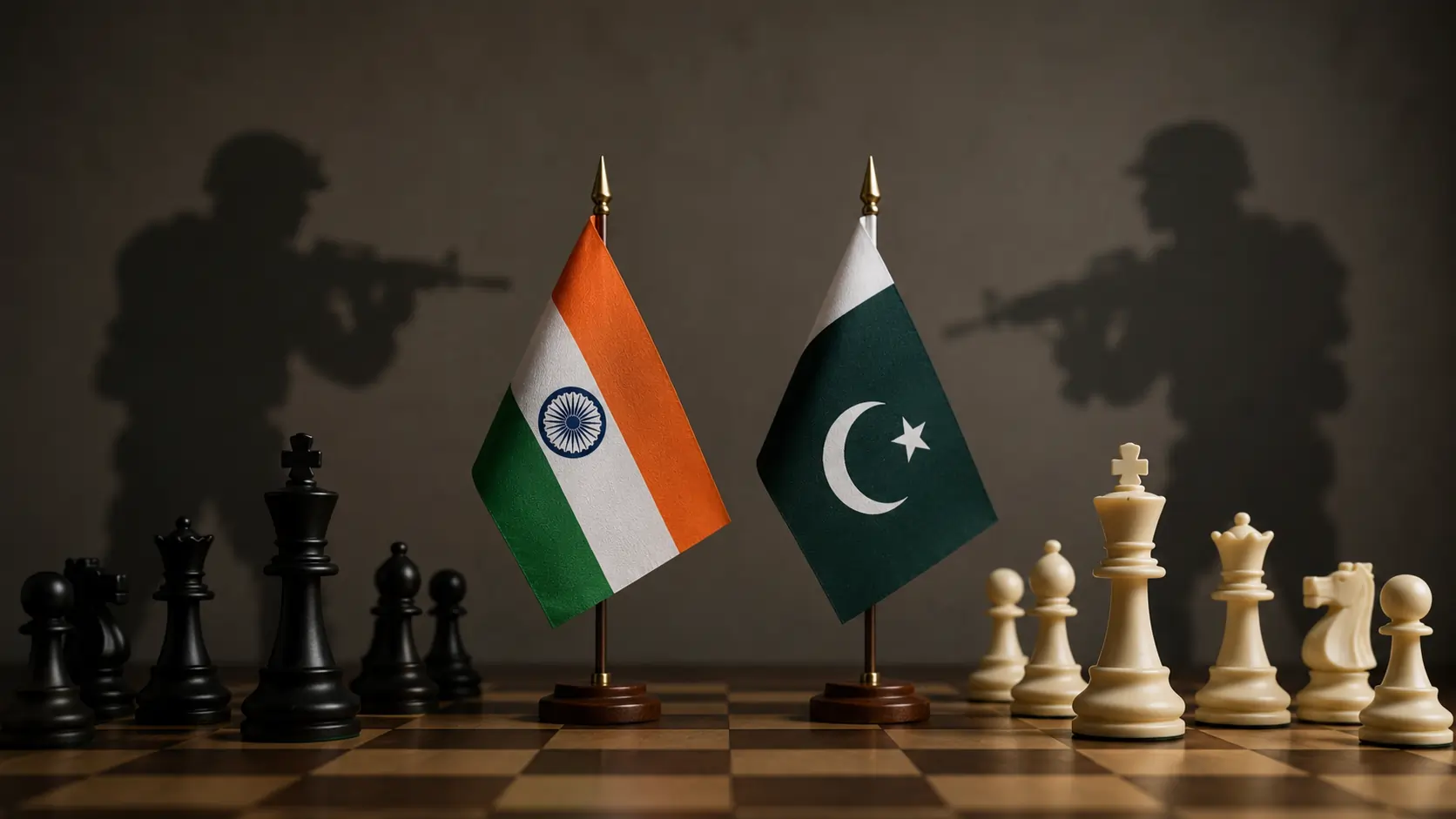

Operation Sindhoor, which has attracted considerable attention among strategic analysts and in the media, is increasingly being characterized as a watershed moment, one that demonstrated weaknesses in the diplomatic strategy adopted by the Modi government, even as it highlighted strengths in the diplomatic strategy of the other side. Despite the attempt to portray the operation as a well-calculated strategy, a closer look at the situation reveals that reality was far different than portrayed by official propaganda. The following discussion examines the issue using comments made by journalist and strategic affairs analyst Praveen Swamy.
The underlying problem lies in the disconnect between military or tactical action and its implications for diplomacy. The Modi government has built up an image of itself in the area of diplomacy, projecting itself as a forceful diplomat capable of acting swiftly. But, as has been pointed out by Praveen Swamy in his analyses, there have been occasions where actions without accompanying strategic communication could prove costly in terms of diplomatic relations.
Swamy contends that while such operations may provide immediate benefits for domestic politics, they are unlikely to gain sustainable geopolitical leverage. Rather, they could spark international doubt, especially if the facts, intentions, and effects are not in line. According to him, in the context of contemporary diplomacy, it is important not only to prove one’s strength but also to manage perceptions, alliances, and stories. From this point of view, the operation in question seems to have failed.
Firstly, as a diplomatic failure, the operation is reflected in the inability of the Modi administration to dominate the international discourse after the event. In the modern connected world, perception is as valuable as action. As Swamy emphasizes, if there are conflicting versions of events, especially in light of a well-prepared diplomatic opposition, the potential advantage of a daring action disappears. In this case, the other side benefited from the situation by intensifying its diplomatic efforts to address the issue in international arenas and creating doubts about the operation in the international community.
A related point of criticism was that there seemed to be no coordination between the military operations being pursued and diplomacy. Swamy has repeatedly argued that it is essential to ensure harmony between these two important aspects. Any military operation undertaken in isolation is bound to fall flat. In this case, while the operation was possibly successful as far as achieving its military objectives were concerned, it failed insofar as diplomacy was concerned.
Moreover, the responses from various world powers to this incident could only be described as lukewarm, if not openly hostile. This aspect is especially noteworthy in view of the fact that diplomacy is often considered successful when it is capable of generating favorable opinion in the international community. However, the Modi-led government has been unable to convince any country of the necessity and legitimacy of such actions. According to Swamy, it seems to be the case that showy diplomacy does not work and that more needs to be done behind closed doors.
However, the opponent was much more flexible and pragmatic in its response. Its reliance on narrative construction, law, and international cooperation allowed it to exploit the scenario for its own benefit. According to Swamy, this shows that it has greater insight into the dynamics of modern diplomacy, where information, timing, and coalition formation play an essential role. In response to this event, it did not act spontaneously but rather predicted its diplomatic repercussions.
Another relevant point raised by Swamy concerns the link between domestic and international spheres in foreign policymaking. Countries take risks by implementing drastic measures to gain domestic political legitimacy, but their policies may fail if they do not properly balance domestic and international considerations. While Operation Sindhoor could have been popular domestically, it could have negatively impacted India’s diplomatic standing internationally.
Implications for 21st century diplomacy are, therefore, quite far-reaching based on this incident. According to Swamy’s evaluation, power alone is not enough but should be coupled with strategy, credibility, and international recognition. It would appear that the Modi-led government was too concerned about getting its message across in the moment as opposed to making the right impact in the long term, and the result has been a diplomatic loss.
Conclusion:
Operation Sindhoor provides an example of how overdependence on hard power can backfire in the absence of strong diplomatic foundations. Based on insights from Praveen Swamy, it has become clear that Operation Sindhoor failed to provide any strategic benefits, while the fact that the other party handled this situation much better shows that diplomacy remains indispensable.
