




A Quiet Issue Returns to the Surface
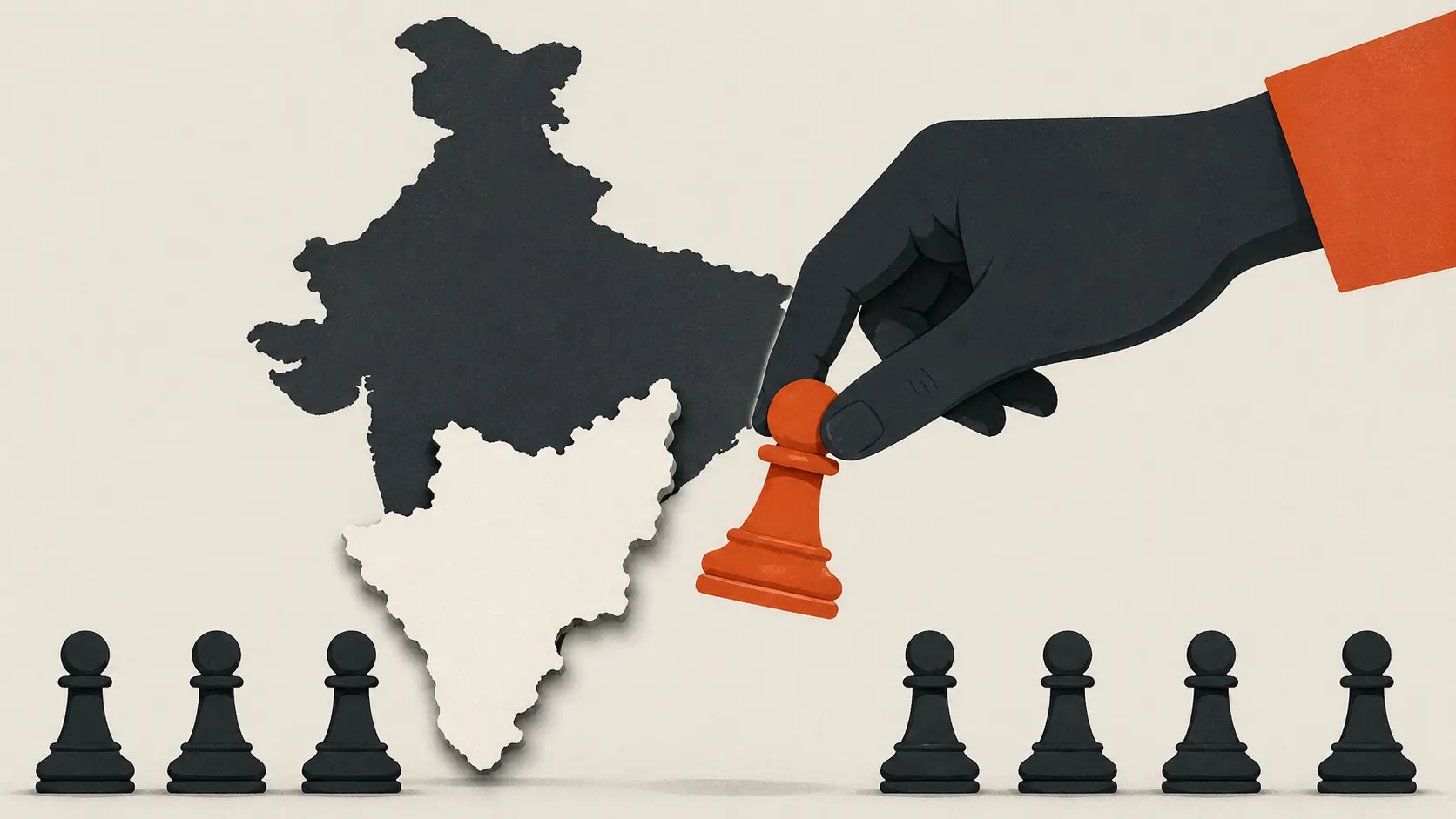
The language question is back in South India. It never really left. It only went quiet for a while.
- Policy Push Without Open Announcement
- A Different Form, Same Pattern
- A Watchful Political Response
- Education as the Frontline
- How Pressure Builds Quietly
- The Centre’s Argument
- Language as Dignity
- Economic Weight vs Cultural Signalling
- Political Calculations in the South
- Social Media as an Amplifier
- A New Generational Dynamic
- A Different Kind of Mobilisation
- More Than a Language Debate
- Reading the Signals
Policy Push Without Open Announcement
Hindi is once again being pushed through policy, exams, and administration. The push is subtle in form. It is aggressive in effect. It shows up in recruitment rules. It appears in central government communication. It creeps into education policy frameworks. Each move looks small on its own. Together they form a pattern.
Memory of Past Resistance
States like Tamil Nadu have seen this before. The anti-Hindi agitations of the 1960s were not just about language. They were about power. They were about who gets to define India. That memory has not faded. It sits close to the surface. It shapes how every new policy is read.
A Different Form, Same Pattern
The current phase looks different but feels familiar. There is no single dramatic trigger. There is accumulation. Competitive exams increasingly privilege Hindi. Central portals default to Hindi interfaces. Official events foreground Hindi slogans. None of this is accidental. It signals a preferred linguistic order.
Language vs Imposition
For many in the South, this is not about rejecting Hindi as a language. Hindi films are popular. Hindi songs travel well. Migration has created everyday contact. The resistance is political. It is about compulsion. It is about hierarchy. A link language is acceptable. A dominant language is not.
Public Space and Access
Karnataka has seen protests over language use in public signage and services. These protests are often dismissed as regional sentiment. That reading misses the point. Language in public space is tied to access. It decides who feels included. It decides who must adjust.
A Watchful Political Response
In Andhra Pradesh and Telangana, the response has been less street-heavy but equally alert. Political parties track these shifts closely. They know language can quickly turn into an electoral issue. It has done so before. It can do so again.
Education as the Frontline
Education is the most sensitive front. The National Education Policy 2020 speaks of flexibility. It speaks of three-language formulas. On paper, it avoids coercion. On the ground, implementation often leans in one direction. Hindi appears as the default third language in many contexts. Alternatives exist but lack equal push.
How Pressure Builds Quietly
This creates a quiet pressure. Schools follow what is easiest to implement. Parents follow what they think will help in exams. Over time, choice narrows without any formal mandate. That is how policy works when it wants to avoid open conflict.
The Centre’s Argument
The Union government frames Hindi as a unifying tool. The argument is administrative efficiency. A common language reduces friction. It speeds communication. This logic has limits. India is not a unitary state. It is a federation with strong linguistic identities. Efficiency cannot override consent.
Language as Dignity
Southern states have a different political memory. Movements here linked language to dignity. They linked it to self-respect. That is why even small signals matter. A circular in Hindi. A form without regional options. A speech that assumes comprehension. Each instance adds to a sense of exclusion.
Economic Weight vs Cultural Signalling
The economic angle sharpens the debate. Southern states contribute a large share to the national economy. Cities like Bengaluru and Chennai drive services and manufacturing. Yet policy signals often come from a Hindi-first frame. This creates a gap between contribution and recognition.
Political Calculations in the South
Political parties in the South are recalibrating. Some take a hard line. Others adopt a measured tone. No one wants to appear anti-national. At the same time, no one can ignore local sentiment. The balance is delicate. It can shift quickly if a flashpoint emerges.
Social Media as an Amplifier
Social media has changed the tempo. A single incident can travel fast. A signboard. A government notice. A clip from an event. These become triggers. They create waves of reaction. They also create pressure on state governments to respond.
A New Generational Dynamic
There is also a generational layer. Younger voters are more mobile. They are more exposed to multiple languages. They are less rigid in daily use. Yet they are not indifferent to identity. They draw a line at compulsion. They resist when choice disappears.
A Structural Dilemma for the Centre
The Centre faces a structural dilemma. It wants uniformity for governance. It operates in a country built on diversity. Pushing too hard risks backlash. Moving too slow frustrates its own administrative goals. This tension will not go away.
A Different Kind of Mobilisation
The return of anti-Hindi mobilisation will not look like the past. It may not produce large street agitations at once. It will build through smaller confrontations. It will appear in policy pushback. It will surface in elections. It will shape alliances.
More Than a Language Debate
What is at stake is not just language policy. It is the balance of the Union. If one language begins to define access to power, others will resist. That resistance will not be framed as linguistic pride alone. It will be framed as federal rights.
Reading the Signals
The signals are already visible. They are scattered but consistent. Each one on its own can be explained away. Together they point to a shift. South India is reading that shift closely. It has done this before. It knows where it can lead.
