



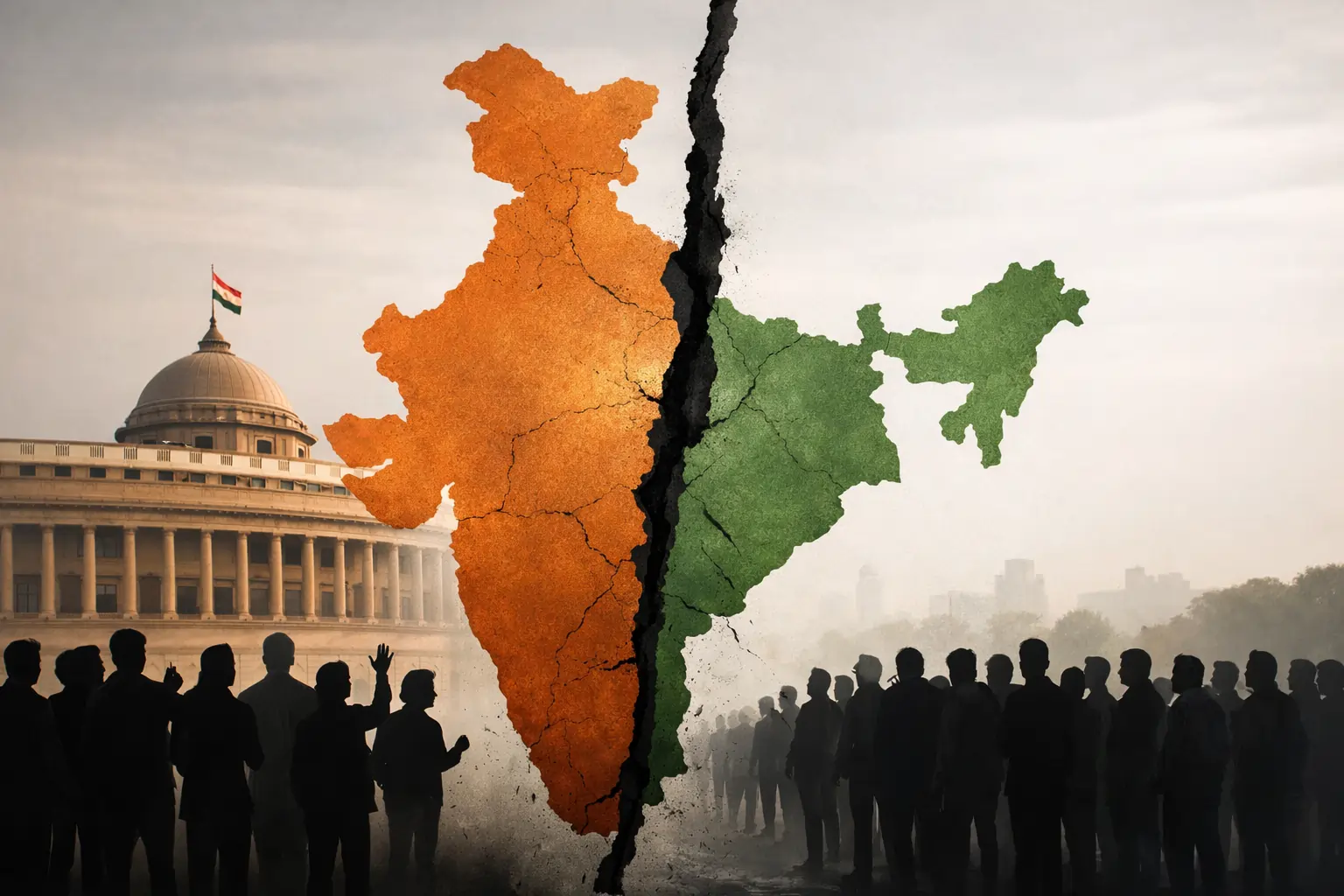

Delimitation looks technical. It is not.
It is about power. It decides who speaks. It decides who is heard.
India will soon face a new delimitation exercise. It will redraw constituencies. It will also reset how many seats each state gets in the Lok Sabha. The last freeze began in 1976. It was extended several times. It now ends in 2026.
This moment has been delayed for decades. That delay masked a growing imbalance. Now the reset is coming. And it will change the structure of Indian politics.
The rule behind delimitation is simple. Representation must follow population. On paper, this looks fair. In practice, it creates a deep divide.
States with high population growth gain more seats. States that reduced population growth gain fewer.
This is where the problem begins.
Southern states like Tamil Nadu, Kerala, Karnataka, and Andhra Pradesh invested early in public health and education. They pushed family planning. Fertility rates fell. Population growth slowed.
Northern states like Uttar Pradesh and Bihar saw slower change. Their populations grew faster. Their demographic weight increased.
A population-based formula converts this into political advantage.
This creates a contradiction at the heart of policy.
For years, India encouraged population control. States that succeeded are now at risk of losing influence. States that lagged may gain more power.
The system ends up rewarding outcomes it once tried to prevent.
This is not just theoretical. It affects real power.
More seats mean more votes in Parliament. More votes shape laws. More votes decide budgets. The shift is direct.
Even if southern states do not lose seats in absolute terms, their share will shrink. In a majoritarian system, share matters more than absolute numbers.
A smaller share means weaker bargaining power.
This is where federal tension enters the picture.
India is not a uniform political space. It is a federation. Balance between regions is essential. When that balance shifts too sharply, friction follows.
The concern is not just about numbers. It is about voice.
If a few large states dominate representation, national politics becomes concentrated. Policy priorities begin to reflect those regions more strongly.
Other states begin to feel sidelined.
This sense of imbalance is already visible in fiscal debates.
Southern states contribute a large portion of India’s tax revenue. They have stronger industrial bases. They generate significant GST collections.
At the same time, central redistribution often favors less developed states. This is expected in a welfare system.
But when combined with delimitation, it creates a layered imbalance.
The South contributes more resources. The North may gain more representation.
One side pays more. The other side may decide more.
This perception is politically sensitive. It feeds a growing narrative of unfairness.
Federal systems depend on trust. They depend on the belief that the system is balanced. Once that belief weakens, tensions grow.
Language disputes begin to carry more weight. Fiscal disagreements become sharper. Political rhetoric becomes more regional.
Delimitation does not create these tensions alone. But it amplifies them.
The political system now faces a difficult choice.
A strict population-based model will shift power significantly. It risks alienating states that have performed better on development indicators.
A frozen system avoids that shift. But it denies growing populations fair representation.
Both options have costs. There is no clean solution.
This is why alternative approaches are being discussed.
One option is to increase the total number of seats in the Lok Sabha. This allows growing states to gain representation without sharply reducing the share of others.
Another approach is to adjust fiscal transfers. This can reduce the perception that some states are carrying a disproportionate burden.
A more complex idea is to include development indicators in representation formulas. This would move beyond pure population metrics.
Each of these options requires political agreement. That is the hardest part.
Delimitation is not just a technical exercise. It is a political negotiation.
At its core, this issue is about what India wants its democracy to reward.
Should representation reflect only numbers. Or should it also reflect governance outcomes.
Should states that controlled population growth lose influence. Or should that effort be protected in some way.
These are not easy questions. But they cannot be avoided.
The outcome of this process will shape India for decades.
It will define who holds power in Parliament. It will shape how policies are made. It will influence how resources are distributed.
Most importantly, it will affect how states relate to each other.
If handled carefully, delimitation can update representation without breaking balance.
If handled poorly, it can deepen regional divides.
It can turn existing tensions into lasting fault lines.
Delimitation was designed to ensure fairness. But fairness is no longer straightforward.
India today is unequal in development, population, and capacity. A single rule cannot fully capture that complexity.
This is why the coming exercise carries so much weight.
It is not just about redrawing boundaries.
It is about redefining political power.
And once that power shifts, it does not easily return.
