



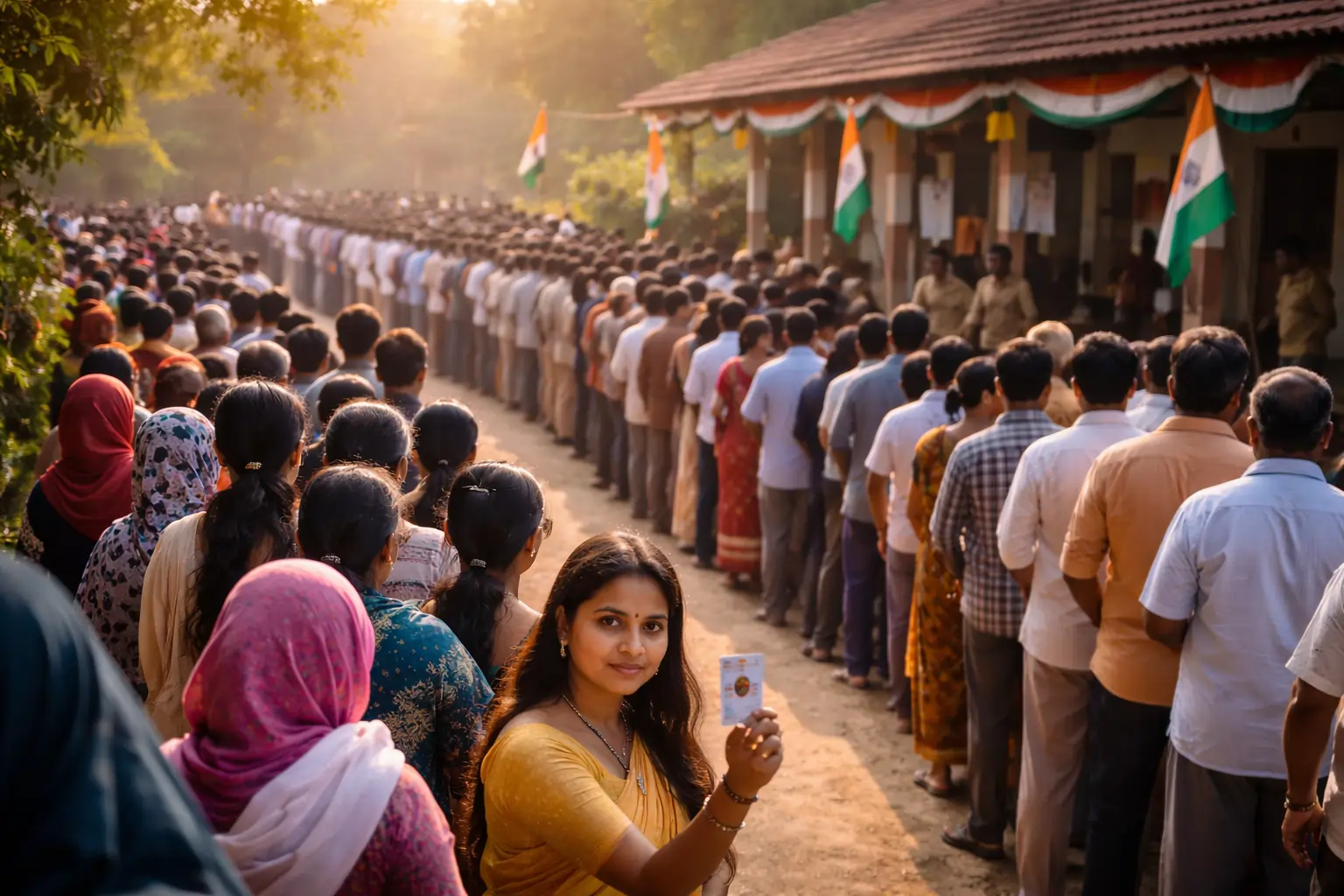

There was an immense amount of voter awareness and participation during that time. All the 140 seats came under one round of elections, which took place on April 9, while the results would be out by May 4, 2026. Several million voters went out to vote for their representatives, and hence their democratic credentials stood revealed through the election process, where LDF, UDF, and BJP NDA candidates fought against each other.
The turnout percentage of Kerala Voter Turnout of 2026 saw an evident increase from their previous assembly elections. It was a manifestation of the increasing interest of the citizens of the state, particularly the females and youth voters.
Trends in Patterns
Progressive voting became more evident as time elapsed. Low turnouts were experienced initially, which increased gradually as the morning moved to the afternoon and even into the evening. Long queues could still be seen late in the evening as a result of many booths being occupied throughout the period. When the voting process was completed, there was a trend that the total number of turnouts in the election was larger than before and was one of the highest ever recorded in an assembly election in the state of Kerala.
Factors Influencing the rise in trend
The following factors could explain the higher turnout rates experienced.
Some of these factors include aggressive campaigning, mobilization of voters through alliances, topics such as development and welfare policies, and the conduct of elections with good security arrangements and capable personnel.
According to the professionals, these kinds of trends normally show the necessity of change or continuity in the area. The above-mentioned high voting trend in the Kerala Election 2026 will definitely pay off during the vote-counting phase.
Voting Trends in Kerala Elections
Voting trends reflected an anti-incumbent atmosphere. Shashi Tharoor remarked on high turnout as an indication of “a voting for change” mood after 10 years of rule by the LDF. High turnout was registered in urban centers and central areas, although turnout was slightly low in some traditional strongholds of the LDF alliance. Analysts said that late surges were likely to favor the opposition UDF coalition. The BJP, however, predicted that high turnout would support its position as the third pole.
Reason for the BJP’s Change of Strategy
Once again, in the NDA alliance, the BJP again made changes to its strategy in the Kerala election 2026 voter turnout period. Having spent decades failing in its attempts, it finally decided to target urban issues. It even nominated state president Rajeev Chandrasekhar in Nemom. While social media and campaigning tactics worked better than ideology alone, the progress remained slow on the ground. Commentators point out that after all its failed changes from alliances to community-level mobilization, the BJP has yet to succeed in changing Kerala’s two-party dynamic.
BJP Politics and Policies
The politics of the BJP have been severely critiqued by many during this period. The BJP has been criticized for promoting divisive nationalist Hindutva politics, which are not in harmony with the secular values and welfare policies of Kerala. Their politics of national development were also attacked for not taking into account any Kerala-based issues like unemployment and the rising cost of living in Kerala. Priyanka Gandhi has accused the BJP of striking a private bargain with the LDF government so as to cover up their investigation into corruption in the BJP ranks.
Corruption of BJP Candidates exposed. Some BJP contestants also became briefly involved in corruption investigations:
- Shobha Surendran (Palakkad): The Congress Party produced footage which proved her campaign’s payment of Rs 5,000 for a vote, despite her claiming that the video was a fake one; an inquiry was demanded by the Election Commission.
- Former state chief, K Surendran: She was charged with corruption in 2021 due to attempts at bribery of a candidate.
- More ADR data indicated that 38% of all candidates, regardless of political affiliation, had been involved in criminal cases.
Why Welfare Politics Remains More Relevant in the End
In the end, the Kerala Election 2026 Voter Turnout paints a larger picture in which the voters of Kerala find their politicians valuable for the welfare benefits of housing and health care provided by the LDF or the notion of growth through inclusiveness provided by the UDF.
But would the people of Kerala prefer welfare politics to nationalistic politics by the BJP? Could the BJP transform without any damage to its ideology? Only time will tell. The one thing that is sure is that the Kerala Election 2026 Voter Turnout signifies a group of people who have started taking politics seriously.
