



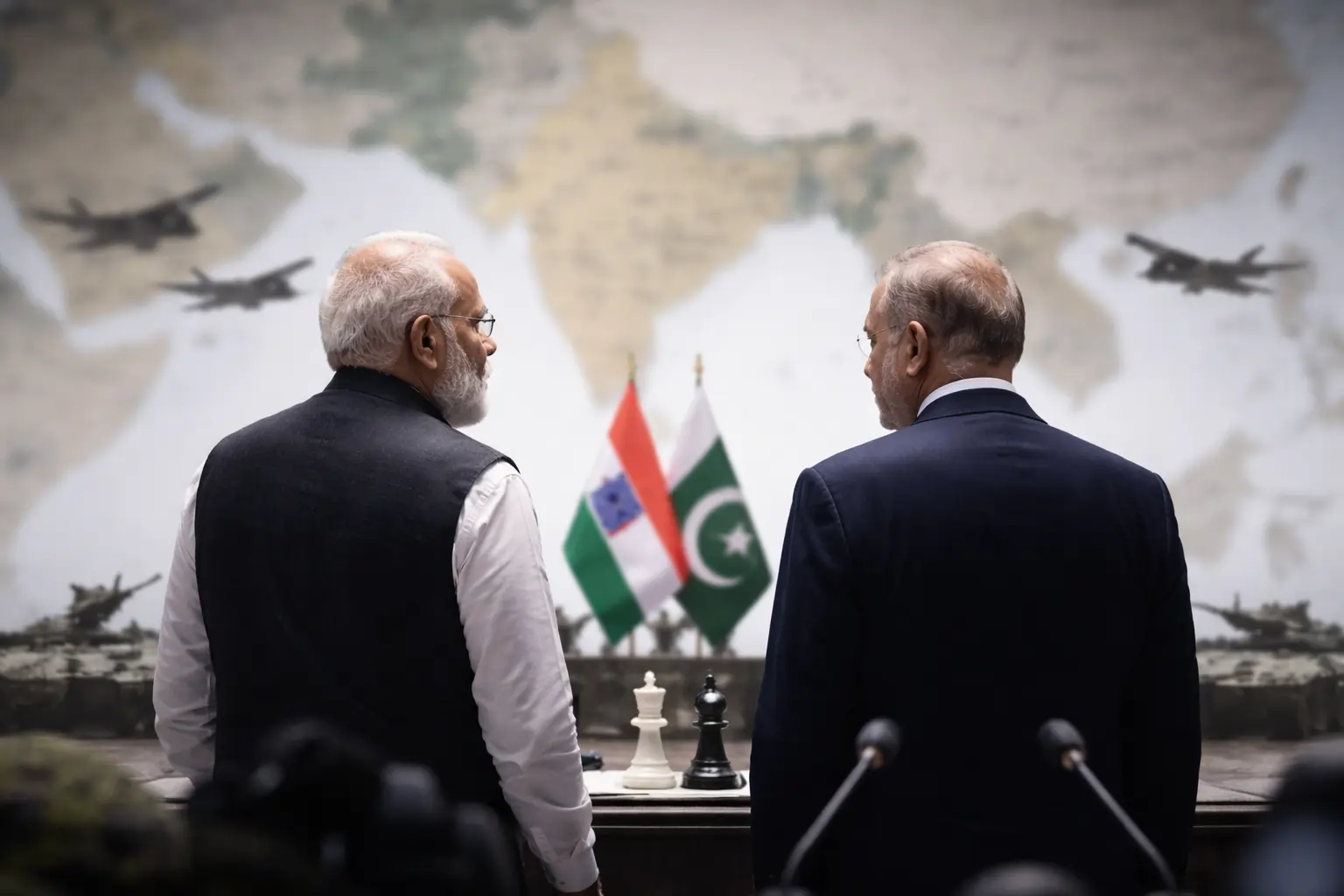

This ceasefire, therefore, marks yet another instance where the difference between the language and the reality of geopolitics in South Asia has become clear, especially in light of the lofty and yet increasingly untenable narrative crafted by Narendra Modi. For some time now, the Modi government has portrayed India as a rising power referred to as “Vishva Guru,” which essentially means a “global guru” from both a moral and strategic standpoint.
Indeed, the central theme of Modi’s foreign policy seems to have been trying to craft a strategic partnership between India and the United States. Numerous high-level visits, defense pacts, and overt demonstrations of friendship and partnership had all been designed to establish this geopolitical relationship. This is based on the simple assumption that an alliance with a global superpower will raise India’s stature internationally.
However, the ceasefire reveals another truth. When the tensions flared, the anticipated extent of the open support from the US side did not come about as the Indian Prime Minister was promising. On the contrary, the position of the Americans was more balanced and restrained, showing preference for stability to partisanship. It reveals a general law of diplomatic game that alliances are based not on sentiment, but rather on pragmatism. Perhaps the idea that the close relationship will necessarily guarantee a solid ally might prove mistaken.
It seems that Modi often relies on the visual effect more than on the substantive result. The large-scale ceremonies, show diplomacy, and aggressive rhetoric provide a picture of a strong man, yet not necessarily bring the desired results. This time, India failed to become an agenda-setter; instead, it appeared as just one of the many participants under pressure from external forces.
Crucially, Modi’s domestic policies have also had an impact on India’s foreign policy outlook. Centralized governance, majoritarian rhetoric, and internal disunity are factors that may undermine a state’s international credibility. Great power status entails more than economic or military prowess; it also includes a stable and credible governance structure. In other words, when internal problems become apparent, they will automatically reflect in international relations.
In comparison, Pakistan seems to have handled the scenario with relative strategic sophistication. By utilizing diplomatic avenues to foster peaceful resolution of tensions, it demonstrated its commitment as a responsible actor towards promoting regional stability. Despite some domestic issues, it succeeded in securing a diplomatic opening for itself rather than falling into the trap of overstretching its diplomatic capacity.
Pakistan’s diplomatic victory in this case stems from the fact that it adopted a calculated stance rather than resorting to aggressive rhetoric. Through constant dialogue and acting in accordance with international efforts at achieving peace, it managed to refute the image it has been accused of being a source of regional instability. Therefore, the ceasefire agreement does not solely represent the end of the conflict but also a reputational victory for Pakistan through diplomatic means.
In conclusion, the bigger picture that can be drawn from the above scenario is that the concept of ‘grand narratives’, which refers to the creation of an illusion about the nation-state such as that of the Vishva Guru, is bound to fail. Grand narratives cannot survive on the basis of symbolic references but require consistent policy coordination, credible institutions, and understanding of global geopolitics.
Moreover, the assumption that the major global players would remain aligned with the national aspirations at all times has been proved wrong in this case. The countries such as the United States pursue their own interest-based strategies, and therefore, the national interest and global interests sometimes do not go together.
In this context, the recent episode of ceasefire has turned out to be a very illuminating moment for South Asian politics. While it reveals the drawbacks in Modi’s foreign policy discourse, on the other hand, it shows how strategic and diplomatic engagements of the country can help it emerge with an upper hand.
If indeed, India aspires to become a world leader, then there might be a need for it to review its foreign policy approach – by adopting an approach that is not only realistic and coherent but also strategic rather than one that relies solely on its image.
