


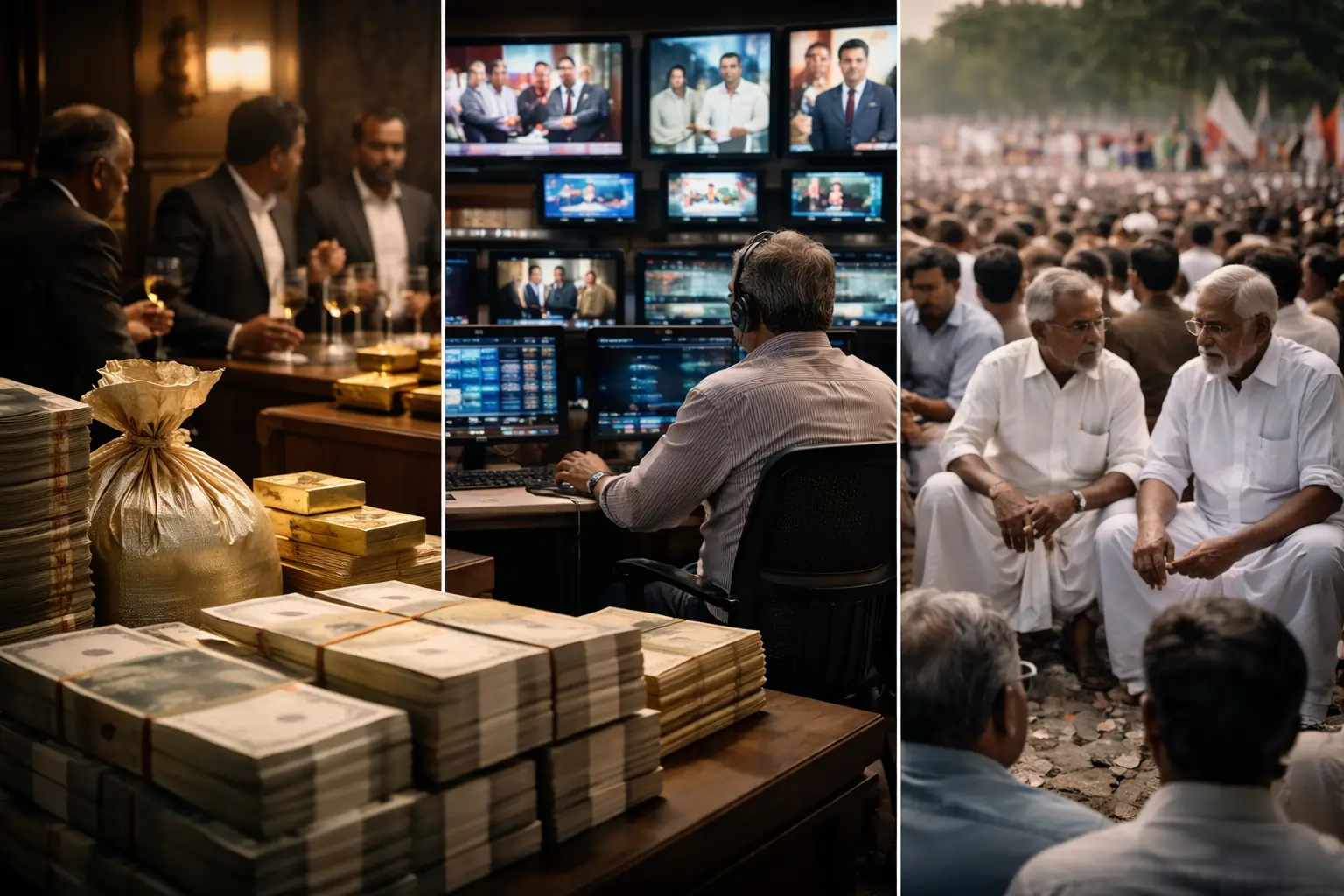

Many people believe that elections determine how power flows in a given area; however, this is not accurate for Andhra Pradesh. While the importance of elections is obvious, they hardly tell the entire story. The reality is that there are three main sources of power within the State: money, mass media, and caste. These three entities will dictate how the political structure of the state will function. The individuals leading this state may change; however, the three aforementioned sources will always remain the same.
The Power Of Money
To understand the political landscape of Andhra, you must first understand who has money, who controls the mass media, and what the effective caste groups are.
The last item on the list above is an important one – money. Political campaigns within Andhra require an incredible amount of money; therefore, when candidates devote funds to campaigns and their workers, they typically have to spend huge sums of money to win the election, as well as with respect to the costs associated with events and other costs associated with campaigning. To win any election in the state of Andhra Pradesh is a difficult task without financial resources.
Rich businessmen enter politics. Contractors enter politics. Real estate groups enter politics. Many politicians are also businessmen. Politics becomes an investment. They spend money to win. Then they use power to recover that money.
Government contracts are very important here. Roads, buildings, irrigation projects, sand, mining, and real estate. These sectors bring huge money. Many politicians have links with these sectors. So politics and business become connected.
This is why many people say Andhra is run by contractors, not just politicians.
The Role of Media
Media plays a very big role in Andhra politics. Many media houses are linked to political parties. Some channels support one party. Other channels support another party. News is not always neutral.
Media shapes public opinion. It decides what people see every day. It decides which leader looks strong. It decides which leader looks weak. If media supports you, your image becomes big. If media attacks you, your image gets damaged.
In Andhra Pradesh, media is not just media. It is a political tool. It is used for propaganda. It is used for image building. It is used to attack opponents.
So power is not just in the Assembly. Power is also in TV studios and newspaper offices.
Caste and Political Power
Caste is one of the most important factors in Andhra politics. People do not like to talk about it openly. But everyone knows it is true.
Different regions have different dominant castes. These castes have money, land, and social networks. They support specific political parties. They support leaders from their own caste. Voting patterns often follow caste lines.
Many political leaders also rise because of caste support. Caste gives them a vote bank. It gives them funding. It gives them ground workers. Without caste support, it is very hard to become a big leader in Andhra.
So when you see politics in Andhra, you are not just seeing party politics. You are also seeing caste alliances.
The Money Media Caste Triangle
Money, media, and caste work together. They do not work separately. A leader with money can fund media. Media can build his image. Caste group can give him votes. This is how power is built.
If someone has only money but no caste support, it is difficult.
If someone has caste support but no media, growth is slow.
If someone has media but no money, it is difficult to sustain.
Real power comes when all three come together.
This is why some leaders remain powerful for many years. This is why new leaders find it very hard to enter politics.
Why Ideology Is Weak
In many states, politics runs on ideology. In Andhra Pradesh, politics mostly runs on personality, caste, and welfare. Ideology is not very strong.
Leaders promise schemes. Leaders promise money transfer. Leaders promise welfare. Elections become a competition of schemes. People vote based on benefit, caste, and leader image.
Because of this, big businessmen, media owners, and caste leaders become very important. They influence which leader becomes powerful.
So the system does not change easily. Even when governments change, the power structure often remains the same.
The Role of Film Industry and Image
Cinema also plays a role in Andhra politics. Film stars have huge fan bases. Fans become political workers. Image becomes very important.
A strong image can bring votes. Media helps build that image. Money helps spread that image. Caste networks help convert that image into votes.
So cinema, media, money, and caste all connect with each other. This creates a powerful political system that is very hard to break.
What This Means for Common People
Common people vote in elections. But they do not control the system fully. The system is influenced by people with money, media control, and caste networks.
This does not mean voting is useless. Voting still matters. Governments still change. Policies still change. But the deeper power structure does not change easily.
That is why many problems remain for many years. Debt, unemployment, migration, and regional inequality continue. Governments change, but the system stays similar.
Conclusion
So who really controls Andhra politics?
Not just politicians.
Not just voters.
Real power often lies with money, media, and caste.
Money funds politics.
Media controls the narrative.
Caste controls the vote banks.
When these three come together, they control the state.
If someone wants to understand Andhra Pradesh politics, they must look beyond elections. They must look at who has money, who controls media, and which caste groups hold power.
That is where real power is.
