


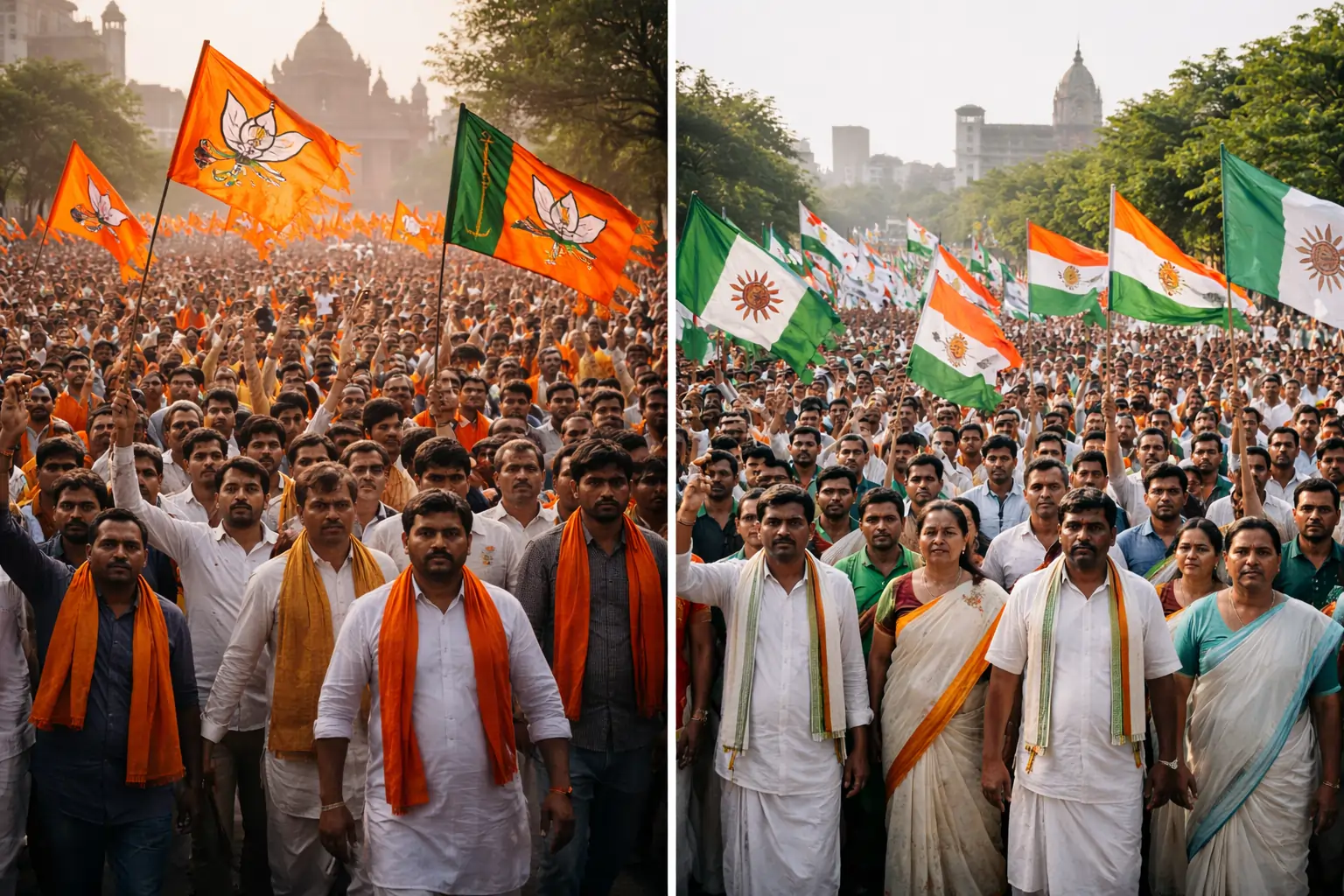

India is not one political story. It is many political stories happening at the same time. The biggest political difference in India is between North India and South India. They vote differently. They think differently. They choose different leaders. And they care about different issues.
This did not happen suddenly. History, language, caste, education, and economics shaped this difference over many years.
Language and Identity
The significance of Language in South Indian politics is quite clear. Languages such as Tamil, Telugu, Kannada and Malayalam are not just mere languages but also have their own separate identities. South Indians take pride in being Tamil, Telugu, Kannada and Malayalee.
In North India, Hindi became the dominant language. And many states have accepted it as their primary language. The South continued to resist switching to Hindi. When there were mass protests against using Hindi in Tamilnadu during the 1960s, students took matters into their own hands and out of this anger, political movements were born.
As a result of this, regional political parties became very powerful in South India mainly because they claimed to represent and protect their language, culture and rights. People believed them. The trust in these parties still remains strong today.
However, in North India, due to the absence of a greater threat posed by the Hindi language, national political parties have continued to be the most powerful political entities.
Rise of Regional Parties
One major political difference is this. South India votes more for regional parties. North India votes more for national parties.
In Tamil Nadu, two regional parties have dominated politics for decades. In Andhra Pradesh and Telangana, regional parties are very powerful. In Karnataka and Kerala, national parties are present, but regional identity still matters a lot.
Why did this happen?
Because South Indian politics grew from social justice movements, language movements, and anti-central government movements. Many South Indian leaders told people that Delhi should not control everything. They said states should have more power. People supported this idea.
In North India, politics was more influenced by national issues like religion, nationalism, and central leadership.
Caste Politics Works Differently
Caste exists everywhere in India. But caste politics works differently in the South.
In North India, caste politics is very visible. Political parties openly depend on caste vote banks. You will often see parties built around one major caste group.
In South India, caste is still important, but politics also focuses on welfare, education, and development. Many South Indian states had strong social justice movements. These movements pushed for reservations, education, and government jobs for backward classes many years ago.
Because of this, literacy improved. Social mobility improved. Politics became more about government schemes, schools, hospitals, and infrastructure.
So the political conversation changed.
Welfare Politics vs Identity Politics
South India focuses a lot on welfare politics. Governments give schemes like free education, free food, free bicycles, free laptops, health insurance, and support for women.
Some people call this freebie politics. But many poor families depend on these schemes. So they vote based on who helps their daily life.
In many North Indian states, politics often focuses more on religion, nationalism, and identity issues. Elections are often fought on emotional issues, not daily life issues.
This is a big political difference.
South Indian voters often ask:
What did the government build?
Did we get water?
Did we get roads?
Did we get schools?
Did we get jobs?
This creates a different type of politics.
Education Changes Politics
South India has higher literacy rates than many North Indian states. Education changes how people vote. Educated voters often ask more questions. They compare policies. They change their vote if the government does not perform.
This is why South Indian governments change more often. Voters are more willing to remove a government if they are unhappy.
In some North Indian states, voting patterns are more fixed because of caste and religious loyalties.
Economic Differences
South India is more urbanised in many areas. Cities like Bangalore, Hyderabad, Chennai, and Kochi became IT and industrial hubs. These cities created a large middle class. The middle class usually votes based on the economy, jobs, and infrastructure.
Many North Indian states are still more dependent on agriculture. Rural politics works differently. Local caste leaders and community leaders have more influence there.
So the economic structure changed political thinking.
Relationship With the Central Government
South Indian states often argue with the central government about taxes and revenue. Many South Indian states contribute more in taxes but feel they get less money back. This created a strong regional political voice.
This is why you often hear South Indian leaders talking about federalism and state rights. This topic is not very emotional in North India, but it is very important in South India.
Cinema and Politics
Cinema also played a big role in South India, especially in Tamil Nadu and Andhra Pradesh. Film stars became political leaders. Cinema helped leaders connect with poor and rural voters. Films carried political messages. This created a different political culture.
North India also has film stars in politics, but cinema did not shape politics there as strongly as it did in the South.
Conclusion
So when we ask why South India is politically different from North India, the answer is not one thing. There are many reasons.
Language identity.
Regional pride.
Social justice movements.
Higher education levels.
Urban economy.
Strong regional parties.
Welfare politics.
State rights movements.
All these factors together created a different political culture.
India is one country, but politically, it is almost like many different countries in one. And the biggest political divide inside India is still between North and South.
To understand Indian politics, you must understand this divide. Otherwise, Indian politics will never make full sense.
