



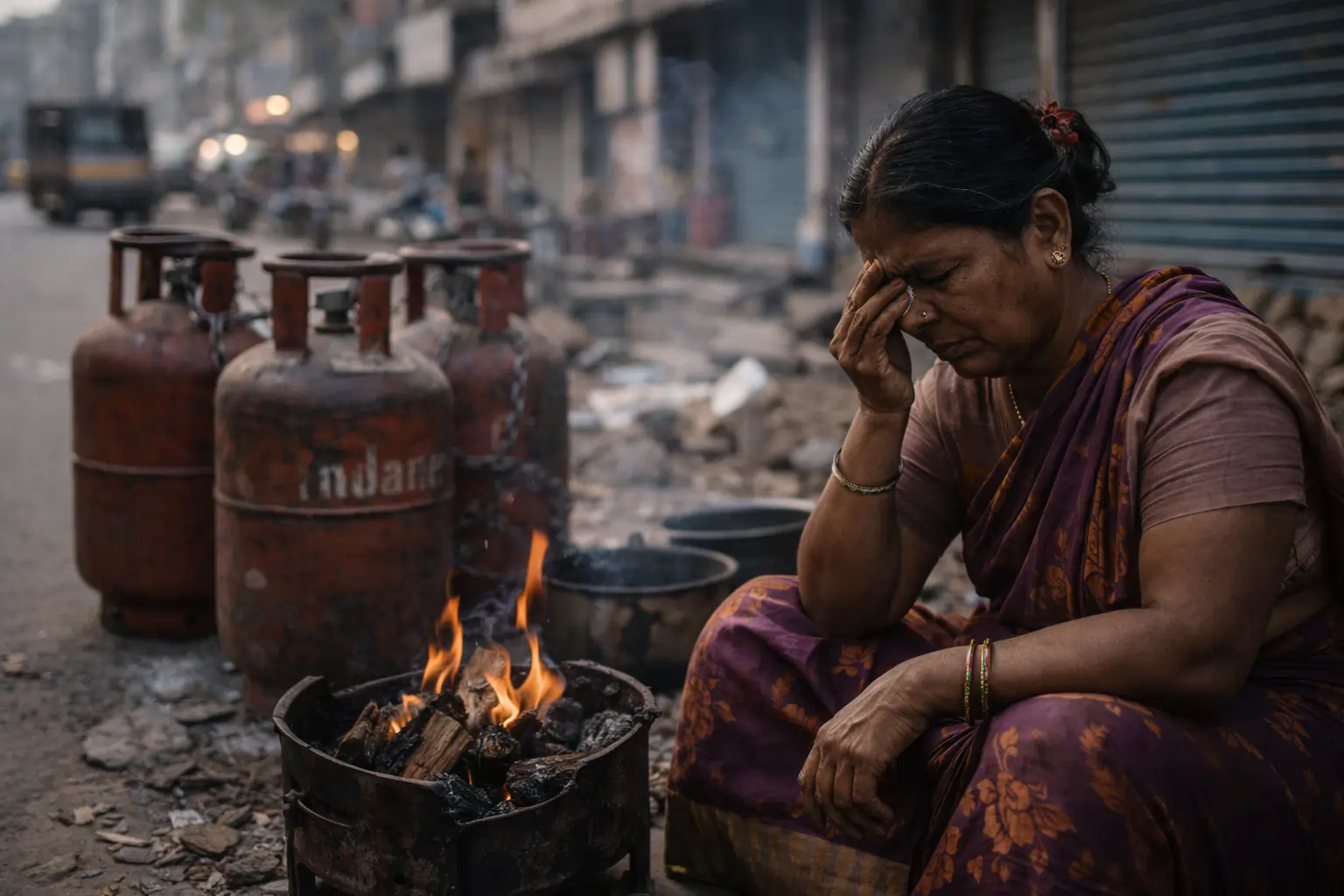

The LPG Crisis in South India has become a leading issue in 2026. Due to Modi’s weak foreign policy toward the Middle East, this problem has seriously affected the public in India. The hike in domestic gas cylinder prices after the East Asia conflict scares people, but the government is doing nothing to resolve this problem. It ranges from ₹900 to ₹1,800 for domestic cylinders and ₹2,000 – ₹4,000 for commercial gas cylinders. It directly affects the livelihood and business of south Indian people.
failed planning and inadequate policies:
The basic reason is not only the failure of policy but failed govt planning. Prime Minister Modi is more concerned about electioneering than attending to real problems like the security of energy and price stability. While 60 percent of the LPG requirements in India are imported, no serious attempt was made to enhance the storage capacity.
The International Energy Agency had already warned that “India’s LPG system is built for flow, not stockpiling.” There are only two underground LPG storage caverns in the whole country, one in Mangalore and one in Visakhapatnam, and their combined capacity is only enough for two days of national consumption, shocking statistics for 1.4 billion people.
Rather than strengthening the reserves or the suppliers, the Modi government decided to reduce the LPG bookings and increase the waiting time for 45 days, which fueled the panic buying.
Bengaluru Restaurants on the Verge of Shutdown
Karnataka is a prime example of how bad policies can ruin a region’s economy. Bengaluru has hundreds of small food outlets that depend on commercial LPG cylinders. The scarcity of LPG and high prices are forcing many food outlets to either reduce their serving sizes or shut down temporarily.
During a heated assembly session, the Congress government questioned the Centre’s policies of making it impossible for hoteliers to survive. The BJP members countered this by accusing external factors, such as the Iran-Israel war. However, this situation revealed an uncomfortable truth; raising serious concerns
Where is Modi? Why is he silent on this crisis?
People are Paying the Price
Citizens are the worst affected. In the middle class, cooking has become a waiting game for the next LPG refill. In the case of the poor, especially in rural Tamil Nadu and Kerala, the use of firewood and kerosene is once again on the rise a retrograde move in the use of clean energy under the Ujjwala Yojana initiative.
While the PM is asking people not to panic, the priorities of the PM seem to be misplaced. He is announcing the allocation of 48,000 kiloliters of kerosene as a substitute. This is again a temporary measure. What the country needs is a strong and well-thought-out LPG reserve policy, not lectures or blame games.
Fix the Policy, Not the Narrative
LPG crisis is not a supply-side issue; it is a symptom of systemic policy neglect. Modi still focused on its lections campaigns in south India while neglecting the people needs. As always, he ignored long term energy security by only focusing on short term electoral benefited policies. The Modi government needs to wake up and have to invest more in storage facilities, manage the prices, and focus on the citizens rather than the rallies.
Until then, the crisis will only highlight the issue of misplaced priorities that is choking the basic human right of cooking a meal.
