



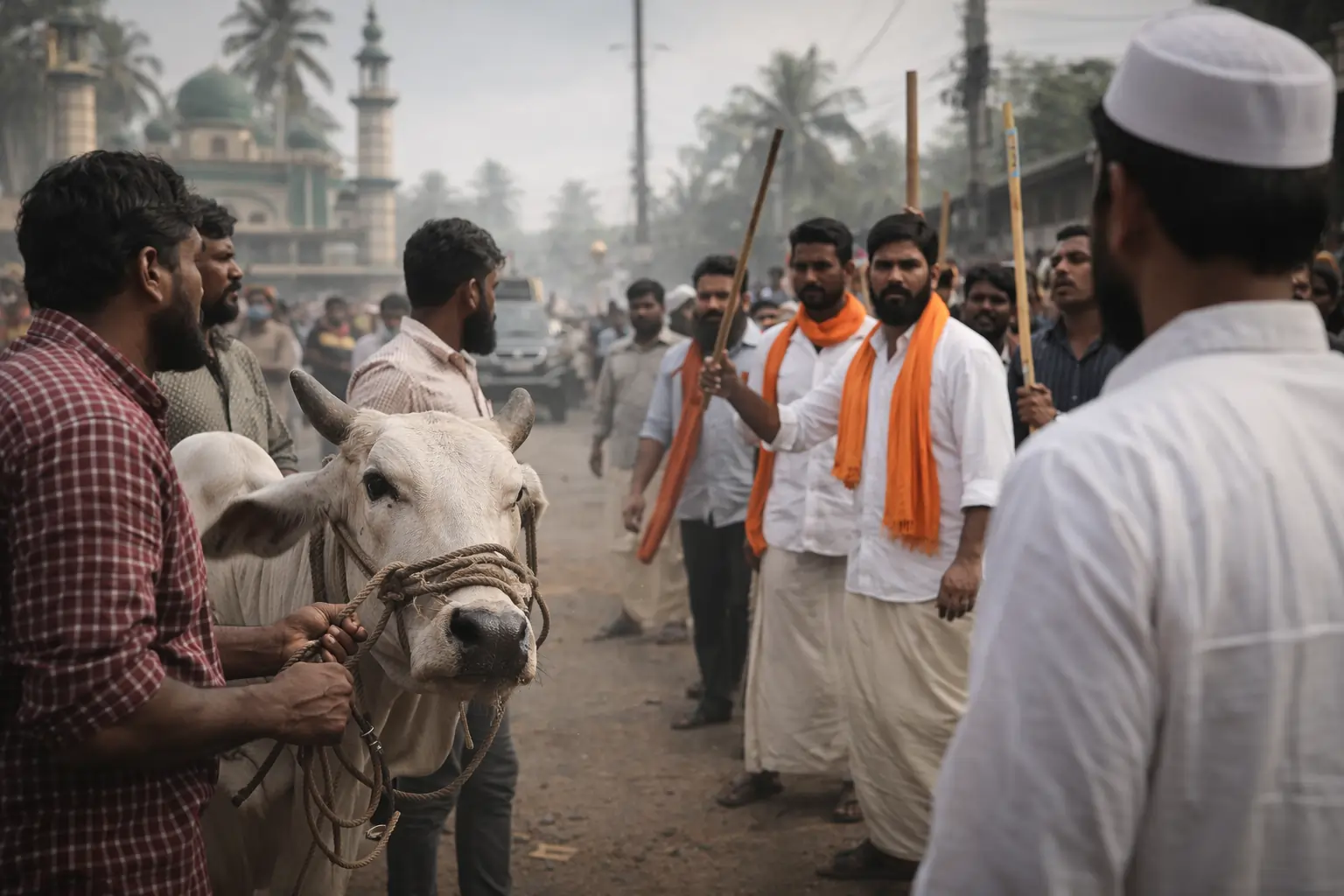

In India, cow vigilantism has escalated into a pattern of violence by mobs, in many cases targeting minorities in the name of cow protection. Such events have been well-reported and have been rising since the BJP government came to power. Cow Vigilantism is often associated with religious mobilization and nationalist discourse.
Compared to the northern part, South India has always been less susceptible to this majoritarian politics. However, over the past few years, these incidents started rising in South Indian states in the name of protecting religion. The recent incident at Manjeshwar clearly indicates that the plural society of Kerala is not exempt from this politics.
This rise in cow vigilantism in the South Indian state, particularly Kerala, during a politically agitated time, is more than just a local law and order problem. It’s the reflection of how easily identity politics and religious majoritarianism can spill into the political arena and be used against the minorities under the BJP rule.
The problem is not about that one episode in Manjeshwar, but with the political culture that makes it happen under this govt to erupt at opportune moments.
Kerala has been a difficult ground for identity Politics:
Identity politics becomes prominent when the parties/ govts are unable to beat unemployment, development, etc., political actors build emotional narratives in the name of religion or identity in order to gain benefits from shifting political accountability towards religious and cultural debates. This is the same identity politics that the BJP played during election times in India. But due to strong cultural and religious diversity and secularism in South India BJP failed to build its influence in the south. These incidents reflect one agenda, and that is;
Change the rhetoric, ultimately, you change the election pattern
Kerala is always a difficult place for the BJP to win because its politics revolves around welfare & development policies, labour and women’s rights, as well as coalition governance rather than communal/ majoritarian mobilization. But a few areas of coastal Kerala have been ideological contestation points because of some historical regions. BJP exploits those regions and uses them against the South Indian states to promote communal majoritarianism. As a result, incidents like Manjeshwar are more about political concerns rather than local conflicts.
Warning signs from Manjeshwar and Kasaragod:
It’s not only the Manjeshwar incident, but the communal mobilization speeches by right-wing extremists in the Kasaragod belt in 2025, that also raised serious threats to Kerala against their religious security. These discourses are projected against the self-defence rhetoric that threatens the identity and religious harmony of Kerala. Not only is the targeting of minorities during Christmas and other religious festivals in the name of cow protection is another serious concern.
From temple politics to identity rhetoric, the BJP’s approach is now reshaping the political environment of South Indian states, then winning it through identity politics and majoritarianism as it’s doing in Northern and western India.
For that matter, the BJP used Manjeshwar and Kasaragod regions to communize. No doubt Kerala showed resistance to this, but resistance is not immunity. These incidents are the alarming signs that show how nature and tone of politics changed from governance towards identity politics.
BJP political gamble; a risk for Kerala Political culture:
This BJP strategy is commonly seen in Northern and Western Indian states, and these campaigns completed the following steps till ripen.
- Firstly, the right-wing groups used symbolic religious mobilization campaigns and slogans
- Local vigilantism, violent incidents in the name of protection done
- Leaders make political rhetoric in the name of protecting cultural and religious rights, used
- Repetition of the above patterns normalizes the communal suspicion.
As a result of this cycle, people started reacting on a religious basis that deepens the divide between the communities. The same patterns are seen there in the Kasaragod region by reshaping the rhetoric and political language. And in politics, language is everything.
These patterns are not dangerous for Kerala, but for all southern states. As BJP tries to replace its civic identity with religious categorization by creating marginalization among communities. In Kerala, different communities, i.e., Muslims, Hindus, and Christians, are interviewed in workplaces, schools, and unions, and that threatens their harmony.
South Indian at the political crossroads:
Ultimately, the question is not whether the political environment will shift, but rather how society responds to this shift and what type of political environment it wishes to cultivate. With Narendra Modi at the helm of the federal government and the BJP exerting considerable influence over the country’s decision-making processes, it is only natural that there will be an increasing concern about centralized politics that are driven by identity. However, the important element is the people themselves and their choices to resist or reinterpret these narratives. The southern states, like Kerala, always give importance to welfare, education, development and transformation rather than religious politics, are at the crossroads
The question that is important is the upcoming election pattern that answer: Will the Keralites continue to maintain its traditions of developmental politics or these BJP gamble of identity politics define their fate which has so longer undermined by the South.
